Researchers have identified a potential new way to assess metabolic health using saliva instead of blood.
High insulin levels in the blood, known as hyperinsulinemia, can reveal metabolic problems long before obvious symptoms appear. It is already recognized as an important warning sign for future health issues, including Type 2 diabetes, obesity, and heart disease.
Now, researchers at UBC Okanagan say saliva may offer a much simpler way to spot that risk. Their study suggests that a saliva test can reflect insulin patterns linked to metabolic health, opening the door to a needle-free approach that could be easier to use in both research and routine screening.
Dr. Jonathan Little, a professor in UBC Okanagan's School of Health and Exercise Sciences, says the method could do more than replace a blood draw. It may also help identify early metabolic changes tied to obesity and related health risks, at a stage when blood sugar levels can still appear normal.
Published in Applied Physiology, Nutrition, and Metabolism, the study included 94 healthy participants across a range of body sizes. After fasting, each person drank a standardized meal replacement shake. Researchers then collected saliva samples and measured blood glucose with a finger-prick test.
"People living with obesity had much higher insulin levels in their saliva than those who were slightly overweight or had lower body weight—even though their blood sugar levels were the same," he says. "This suggests that saliva testing could be a simple, non-invasive way to identify people at risk of Type 2 diabetes before symptoms appear."
Detecting Diabetes Risk Years Earlier
Type 2 diabetes affects roughly 400 million people worldwide and is typically diagnosed when blood glucose levels become elevated. However, Dr. Little explains that underlying metabolic changes can begin much earlier.
Conditions linked to prediabetes, including insulin resistance and hyperinsulinemia, may develop 10 to 20 years before a formal diagnosis is made.

"If hyperinsulinemia can be detected before blood glucose levels start to rise, people at risk for Type 2 diabetes could be identified early, allowing for lifestyle changes and other treatments to be introduced long before glucose levels rise."
Early intervention is important because hyperinsulinemia is associated with an increased risk of several chronic diseases. These include Type 2 diabetes, hypertension, cardiovascular disease, stroke, and cancer. More recently, researchers have also connected the condition to obesity.
Co-author Dr. Hossein Rafiei says the goal of the study was to explore the possibility of creating a practical and non-invasive test for hyperinsulinemia. During the research, the team also observed a notable pattern after participants consumed the meal replacement drink.
Surprising Findings in Lean Participants
Previous research by Dr. Rafiei at UBC Okanagan showed that insulin levels detected in saliva closely track plasma insulin levels throughout the day after both high-carbohydrate and low-carbohydrate mixed meals.
"This suggests that saliva insulin may help distinguish between high and low plasma insulin responses, and could play a role in predicting the severity of hyperinsulinemia and possibly insulin resistance."
In the study, saliva samples were collected 30, 60, and 90 minutes after participants drank the beverage.
Dr. Rafiei notes that some participants with lower body weight also experienced large increases in saliva insulin after the meal. This pattern suggests they could face an increased risk of Type 2 diabetes even though they were not overweight and had normal blood glucose levels.
"The finding that some people who are lean have high insulin is intriguing," says Dr. Rafiei. "This indicates that saliva insulin may be more useful than measuring someone's weight or waist size."
Researchers also examined how saliva insulin levels related to waist circumference, body mass index (BMI), age, and sex. Among these factors, waist circumference showed the strongest relationship with saliva insulin levels.
"These findings suggest that waist circumference could be a more reliable indicator of hyperinsulinemia than age or overall body weight when using saliva insulin," he says. "Our results also suggest that saliva insulin may be better than blood glucose at distinguishing between those who are more metabolically healthy and those who are more likely to live with hyperinsulinemia."
Reference: "Saliva insulin concentration following ingestion of a standardized mixed meal tolerance test: influence of obesity status" by Hossein Rafiei and Jonathan Peter Little, 16 May 2025, Applied Physiology Nutrition and Metabolism.
DOI: 10.1139/apnm-2024-0532

News – Curated by Amanda Scott, Alias Group Creative
Follow her on Bluesky
Scientists Discover Simple Saliva Test That Reveals Hidden Diabetes Risk
Researchers have identified a potential new way to assess metabolic health using saliva instead of blood. High insulin levels in the blood, known as hyperinsulinemia, can reveal metabolic problems long before obvious symptoms appear. It is [...]

One Nasal Spray Could Protect Against COVID, Flu, Pneumonia, and More
A single nasal spray vaccine may one day protect against viruses, pneumonia, and even allergies. For decades, scientists have dreamed of creating a universal vaccine capable of protecting against many different pathogens. The idea [...]
New AI Model Predicts Cancer Spread With Incredible Accuracy
Scientists have developed an AI system that analyzes complex gene-expression signatures to estimate the likelihood that a tumor will spread. Why do some tumors spread throughout the body while others remain confined to their [...]

Scientists Discover DNA “Flips” That Supercharge Evolution
In Lake Malawi, hundreds of species of cichlid fish have evolved with astonishing speed, offering scientists a rare opportunity to study how biodiversity arises. Researchers have identified segments of “flipped” DNA that may allow fish to adapt rapidly [...]

Our books now available worldwide!
Online Sellers other than Amazon, Routledge, and IOPP Indigo Global Health Care Equivalency in the Age of Nanotechnology, Nanomedicine and Artifcial Intelligence Global Health Care Equivalency In The Age Of Nanotechnology, Nanomedicine And Artificial [...]

Scientists Discover Why Some COVID Survivors Still Can’t Taste Food Years Later
A new study provides the first direct biological evidence explaining why some people continue to experience taste loss long after recovering from COVID-19. Researchers have uncovered specific biological changes in taste buds that could help [...]

Catching COVID significantly raises the risk of developing kidney disease, researchers find
Catching Covid significantly raises the risk of developing deadly kidney disease, research has shown. The virus was found to increase the chances that patients will develop the incurable condition by around 50 per cent. [...]
New Toothpaste Stops Gum Disease Without Harming Healthy Bacteria
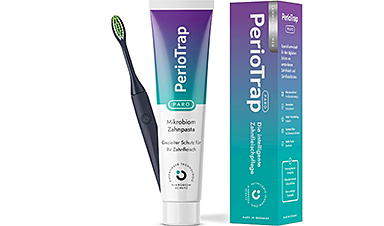
Researchers have developed a targeted approach to combat periodontitis without disrupting the natural balance of the oral microbiome. The innovation could reshape how gum disease is treated while preserving beneficial bacteria. The human mouth [...]

Plastic Without End: Are We Polluting the Planet for Eternity?
The Kunming Montreal Global Biodiversity Framework calls for the elimination of plastic pollution by 2030. If that goal has been clearly set, why have meaningful measures that create real change still not been implemented? [...]

Scientists Rewire Natural Killer Cells To Attack Cancer Faster and Harder
Researchers tested new CAR designs in NK-92 cells and found the modified cells killed tumor cells more effectively, showing stronger anti-cancer activity. Researchers at the Ribeirão Preto Blood Center and the Center for Cell-Based [...]

New “Cellular” Target Could Transform How We Treat Alzheimer’s Disease
A new study from researchers highlights an unexpected player in Alzheimer’s disease: aging astrocytes. Senescent astrocytes have been identified as a major contributor to Alzheimer’s progression. The cells lose protective functions and fuel inflammation, particularly in [...]

Treating a Common Dental Infection… Effects That Extend Far Beyond the Mouth
Successful root canal treatment may help lower inflammation associated with heart disease and improve blood sugar and cholesterol levels. Treating an infected tooth with a successful root canal procedure may do more than relieve [...]
Microplastics found in prostate tumors in small study
In a new study, researchers found microplastics deep inside prostate cancer tumors, raising more questions about the role the ubiquitous pollutants play in public health. The findings — which come from a small study of 10 [...]

All blue-eyed people have this one thing in common
All Blue-Eyed People Have This One Thing In Common Blue Eyes Aren’t Random—Research Traces Them Back to One Prehistoric Human It sounds like a myth at first — something you’d hear in a folklore [...]

Scientists reveal how exercise protects the brain from Alzheimer’s
Researchers at UC San Francisco have identified a biological process that may explain why exercise sharpens thinking and memory. Their findings suggest that physical activity strengthens the brain's built in defense system, helping protect [...]

NanoMedical Brain/Cloud Interface – Explorations and Implications. A new book from Frank Boehm
New book from Frank Boehm, NanoappsMedical Inc Founder: This book explores the future hypothetical possibility that the cerebral cortex of the human brain might be seamlessly, safely, and securely connected with the Cloud via [...]