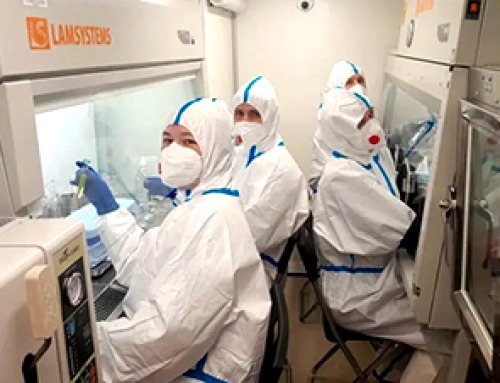
An NIH-supported initiative seeks to unravel how the nervous system tracks and regulates the body's internal organs.
How does your brain recognize when it's time to take a breath, when your blood pressure has fallen, or when your body is fighting an infection? The key lies in interoception, a little-known process through which the nervous system constantly monitors and interprets internal signals to keep essential body functions stable.
Researchers from Scripps Research and the Allen Institute have been awarded the National Institutes of Health (NIH) Director's Transformative Research Award to develop the first comprehensive map, or atlas, of this internal sensory network.
The project will be led by Nobel Prize–winning neuroscientist Ardem Patapoutian, in collaboration with Li Ye, the N. Paul Whittier Chair in Chemistry and Chemical Biology at Scripps Research, and Bosiljka Tasic, Director of Molecular Genetics at the Allen Institute. Xin Jin, Associate Professor at Scripps Research, will serve as co-investigator and head the genomic and cell-type identification portion of the project. The initiative is supported by $14.2 million in NIH funding over the next five years.
"My team is honored that the NIH is supporting the kind of collaborative science needed to study such a complex system," says Patapoutian, the Presidential Endowed Chair in Neurobiology at Scripps Research.
Decoding the Signals Within
Patapoutian, who shared the 2021 Nobel Prize in Physiology or Medicine for discovering cellular sensors of touch, will use the NIH award with his team to decode interoception.
"We hope our results will help other scientists ask new questions about how internal organs and the nervous system stay in sync," adds Ye. Like Patapoutian, he's also a Howard Hughes Medical Institute Investigator.

Established in 2009, the Transformative Research Award supports interdisciplinary projects that cross conventional boundaries and open new directions in science. This accolade is part of the NIH Common Fund's High-Risk, High-Reward Research program, which promotes ideas aimed at filling major gaps in our understanding of human health—the kind of endeavors that might struggle to gain funding through traditional channels.
Unlike classic senses, such as smell, sight, and hearing—which are external and rely on specialized sensory organs—interoception operates through a network of neural pathways that monitor functions like circulation, digestion, and immune activity. Because these signals come from deep within the body and are often processed outside conscious awareness, interoception is often described as our "hidden sixth sense."
Despite its importance, interoception has been historically neglected because of its complexity. Signals from internal organs spread widely, often overlap, and are difficult to isolate and measure. Sensory neurons that carry these messages weave through tissues—ranging from the heart and lungs to the stomach and kidneys—without clear anatomical boundaries.
Building the First Interoceptive Atlas
With support from the NIH, the team will chart how sensory neurons connect to a wide range of internal organs, including the heart and gastrointestinal tract. Using their findings, the researchers aim to build a comprehensive atlas that anatomically and molecularly catalogs these neural pathways.
The anatomical part of the project will label sensory neurons and then apply whole-body imaging to follow their paths from the spinal cord into different organs, generating a detailed 3D map of the routes and branching patterns. In the molecular component, the team will use genetic profiling to identify the various cell types of sensory neurons—for example, showing how neurons that send signals from the gut differ from those linked to the bladder or fat. Together, these complementary datasets will produce the first standardized framework for mapping the body's internal sensory wiring.
By decoding interoception, the team also hopes to uncover core principles of body-brain communication that could guide new approaches to treating disease. Dysregulation of interoceptive pathways has been implicated in conditions ranging from autoimmune disorders and chronic pain to neurodegeneration and high blood pressure.
"Interoception is fundamental to nearly every aspect of health, but it remains a largely unexplored frontier of neuroscience," says Jin, who's a Howard Hughes Medical Institute Freeman Hrabowski Scholar. "By creating the first atlas of this system, we aim to lay the foundation for better understanding how the brain keeps the body in balance, how that balance can be disrupted in disease, and how we might restore it."

News
Long-Acting HIV Shots Could Solve a Major Treatment Challenge for Young People
A major African trial suggests that changing how HIV treatment is delivered could significantly improve viral suppression in adolescents. Young people with HIV were more likely to keep the virus suppressed when they received [...]

WHO Factsheets – The top 10 causes of death
In 2023, the 10 leading causes of death accounted for 33 million deaths, or 54% of the total 61 million deaths worldwide. The top global causes of death, in order of total number of lives lost, [...]
Aging Cells May Be Hiding From the Immune System – Scientists Think They Know How
Your immune system is supposed to clear out damaged cells. Researchers may have found how some of them hide and linger as the body ages. Researchers led by Cedars-Sinai Health Sciences University have identified [...]

Your Voice May Reveal How Fast Your Brain Is Aging
Researchers have developed a machine-learning “speech clock” that estimates age from subtle patterns in how people speak and what they say. It is possible that people’s voices may contain certain signals of aging that [...]
Optogenetics Pioneers Win 2026 Nobel Prize in Physiology or Medicine
The 2026 Nobel Prize in Physiology or Medicine has been awarded to Peter Hegemann, Georg Nagel, and Karl Deisseroth for the development of optogenetics, a revolutionary technology that uses light to control individual neurons [...]
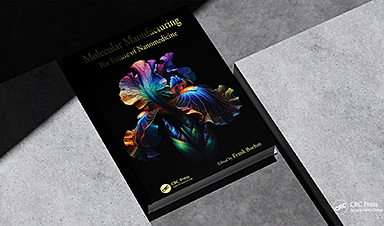
Molecular Manufacturing: The Future of Nanomedicine – From NanoappsMedical Inc.
This book explores the revolutionary potential of atomically precise manufacturing technologies to transform global healthcare, as well as practically every other sector across society. This forward-thinking volume examines how envisaged Factory@Home systems might enable the cost-effective [...]

What is ‘American Covid’ and how bad is it?
Cases of so-called ‘American Covid’ are on the rise in the UK. The strain is officially called XFG, or ‘Stratus’, and is the most common variant in North America, hence the name. It might soon [...]
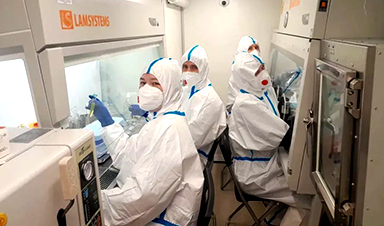
Researcher at Russian plague laboratory dies of ‘unknown’ infection
Russian authorities have imposed "anti-epidemic measures" after a laboratory worker at an institute in Siberia dedicated to studying the plague and other infectious diseases died of a mysterious illness. The researcher, a 28-year-old female [...]
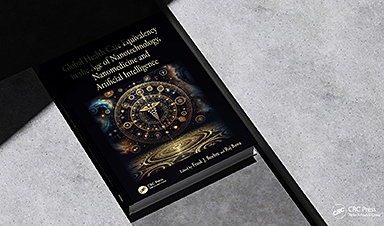
GHCE Concept
From the preface of the book Global Health Care Equivalency in the Age of Nanotechnology, Nanomedicine and Artificial Intelligence, Edited by Frank Boehm: Since the publication of my first book (Nanomedical Device and Systems [...]
A Surprising Brain Signal Could Explain Why Eating Less Protein Extends Lifespan
A new paper suggests that limiting protein intake triggers a coordinated response throughout the body that may help explain how protein restriction affects healthy aging. Animals respond to protein restriction, or reduced protein in [...]

Back and shoulder surgery is often worse than useless
Millions of operations should be scrapped SIX IN TEN Britons have surgery at some point. So do lots of Americans, at a cost of perhaps $500bn a year, a third of all spending on [...]
Cocaine plays with mind, hijacks brain circuit, drives increasingly rigid and repetitive behavior
Researchers have found that cocaine hijacks brain circuit, which to drive increasingly rigid and repetitive behavior. The brain circuit that normally participates in selecting natural mouth and face movements, but which becomes disproportionately engaged [...]
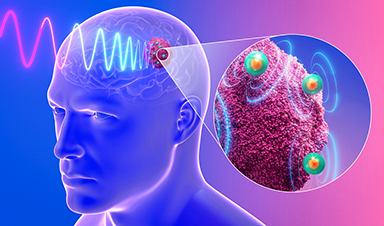
Injectable nanodevices could provide effective treatment for drug-resistant glioblastoma
The brain cancer glioblastoma is one of the most aggressive and treatment-resistant cancers known to medicine, carrying a median survival of just 12-15 months, even with the best available care. Now, researchers at the [...]
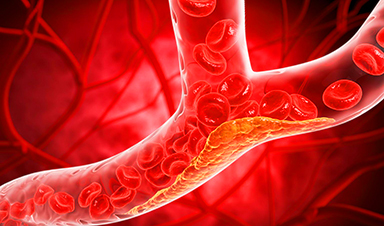
New Treatment Cuts “Bad” Cholesterol in Half for a Full Year
A single infusion of an experimental CRISPR-Cas9 therapy was reported to safely lower LDL cholesterol by 52.5% and triglycerides by 47.8%, as measured 12 months after treatment. What if one infusion could keep cholesterol [...]
Too Much RNA Can Drain a Cell’s Energy, Scientists Discover
A virus may cripple a cell’s power supply simply by producing too much of a molecule the cell needs to survive. New research from the Texas A&M College of Veterinary Medicine and Biomedical Sciences [...]

West African scientists warn of weakening health systems and urge stronger outbreak detection
LOME, Togo (AP) — West African laboratory scientists called on governments Friday to strengthen capacity to detect disease outbreaks to avoid another major outbreak, saying health systems across the region are becoming weaker. Participants [...]