Summary: Researchers discovered a biological “trash disposal” mechanism that directly controls how fast we age. While circular RNA has long been known to accumulate in cells as we get older, this study proves for the first time that this buildup isn’t just a side effect of aging—it actually causes it. By identifying the enzyme RNASEK, which degrades this aging-linked RNA, scientists have found a way to potentially reset the cellular clock.
Cells in our bodies produce RNA based on genetic information stored in DNA, and RNA serves as a blueprint for making proteins. Researchers at our university have discovered a new phenomenon: removing ‘circular RNA’ that accumulates in cells as we age can slow down aging and extend lifespan. This study provides crucial clues for uncovering the principles of aging and developing treatment strategies for related diseases.
Professor Seung-Jae V. Lee’s research team (RNA-Mediated Healthspan and Longevity Research Center) from the Department of Biological Sciences, in collaboration with research teams led by Professors Yoon Ki Kim and Gwangrog Lee, announced on the 18th that they discovered the RNASEK protein—an enzyme that degrades circular RNA—plays a vital role in slowing aging and extending lifespan.
Until now, circular RNA has been regarded mainly as an aging marker because of its stability, which allows it to accumulate over time. However, the molecular mechanism for removing this RNA and its direct link to aging had not been clearly identified. The research team conducted this study to determine how the accumulation of circular RNA affects aging and whether an intracellular management system exists to regulate it.
Using Caenorhabditis elegans (C. elegans), a short-lived roundworm widely used in aging research, the team first confirmed that the circular RNA-degrading enzyme RNASEK is essential for longevity. They also discovered that as aging progresses, the amount of RNASEK decreases, resulting in an abnormal accumulation of circular RNA within cells.
Conversely, artificially increasing the levels of RNASEK (overexpression) extended the lifespan and allowed the organisms to survive longer in a healthy state. This implies that the process of appropriately removing cellular circular RNA is critical for maintaining health and longevity.
The research team also found that RNASEK prevents the toxic aggregation of circular RNAs in aged organisms. . When RNASEK is deficient and circular RNA accumulates, “stress granules” form abnormally inside the cell, which can impair cellular functions and accelerate aging.
RNASEK works alongside the chaperone protein HSP90 (which helps proteins avoid misfolding or clumping) to inhibit the formation of these stress granules and help cells maintain a normal state. Notably, this phenomenon was observed not only in C. elegans but also in human cells. In mammals, RNASEK also functions to directly degrade circular RNA; a deficiency of RNASEK in human cells and mouse models led to premature aging.
The researchers explained that this study is significant as it identifies a mechanism for regulating aging at the RNA level. They suggested that research using RNASEK to control circular RNA could lead to the development of treatment strategies for human aging and degenerative diseases.
Professor Seung-Jae V. Lee of KAIST, who led the study, explained, “Until now, circular RNA was merely regarded as a marker of aging that accumulates over time due to its stability. This study proves that circular RNA accumulated during aging actually induces aging, and that RNASEK, which removes it, is a key regulator that slows aging and induces healthy longevity.”
Drs. Sieun S. Kim, Seokjin Ham, Sung Ho Boo, and Donghun Lee from the KAIST Department of Biological Sciences participated as joint first authors.
The research results were published on February 24 in the world-renowned scientific journal Molecular Cell.
Funding: This research was conducted with support from the Leader Researcher Program of the National Research Foundation of Korea.

News – Curated by Amanda Scott, Alias Group Creative
Follow her on Bluesky
RNA Recycling Extends Lifespan
Summary: Researchers discovered a biological “trash disposal” mechanism that directly controls how fast we age. While circular RNA has long been known to accumulate in cells as we get older, this study proves for the [...]
Cancer’s Deadly Paradox: How Tumors Break Their Own DNA To Keep Growing
Cancer’s strongest gene switches push DNA into damaging overdrive, creating repeated breaks and repairs that may fuel tumor evolution while exposing possible therapeutic weak spots. A new study indicates that cancer can harm its own genetic [...]
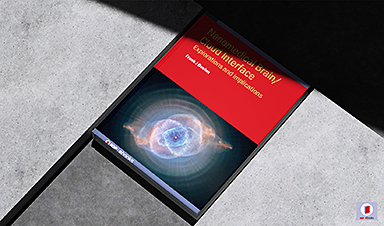
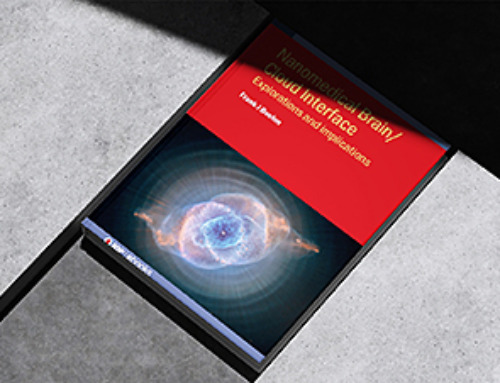
NanoMedical Brain/Cloud Interface – Explorations and Implications. A new book from Frank Boehm
New book from Frank Boehm, NanoappsMedical Inc Founder: This book explores the future hypothetical possibility that the cerebral cortex of the human brain might be seamlessly, safely, and securely connected with the Cloud via [...]
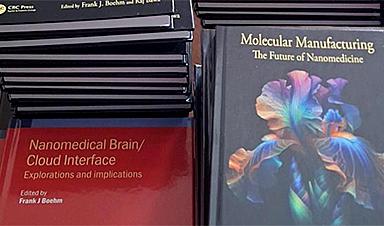
Our books now available worldwide!
Online Sellers other than Amazon, Routledge, and IOPP Indigo Global Health Care Equivalency in the Age of Nanotechnology, Nanomedicine and Artifcial Intelligence Global Health Care Equivalency In The Age Of Nanotechnology, Nanomedicine And Artificial [...]
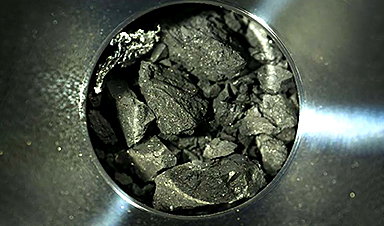
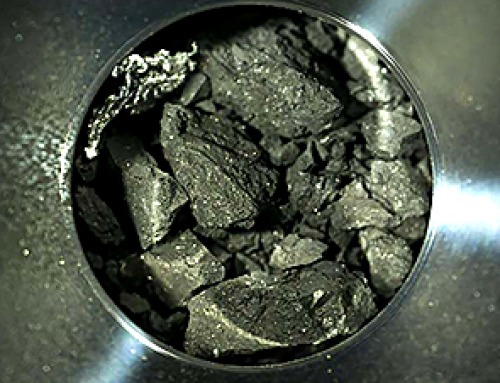
Ryugu asteroid samples contain all DNA and RNA building blocks, bolstering origin-of-life theories
All the essential ingredients to make the DNA and RNA underpinning life on Earth have been discovered in samples collected from the asteroid Ryugu, scientists said Monday. The discovery comes after these building blocks [...]

Is Berberine Really a “Natural Ozempic”?
Often labeled a “natural Ozempic,” berberine is widely discussed as a metabolic aid. Yet research suggests its influence may lie deeper. In recent years, berberine has gained significant attention as a supposed “natural way” [...]
Viagra Ingredient Shows Promise for Rare Childhood Brain Disease in Surprising Study
A rare childhood disease with no approved treatment may have an unexpected new therapeutic candidate. Sildenafil, the active ingredient also sold under the brand name Viagra, may help reduce symptoms in people with Leigh [...]

In a first for China, Neuracle’s implantable brain-computer interface wins approval
In a landmark development, Neuracle Medical Technology has secured the country’s first-ever approval for an implantable brain-computer interface (BCI) system designed to restore hand motor function in patients with spinal cord injuries, in a [...]
A Cambridge Lab Mistake Reveals a Powerful New Way to Modify Drug Molecules
A surprising lab discovery reveals a light-powered way to tweak complex drugs faster, cleaner, and later in development. Researchers at the University of Cambridge have created a new technique for altering complex drug molecules [...]
New book from NanoappsMedical Inc – Molecular Manufacturing: The Future of Nanomedicine
This book explores the revolutionary potential of atomically precise manufacturing technologies to transform global healthcare, as well as practically every other sector across society. This forward-thinking volume examines how envisaged Factory@Home systems might enable the cost-effective [...]

Scientists Discover Simple Saliva Test That Reveals Hidden Diabetes Risk
Researchers have identified a potential new way to assess metabolic health using saliva instead of blood. High insulin levels in the blood, known as hyperinsulinemia, can reveal metabolic problems long before obvious symptoms appear. It is [...]

One Nasal Spray Could Protect Against COVID, Flu, Pneumonia, and More
A single nasal spray vaccine may one day protect against viruses, pneumonia, and even allergies. For decades, scientists have dreamed of creating a universal vaccine capable of protecting against many different pathogens. The idea [...]
New AI Model Predicts Cancer Spread With Incredible Accuracy
Scientists have developed an AI system that analyzes complex gene-expression signatures to estimate the likelihood that a tumor will spread. Why do some tumors spread throughout the body while others remain confined to their [...]

Scientists Discover DNA “Flips” That Supercharge Evolution
In Lake Malawi, hundreds of species of cichlid fish have evolved with astonishing speed, offering scientists a rare opportunity to study how biodiversity arises. Researchers have identified segments of “flipped” DNA that may allow fish to adapt rapidly [...]

Scientists Discover Why Some COVID Survivors Still Can’t Taste Food Years Later
A new study provides the first direct biological evidence explaining why some people continue to experience taste loss long after recovering from COVID-19. Researchers have uncovered specific biological changes in taste buds that could help [...]

Catching COVID significantly raises the risk of developing kidney disease, researchers find
Catching Covid significantly raises the risk of developing deadly kidney disease, research has shown. The virus was found to increase the chances that patients will develop the incurable condition by around 50 per cent. [...]