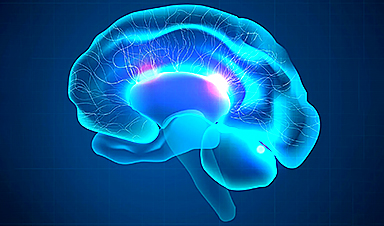
The study broadly reveals how fast brain waves, previously overlooked, establish fundamental patterns of sleep and wakefulness.
Scientists have developed a new method to analyze sleep and wake states by detecting ultra-fast neuronal activity patterns, just milliseconds long, challenging traditional understandings based on slower brain waves. This research also uncovered that individual brain regions can briefly transition between sleep and wake independently, revealing complex, localized brain activities that may reshape our understanding of sleep mechanics.
Sleep and wake: they’re totally distinct states of being that define the boundaries of our daily lives. For years, scientists have measured the difference between these instinctual brain processes by observing brain waves, with sleep characteristically defined by slow, long-lasting waves measured in tenths of seconds that travel across the whole organ.
For the first time, scientists have found that sleep can be detected by patterns of neuronal activity just milliseconds long, 1000 times shorter than a second, revealing a new way to study and understand the basic brain wave patterns that govern consciousness. They also show that small regions of the brain can momentarily “flicker” awake while the rest of the brain remains asleep, and vice versa from wake to sleep.
These findings, described in a new study published in the journal Nature Neuroscience, are from a collaboration between the laboratories of Assistant Professor of Biology Keith Hengen at Washington University in St. Louis and Distinguished Professor of Biomolecular Engineering David Haussler at UC Santa Cruz. The research was carried out by Ph.D. students David Parks (UCSC) and Aidan Schneider (WashU).
Over four years of work, Parks and Schneider trained a neural network to study the patterns within massive amounts of brain wave data, uncovering patterns that occur at extremely high frequencies that have never been described before and challenge foundational, long-held conceptions of the neurological basis of sleep and wake.
“With powerful tools and new computational methods, there’s so much to be gained by challenging our most basic assumptions and revisiting the question of ‘what is a state?’” Hengen said. “Sleep or wake is the single greatest determinant of your behavior, and then everything else falls out from there. So if we don’t understand what sleep and wake actually are, it seems like we’ve missed the boat.”
“It was surprising to us as scientists to find that different parts of our brains actually take little naps when the rest of the brain is awake, although many people may have already suspected this in their spouse, so perhaps a lack of male-female bias is what is surprising,” Haussler quipped.
Understanding sleep
Neuroscientists study the brain via recordings of the electrical signals of brain activity, known as electrophysiology data, observing voltage waves as they crest and fall at different paces. Mixed into these waves are the spike patterns of individual neurons.
The researchers worked with data from mice at the Hengen Lab in St. Louis. The freely behaving animals were equipped with a very lightweight headset that recorded brain activity from 10 different brain regions for months at a time, tracking voltage from small groups of neurons with microsecond precision.
This much input created petabytes — which are one million times larger than a gigabyte — of data. David Parks led the effort to feed this raw data into an artificial neural network, which can find highly complex patterns, to differentiate sleep and wake data and find patterns that human observation may have missed. A collaboration with the shared academic compute infrastructure located at UC San Diego enabled the team to work with this much data, which was on the scale of what large companies like Google or Facebook might use.
Knowing that sleep is traditionally defined by slow-moving waves, Parks began to feed smaller and smaller chunks of data into the neural network and asked it to predict if the brain was asleep or awake.
They found that the model could differentiate between sleep and wake from just milliseconds of brain activity data. This was shocking to the research team — it showed that the model couldn’t have been relying on the slow-moving waves to learn the difference between sleep and wake.. Just as listening to a thousandth of a second of a song couldn’t tell you if it had a slow rhythm, it would be impossible for the model to learn a rhythm that occurs over several seconds by just looking at random isolated milliseconds of information.
“We’re seeing information at a level of detail that’s unprecedented,” Haussler said. “The previous feeling was that nothing would be found there, that all the relevant information was in the slower frequency waves. This paper says, if you ignore the conventional measurements, and you just look at the details of the high-frequency measurement over just a thousandth of a second, there is enough there to tell if the tissue is asleep or not. This tells us that there is something going on a very fast scale — that’s a new hint to what might be going on in sleep.”
Hengen, for his part, was convinced that Parks and Schneider had missed something, as their results were so contradictory to bedrock concepts drilled into him over many years of neuroscience education. He asked Parks to produce more and more evidence that this phenomenon could be real.
“This challenged me to ask myself ‘to what extent are my beliefs based on evidence, and what evidence would I need to see to overturn those beliefs?” Hengen said. “It really did feel like a game of cat and mouse, because I’d ask David [Parks] over and over to produce more evidence and prove things to me, and he’d come back and say ‘check this out!’ It was a really interesting process as a scientist to have my students tear down these towers brick by brick, and for me to have to be okay with that.”
Local patterns
Because an artificial neural network is fundamentally a black box and does not report back on what it learns from, Parks began stripping away layers of temporal and spatial information to try to understand what patterns the model could be learning from.
Eventually, they got down to the point where they were looking at chunks of brain data just a millisecond long and at the highest frequencies of brain voltage fluctuations.
“We’d taken out all the information that neuroscience has used to understand, define, and analyze sleep for the last century, and we asked ‘can the model still learn under these conditions?’” Parks said. “This allowed us to look into signals we haven’t understood before.”
By looking at these data, they were able to determine that the hyper-fast pattern of activity between just a few neurons was the fundamental element of sleep that the model was detecting. Crucially, such patterns cannot be explained by the traditional, slow, and widespread waves. The researchers hypothesize that the slow-moving waves may be acting to coordinate the fast, local patterns of activity, but ultimately reached the conclusion that the fast patterns are much closer to the true essence of sleep.
If the slow-moving waves traditionally used to define sleep are compared to thousands of people in a baseball stadium doing the wave, then these fast-moving patterns are the conversations between just a few people deciding to participate in the wave. Those conversations occurring are essential for the overall larger wave to take place, and are more directly related to the mood of the stadium — the wave is a secondary result of that.
Observing flickers
In further studying the hyperlocal patterns of activity, the researchers began to notice another surprising phenomenon.
As they observed the model predicting sleep or wake, they noticed what looked at first like errors, in which for a split second the model would detect wake in one region of the brain while the rest of the brain remained asleep. They saw the same thing in wake states: for a split second, one region would fall asleep while the rest of the regions were awake. They call these instances “flickers.”
“We could look at the individual time points when these neurons fired, and it was pretty clear that [the neurons] were transitioning to a different state,” Schneider said. “In some cases, these flickers might be constrained to the area of just an individual brain region, maybe even smaller than that.”
This compelled the researchers to explore what flickers could mean about the function of sleep, and how they affect behavior during sleep and wake.
“There’s a natural hypothesis there; let’s say a small part of your brain slips into sleep while you’re awake — does that mean your behavior suddenly looks like you’re asleep? We started to see that that was often the case,” Schneider said.
In observing the behavior of mice, the researchers saw that when a brain region would flicker to sleep while the rest of the brain was awake, the mouse would pause for a second, almost like it had zoned out. A flicker during sleep (one brain region “wakes up”) was reflected by an animal twitching in its sleep.
Flickers are particularly surprising because they don’t follow established rules dictating the strict cycle of the brain moving sequentially between wake to non-REM sleep to REM sleep.
“We are seeing wake to REM flickers, REM to non-REM flickers — we see all these possible combinations, and they break the rules that you would expect based on a hundred years of literature,” Hengen said. “I think they reveal the separation between the macro-state — sleep and wake at the level of the whole animal, and the fundamental unit of state in the brain — the fast and local patterns.”
Impact
Gaining a deeper understanding of the patterns that occur at high frequencies and the flickers between wake and sleep could help researchers better study neurodevelopmental and neurodegenerative diseases, which are both associated with sleep dysregulation. Both Haussler and Hengen’s lab groups are interested in understanding this connection further, with Haussler interested in further studying these phenomena in cerebral organoid models, bits of brain tissue grown on a laboratory bench.
“This gives us potentially a very, very sharp scalpel with which to cut into these questions of diseases and disorders,” Hengen said. “The more we understand fundamentally about what sleep and wake are, the more we can address pertinent clinical and disease-related problems.”
On a foundational level, this work helps push forward our understanding of the many layers of complexity of the brain as the organ that dictates behavior, emotion, and much more.
Reference: “A nonoscillatory, millisecond-scale embedding of brain state provides insight into behavior” by David F. Parks, Aidan M. Schneider, Yifan Xu, Samuel J. Brunwasser, Samuel Funderburk, Danilo Thurber, Tim Blanche, Eva L. Dyer, David Haussler and Keith B. Hengen, 15 July 2024, Nature Neuroscience.
DOI: 10.1038/s41593-024-01715-2

News
A Cambridge Lab Mistake Reveals a Powerful New Way to Modify Drug Molecules
A surprising lab discovery reveals a light-powered way to tweak complex drugs faster, cleaner, and later in development. Researchers at the University of Cambridge have created a new technique for altering complex drug molecules [...]
New book from NanoappsMedical Inc – Molecular Manufacturing: The Future of Nanomedicine
This book explores the revolutionary potential of atomically precise manufacturing technologies to transform global healthcare, as well as practically every other sector across society. This forward-thinking volume examines how envisaged Factory@Home systems might enable the cost-effective [...]
Scientists Discover Simple Saliva Test That Reveals Hidden Diabetes Risk
Researchers have identified a potential new way to assess metabolic health using saliva instead of blood. High insulin levels in the blood, known as hyperinsulinemia, can reveal metabolic problems long before obvious symptoms appear. It is [...]

One Nasal Spray Could Protect Against COVID, Flu, Pneumonia, and More
A single nasal spray vaccine may one day protect against viruses, pneumonia, and even allergies. For decades, scientists have dreamed of creating a universal vaccine capable of protecting against many different pathogens. The idea [...]
New AI Model Predicts Cancer Spread With Incredible Accuracy
Scientists have developed an AI system that analyzes complex gene-expression signatures to estimate the likelihood that a tumor will spread. Why do some tumors spread throughout the body while others remain confined to their [...]

Scientists Discover DNA “Flips” That Supercharge Evolution
In Lake Malawi, hundreds of species of cichlid fish have evolved with astonishing speed, offering scientists a rare opportunity to study how biodiversity arises. Researchers have identified segments of “flipped” DNA that may allow fish to adapt rapidly [...]
Our books now available worldwide!
Online Sellers other than Amazon, Routledge, and IOPP Indigo Global Health Care Equivalency in the Age of Nanotechnology, Nanomedicine and Artifcial Intelligence Global Health Care Equivalency In The Age Of Nanotechnology, Nanomedicine And Artificial [...]
Scientists Discover Why Some COVID Survivors Still Can’t Taste Food Years Later
A new study provides the first direct biological evidence explaining why some people continue to experience taste loss long after recovering from COVID-19. Researchers have uncovered specific biological changes in taste buds that could help [...]
Catching COVID significantly raises the risk of developing kidney disease, researchers find
Catching Covid significantly raises the risk of developing deadly kidney disease, research has shown. The virus was found to increase the chances that patients will develop the incurable condition by around 50 per cent. [...]

New Toothpaste Stops Gum Disease Without Harming Healthy Bacteria
Researchers have developed a targeted approach to combat periodontitis without disrupting the natural balance of the oral microbiome. The innovation could reshape how gum disease is treated while preserving beneficial bacteria. The human mouth [...]

Plastic Without End: Are We Polluting the Planet for Eternity?
The Kunming Montreal Global Biodiversity Framework calls for the elimination of plastic pollution by 2030. If that goal has been clearly set, why have meaningful measures that create real change still not been implemented? [...]
Scientists Rewire Natural Killer Cells To Attack Cancer Faster and Harder
Researchers tested new CAR designs in NK-92 cells and found the modified cells killed tumor cells more effectively, showing stronger anti-cancer activity. Researchers at the Ribeirão Preto Blood Center and the Center for Cell-Based [...]
New “Cellular” Target Could Transform How We Treat Alzheimer’s Disease
A new study from researchers highlights an unexpected player in Alzheimer’s disease: aging astrocytes. Senescent astrocytes have been identified as a major contributor to Alzheimer’s progression. The cells lose protective functions and fuel inflammation, particularly in [...]

Treating a Common Dental Infection… Effects That Extend Far Beyond the Mouth
Successful root canal treatment may help lower inflammation associated with heart disease and improve blood sugar and cholesterol levels. Treating an infected tooth with a successful root canal procedure may do more than relieve [...]
Microplastics found in prostate tumors in small study
In a new study, researchers found microplastics deep inside prostate cancer tumors, raising more questions about the role the ubiquitous pollutants play in public health. The findings — which come from a small study of 10 [...]
All blue-eyed people have this one thing in common
All Blue-Eyed People Have This One Thing In Common Blue Eyes Aren’t Random—Research Traces Them Back to One Prehistoric Human It sounds like a myth at first — something you’d hear in a folklore [...]