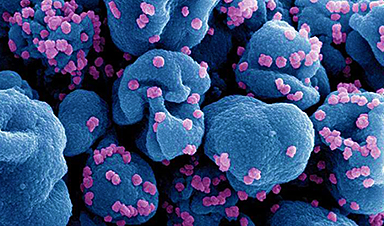
SARS‑CoV‑2, the virus that causes COVID-19, continues to mutate, with some newer strains becoming less responsive to current antiviral treatments like Paxlovid. Now, University of California San Diego scientists and an international team of researchers have identified several promising molecules that could lead to new medications capable of combating these resistant variants.
Instead of looking for antiviral candidates from scratch, the research team screened 141 previously synthesized compounds that had originally been designed between 1997 and 2012 to inhibit a key enzyme called cruzain. Cruzain allows the parasite that causes Chagas disease to thrive in human cells. If left untreated, Chagas disease can lead to heart failure, organ damage, and even death.
The SARS-CoV-2 virus also depends on an enzyme, called Mpro, to replicate in host cells. Because cruzain and Mpro are structurally similar, the researchers reasoned that one or more of the anti-cruzain compounds might block SARS-CoV-2, too.
Five of the 141 molecules stood out for their ability to strongly inhibit Mpro. Two of these, dubbed compounds 1a and 5a, were particularly potent against Mpro. But because these compounds had been stored for over a decade, the researchers synthesized them in the lab to confirm their potency. They also synthesized a mirror-image version of 5a called 5b, because such molecules can often prove more powerful than the original version.
Laboratory testing of 5b demonstrated the strongest inhibition of Mpro, even at extremely low concentrations. 5a and 5b were also effective against the enzymes that allow SARS‑CoV and MERS‑CoV—two viruses closely related to SARS‑CoV‑2—to replicate. Both versions exhibited very high selectivity for the viral enzymes without significantly affecting human enzymes involved in normal cell function, an important consideration when developing drugs with fewer side effects.
In addition, advanced computer simulations revealed that compounds 5a and 5b bind to Mpro firmly enough to stop it from working, but not permanently, a property associated with potent yet safer drugs. The molecules demonstrated low toxicity in mammalian cells, reinforcing their potential as early‑stage drug candidates for further study, according to senior author Conor Caffrey, Ph.D., director of the Center for Discovery and Innovation in Parasitic Diseases at UC San Diego Skaggs School of Pharmacy and Pharmaceutical Sciences.
The findings highlight the value of revisiting older chemical libraries to accelerate the development of next‑generation drugs at a time when the world continues to face evolving coronavirus threats and the potential for future pandemics.
The study is published in the Journal of Enzyme Inhibition and Medicinal Chemistry, and Caffrey is a co-inventor on a patent related to the technology described in this study.
More information: Mateus Sá Magalhães Serafim et al, Discovery of benzyl carbamate inhibitors of coronavirus Mproenzymes from a legacy collection of cysteine protease inhibitors, Journal of Enzyme Inhibition and Medicinal Chemistry (2025). DOI: 10.1080/14756366.2025.2585619
Provided by University of California – San Diego

News
Scientists Discover a Powerful New Weapon Against a Dangerous Gut Infection
The promise of an experimental treatment for C. difficile gut infections lies partly in the bacteria it leaves alive, according to early laboratory and mouse research. Broad-spectrum antibiotics can disrupt the gut’s microbial community, [...]
Your Bones May Hold a Hidden Clue to Blood Cancer Survival
For people with blood cancers called myelodysplastic syndromes, osteoporosis may hold an overlooked clue to survival, a three-year observational study suggests. In blood cancers that develop in the bone marrow, an important clue to [...]

Researchers Discover What Reading for Pleasure May Be Doing to Your Brain
Reading for pleasure may offer surprising benefits for the brain, with research linking the habit to better mental health, stronger cognitive abilities, and a lower risk of dementia. Reading for pleasure may do far [...]
Scientists Discover a Hidden Trigger That Keeps Inflammation Alive
Inflammation persists after proteins detach from immune receptors, revealing a potential target for autoimmune treatments. Since a Nobel Prize-winning discovery in the 1990s identified molecules called Toll-like Receptors as the guardians of the human [...]
A Virus Gives Itself Away the Moment It Attacks
Researchers have found the trigger behind a powerful bacterial defense against viruses. Viruses that prey on bacteria could become an increasingly important tool for treating bacterial infections, particularly as antibiotic resistance makes some infections [...]
Scientists Discover Aspirin May Slash Dementia Risk by 70% – but Only for Certain People
Aspirin was linked to a sharply lower dementia risk in some older adults, and their genes may hold the clue. A Monash University analysis found that older adults with a particular genetic profile had [...]
Inflammation May Awaken Dormant Cancer Cells Years After Treatment
The body’s response to inflammation may disturb cancer cells that have been lying silent for years, giving them an opportunity to grow again. Researchers at the Francis Crick Institute have found that gut inflammation [...]

Where do nanoparticles go once they enter the body?
New international best practice guidance, co-written at ANSTO, sets out how to measure where nanoparticles like titanium dioxide end up in the body and how long they remain. The guidance has been shared by [...]
Long-Acting HIV Shots Could Solve a Major Treatment Challenge for Young People
A major African trial suggests that changing how HIV treatment is delivered could significantly improve viral suppression in adolescents. Young people with HIV were more likely to keep the virus suppressed when they received [...]

WHO Factsheets – The top 10 causes of death
In 2023, the 10 leading causes of death accounted for 33 million deaths, or 54% of the total 61 million deaths worldwide. The top global causes of death, in order of total number of lives lost, [...]
Aging Cells May Be Hiding From the Immune System – Scientists Think They Know How
Your immune system is supposed to clear out damaged cells. Researchers may have found how some of them hide and linger as the body ages. Researchers led by Cedars-Sinai Health Sciences University have identified [...]

Your Voice May Reveal How Fast Your Brain Is Aging
Researchers have developed a machine-learning “speech clock” that estimates age from subtle patterns in how people speak and what they say. It is possible that people’s voices may contain certain signals of aging that [...]
Optogenetics Pioneers Win 2026 Nobel Prize in Physiology or Medicine
The 2026 Nobel Prize in Physiology or Medicine has been awarded to Peter Hegemann, Georg Nagel, and Karl Deisseroth for the development of optogenetics, a revolutionary technology that uses light to control individual neurons [...]
Molecular Manufacturing: The Future of Nanomedicine – From NanoappsMedical Inc.
This book explores the revolutionary potential of atomically precise manufacturing technologies to transform global healthcare, as well as practically every other sector across society. This forward-thinking volume examines how envisaged Factory@Home systems might enable the cost-effective [...]

What is ‘American Covid’ and how bad is it?
Cases of so-called ‘American Covid’ are on the rise in the UK. The strain is officially called XFG, or ‘Stratus’, and is the most common variant in North America, hence the name. It might soon [...]
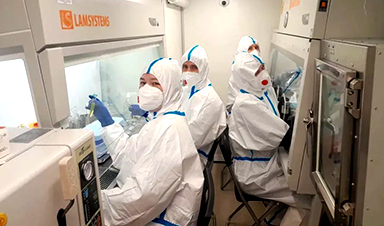
Researcher at Russian plague laboratory dies of ‘unknown’ infection
Russian authorities have imposed "anti-epidemic measures" after a laboratory worker at an institute in Siberia dedicated to studying the plague and other infectious diseases died of a mysterious illness. The researcher, a 28-year-old female [...]