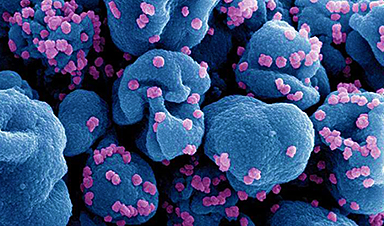
SARS‑CoV‑2, the virus that causes COVID-19, continues to mutate, with some newer strains becoming less responsive to current antiviral treatments like Paxlovid. Now, University of California San Diego scientists and an international team of researchers have identified several promising molecules that could lead to new medications capable of combating these resistant variants.
Instead of looking for antiviral candidates from scratch, the research team screened 141 previously synthesized compounds that had originally been designed between 1997 and 2012 to inhibit a key enzyme called cruzain. Cruzain allows the parasite that causes Chagas disease to thrive in human cells. If left untreated, Chagas disease can lead to heart failure, organ damage, and even death.
The SARS-CoV-2 virus also depends on an enzyme, called Mpro, to replicate in host cells. Because cruzain and Mpro are structurally similar, the researchers reasoned that one or more of the anti-cruzain compounds might block SARS-CoV-2, too.
Five of the 141 molecules stood out for their ability to strongly inhibit Mpro. Two of these, dubbed compounds 1a and 5a, were particularly potent against Mpro. But because these compounds had been stored for over a decade, the researchers synthesized them in the lab to confirm their potency. They also synthesized a mirror-image version of 5a called 5b, because such molecules can often prove more powerful than the original version.
Laboratory testing of 5b demonstrated the strongest inhibition of Mpro, even at extremely low concentrations. 5a and 5b were also effective against the enzymes that allow SARS‑CoV and MERS‑CoV—two viruses closely related to SARS‑CoV‑2—to replicate. Both versions exhibited very high selectivity for the viral enzymes without significantly affecting human enzymes involved in normal cell function, an important consideration when developing drugs with fewer side effects.
In addition, advanced computer simulations revealed that compounds 5a and 5b bind to Mpro firmly enough to stop it from working, but not permanently, a property associated with potent yet safer drugs. The molecules demonstrated low toxicity in mammalian cells, reinforcing their potential as early‑stage drug candidates for further study, according to senior author Conor Caffrey, Ph.D., director of the Center for Discovery and Innovation in Parasitic Diseases at UC San Diego Skaggs School of Pharmacy and Pharmaceutical Sciences.
The findings highlight the value of revisiting older chemical libraries to accelerate the development of next‑generation drugs at a time when the world continues to face evolving coronavirus threats and the potential for future pandemics.
The study is published in the Journal of Enzyme Inhibition and Medicinal Chemistry, and Caffrey is a co-inventor on a patent related to the technology described in this study.
More information: Mateus Sá Magalhães Serafim et al, Discovery of benzyl carbamate inhibitors of coronavirus Mproenzymes from a legacy collection of cysteine protease inhibitors, Journal of Enzyme Inhibition and Medicinal Chemistry (2025). DOI: 10.1080/14756366.2025.2585619
Provided by University of California – San Diego

News
New AI Model Predicts Cancer Spread With Incredible Accuracy
Scientists have developed an AI system that analyzes complex gene-expression signatures to estimate the likelihood that a tumor will spread. Why do some tumors spread throughout the body while others remain confined to their [...]

Scientists Discover DNA “Flips” That Supercharge Evolution
In Lake Malawi, hundreds of species of cichlid fish have evolved with astonishing speed, offering scientists a rare opportunity to study how biodiversity arises. Researchers have identified segments of “flipped” DNA that may allow fish to adapt rapidly [...]
Our books now available worldwide!
Online Sellers other than Amazon, Routledge, and IOPP Indigo Global Health Care Equivalency in the Age of Nanotechnology, Nanomedicine and Artifcial Intelligence Global Health Care Equivalency In The Age Of Nanotechnology, Nanomedicine And Artificial [...]
Scientists Discover Why Some COVID Survivors Still Can’t Taste Food Years Later
A new study provides the first direct biological evidence explaining why some people continue to experience taste loss long after recovering from COVID-19. Researchers have uncovered specific biological changes in taste buds that could help [...]
Catching COVID significantly raises the risk of developing kidney disease, researchers find
Catching Covid significantly raises the risk of developing deadly kidney disease, research has shown. The virus was found to increase the chances that patients will develop the incurable condition by around 50 per cent. [...]
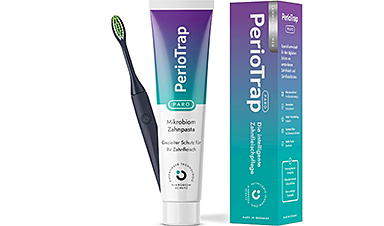
New Toothpaste Stops Gum Disease Without Harming Healthy Bacteria
Researchers have developed a targeted approach to combat periodontitis without disrupting the natural balance of the oral microbiome. The innovation could reshape how gum disease is treated while preserving beneficial bacteria. The human mouth [...]

Plastic Without End: Are We Polluting the Planet for Eternity?
The Kunming Montreal Global Biodiversity Framework calls for the elimination of plastic pollution by 2030. If that goal has been clearly set, why have meaningful measures that create real change still not been implemented? [...]
Scientists Rewire Natural Killer Cells To Attack Cancer Faster and Harder
Researchers tested new CAR designs in NK-92 cells and found the modified cells killed tumor cells more effectively, showing stronger anti-cancer activity. Researchers at the Ribeirão Preto Blood Center and the Center for Cell-Based [...]
New “Cellular” Target Could Transform How We Treat Alzheimer’s Disease
A new study from researchers highlights an unexpected player in Alzheimer’s disease: aging astrocytes. Senescent astrocytes have been identified as a major contributor to Alzheimer’s progression. The cells lose protective functions and fuel inflammation, particularly in [...]

Treating a Common Dental Infection… Effects That Extend Far Beyond the Mouth
Successful root canal treatment may help lower inflammation associated with heart disease and improve blood sugar and cholesterol levels. Treating an infected tooth with a successful root canal procedure may do more than relieve [...]
Microplastics found in prostate tumors in small study
In a new study, researchers found microplastics deep inside prostate cancer tumors, raising more questions about the role the ubiquitous pollutants play in public health. The findings — which come from a small study of 10 [...]

All blue-eyed people have this one thing in common
All Blue-Eyed People Have This One Thing In Common Blue Eyes Aren’t Random—Research Traces Them Back to One Prehistoric Human It sounds like a myth at first — something you’d hear in a folklore [...]
Scientists reveal how exercise protects the brain from Alzheimer’s
Researchers at UC San Francisco have identified a biological process that may explain why exercise sharpens thinking and memory. Their findings suggest that physical activity strengthens the brain's built in defense system, helping protect [...]
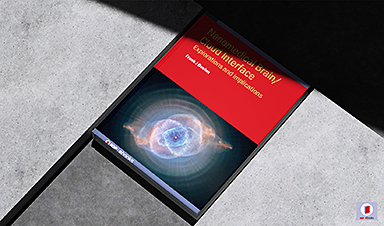
NanoMedical Brain/Cloud Interface – Explorations and Implications. A new book from Frank Boehm
New book from Frank Boehm, NanoappsMedical Inc Founder: This book explores the future hypothetical possibility that the cerebral cortex of the human brain might be seamlessly, safely, and securely connected with the Cloud via [...]
Deadly Pancreatic Cancer Found To “Wire Itself” Into the Body’s Nerves
A newly discovered link between pancreatic cancer and neural signaling reveals a promising drug target that slows tumor growth by blocking glutamate uptake. Pancreatic cancer is among the most deadly cancers, and scientists are [...]
This Simple Brain Exercise May Protect Against Dementia for 20 Years
A long-running study following thousands of older adults suggests that a relatively brief period of targeted brain training may have effects that last decades. Starting in the late 1990s, close to 3,000 older adults [...]