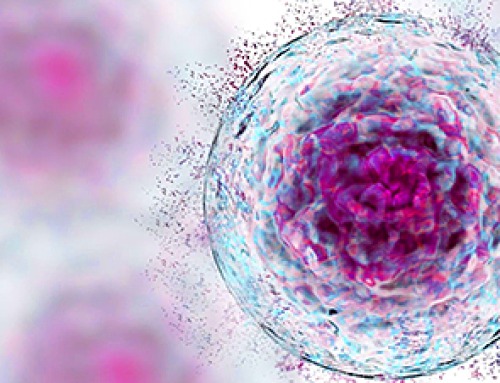
Bacteria that multiply on surfaces are a major headache in health care when they gain a foothold on, for example, implants or in catheters. Researchers at Chalmers University of Technology in Sweden have found a new weapon to fight these hotbeds of bacterial growth—one that does not rely on antibiotics or toxic metals.
The key lies in a completely new application of this year’s Nobel Prize-winning material: metal-organic frameworks. These materials can physically impale, puncture and kill bacteria before they have time to attach to the surface.
Because once bacteria attach to a surface, they start to multiply while encasing themselves in what is known as a biofilm—a viscous, slimy coating that protects the bacteria and makes them difficult to kill. Biofilms thrive particularly well in humid environments and can pose serious challenges in health care.
For example, bacteria can attach to medical devices such as catheters, hip replacements and dental implants, and lead to hospital-acquired infections (HAI), also known as nosocomial infections—a widespread problem worldwide that causes great suffering and high health care costs, and an increased risk of the development of antibiotic resistance.
Biofilms can also form on ship hulls, where they can lead to troublesome algal biofouling and barnacle growth, slowing down the ship while increasing its fuel consumption.
Furthermore, antifouling paints containing toxic biocides are often used on ship hulls to combat this problem, with an associated risk of harmful substances leaching into the marine environment. Biofilms in industrial piping systems are also a widespread problem that can cause corrosion, clog the systems, reduce their efficiency, and increase energy consumption, for example.
New way to use metal-organic frameworks
Researchers at Chalmers University of Technology have now found a new way to attack biofilms by coating surfaces with nanostructures—metal-organic frameworks—that kill bacteria mechanically.
The study, published in the journal Advanced Science, was carried out in a collaboration between two teams of researchers at the University: Professor Ivan Mijakovic’s and Professor Lars Öhrström’s.
“Our study shows that these nanostructures can act like tiny spikes that physically injure the bacteria, quite simply puncturing them so that they die. It’s a completely new way of using such metal-organic frameworks,” says the study’s lead author, Zhejian Cao, Ph.D. in Materials Engineering and researcher at Chalmers.
The coating is constructed in a way that allows it to be applied to a variety of surfaces and integrated into other materials. A major advantage of the method is that it prevents or reduces biofilm formation without the need to use antibiotics or toxic metals.
“It fights a major global problem, as it eliminates the risk that controlling bacteria will lead to antibiotic resistance,” says Cao.
Metal-organic frameworks (MOFs) are a new class of materials with exceptional properties where metal ions are interlinked into three-dimensional structures with large cavities and channels in the material.
The Chalmers researchers explored a completely different function for MOFs in their study.
“There have been previous attempts to use metal-organic frameworks for antibacterial purposes, but in those cases the bacteria were killed by toxic metal ions or antimicrobial agents released by the MOFs. Instead, we have grown one MOF on top of another, which results in the formation of sharp nanotips that can puncture and kill the bacteria when they approach,” says Cao. The nanotips were created by controlling the crystalline growth in the material, and a major challenge was finding the right distance between the nanotips to maximize their effect.
“If the distance between the nanotips is too large, bacteria can slip through and attach to the surface. If the distance is too small, however, the mechanical stress exerted by the nanotips on the bacterial cell capsule may be reduced so that the bacteria survive—the same principle that allows you to lie on a bed of nails without getting hurt,” says Cao.
Possible to achieve large-scale production
Lars Öhrström is a co-author of the study and has worked with metal-organic frameworks for 30 years. He emphasizes that there are numerous practical advantages to using MOF coatings for controlling bacteria on surfaces compared to other solutions.
“These coatings can be produced at much lower temperatures than, for example, the graphene arrays previously developed at Chalmers. This facilitates large-scale production and makes it possible to apply the coatings to temperature-sensitive materials such as the plastics used in medical implants. In addition, the organic polymers in metal-organic frameworks can be created from recycled plastics, having the potential to contribute to a circular economy,” says Lars Öhrström.
The study was conducted in Professor Lars Öhrström’s research group at the Department of Chemistry and Chemical Engineering, and in Professor Ivan Mijakovic’s group at the Department of Life Sciences.
More information: Zhejian Cao et al, Mechano‐Bactericidal Surfaces Achieved by Epitaxial Growth of Metal–Organic Frameworks, Advanced Science (2025). DOI: 10.1002/advs.202505976
Journal information: Advanced Science

News

WHO Factsheets – The top 10 causes of death
In 2023, the 10 leading causes of death accounted for 33 million deaths, or 54% of the total 61 million deaths worldwide. The top global causes of death, in order of total number of lives lost, [...]
Aging Cells May Be Hiding From the Immune System – Scientists Think They Know How
Your immune system is supposed to clear out damaged cells. Researchers may have found how some of them hide and linger as the body ages. Researchers led by Cedars-Sinai Health Sciences University have identified [...]

Your Voice May Reveal How Fast Your Brain Is Aging
Researchers have developed a machine-learning “speech clock” that estimates age from subtle patterns in how people speak and what they say. It is possible that people’s voices may contain certain signals of aging that [...]

Optogenetics Pioneers Win 2026 Nobel Prize in Physiology or Medicine
The 2026 Nobel Prize in Physiology or Medicine has been awarded to Peter Hegemann, Georg Nagel, and Karl Deisseroth for the development of optogenetics, a revolutionary technology that uses light to control individual neurons [...]

Molecular Manufacturing: The Future of Nanomedicine – From NanoappsMedical Inc.
This book explores the revolutionary potential of atomically precise manufacturing technologies to transform global healthcare, as well as practically every other sector across society. This forward-thinking volume examines how envisaged Factory@Home systems might enable the cost-effective [...]

What is ‘American Covid’ and how bad is it?
Cases of so-called ‘American Covid’ are on the rise in the UK. The strain is officially called XFG, or ‘Stratus’, and is the most common variant in North America, hence the name. It might soon [...]
Researcher at Russian plague laboratory dies of ‘unknown’ infection
Russian authorities have imposed "anti-epidemic measures" after a laboratory worker at an institute in Siberia dedicated to studying the plague and other infectious diseases died of a mysterious illness. The researcher, a 28-year-old female [...]

GHCE Concept
From the preface of the book Global Health Care Equivalency in the Age of Nanotechnology, Nanomedicine and Artificial Intelligence, Edited by Frank Boehm: Since the publication of my first book (Nanomedical Device and Systems [...]

A Surprising Brain Signal Could Explain Why Eating Less Protein Extends Lifespan
A new paper suggests that limiting protein intake triggers a coordinated response throughout the body that may help explain how protein restriction affects healthy aging. Animals respond to protein restriction, or reduced protein in [...]

Back and shoulder surgery is often worse than useless
Millions of operations should be scrapped SIX IN TEN Britons have surgery at some point. So do lots of Americans, at a cost of perhaps $500bn a year, a third of all spending on [...]

Cocaine plays with mind, hijacks brain circuit, drives increasingly rigid and repetitive behavior
Researchers have found that cocaine hijacks brain circuit, which to drive increasingly rigid and repetitive behavior. The brain circuit that normally participates in selecting natural mouth and face movements, but which becomes disproportionately engaged [...]
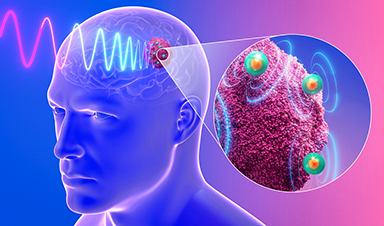
Injectable nanodevices could provide effective treatment for drug-resistant glioblastoma
The brain cancer glioblastoma is one of the most aggressive and treatment-resistant cancers known to medicine, carrying a median survival of just 12-15 months, even with the best available care. Now, researchers at the [...]
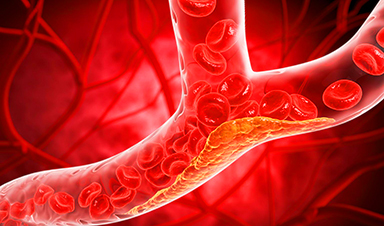
New Treatment Cuts “Bad” Cholesterol in Half for a Full Year
A single infusion of an experimental CRISPR-Cas9 therapy was reported to safely lower LDL cholesterol by 52.5% and triglycerides by 47.8%, as measured 12 months after treatment. What if one infusion could keep cholesterol [...]
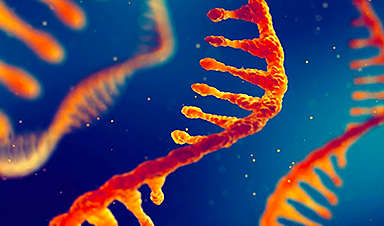
Too Much RNA Can Drain a Cell’s Energy, Scientists Discover
A virus may cripple a cell’s power supply simply by producing too much of a molecule the cell needs to survive. New research from the Texas A&M College of Veterinary Medicine and Biomedical Sciences [...]

West African scientists warn of weakening health systems and urge stronger outbreak detection
LOME, Togo (AP) — West African laboratory scientists called on governments Friday to strengthen capacity to detect disease outbreaks to avoid another major outbreak, saying health systems across the region are becoming weaker. Participants [...]

A Little-Known Protein Could Point to a New Way To Treat Alzheimer’s
A study suggests that increasing SORLA protein levels could help treat Alzheimer’s disease and other disorders involving tau protein. Increasing SORLA, a protein with a protective role in the brain, helped mice withstand damage [...]