Long COVID is more than just lingering symptoms—it may have a hidden biological basis that standard medical tests fail to detect.
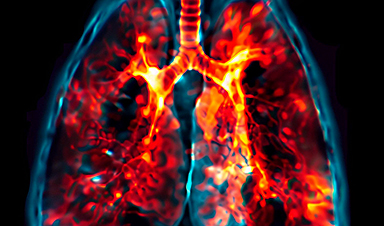
A groundbreaking study using advanced MRI technology has uncovered significant lung abnormalities in children and adolescents suffering from long COVID, particularly in blood flow and air movement. These findings help explain persistent symptoms like chronic fatigue and shortness of breath, offering a new path for diagnosing and managing this condition.
MRI Reveals Lung Abnormalities in Children with Long COVID
A new study published today (February 25) in Radiology, the journal of the Radiological Society of North America (RSNA), reveals that an advanced type of MRI has detected significant lung abnormalities in children and adolescents with long COVID.
Long COVID, or post-COVID-19 condition, occurs when symptoms persist for more than 12 weeks after a COVID-19 infection. While children and teens generally experience a milder form of the condition, symptoms like chronic fatigue, headaches, and difficulty concentrating can interfere with school and social activities.
A Need for Better Testing
In adults, chest CT scans are commonly used to assess lung function in long COVID cases. However, this method is not usually recommended for children due to radiation exposure and the potential need for contrast agents.
Instead, young patients suspected of having long COVID are typically evaluated through pulmonary function tests, echocardiography, and medical history reviews. Unfortunately, these standard tests often show normal lung and heart function, even in children experiencing ongoing symptoms.
"Parents should understand that their children's persistent symptoms after COVID-19 may have a measurable physiological basis, even when standard medical tests appear normal," said lead study author Gesa H. Pöhler, M.D., a senior physician in the Department of Diagnostic and Interventional Radiology at Hannover Medical School in Germany.
The researchers employed phase-resolved functional lung (PREFUL) MRI. This advanced MRI technology can analyze lung ventilation (air movement in and out of the lungs) and perfusion (blood flow through the lungs). PREFUL MRI doesn't require the use of radiation or intravenous contrast agents and can be done while the patient breathes freely, making it a suitable procedure for children.
First Evidence of Lung Perfusion Abnormalities
"Our research provides the first comprehensive evidence of measurable regional lung perfusion abnormalities in pediatric post-COVID-19 condition using radiation-free, contrast-free lung imaging," Dr. Pöhler said.
For the prospective study, conducted between April 2022 and 2023, the researchers enrolled 54 patients ranging in age from 11 to 17 years. Half of the patients were diagnosed with long COVID, and the other half were healthy controls. A self-reported assessment called the bell score was used to assess symptom severity in patients with long COVID.

Blood Flow Reduction and Fatigue Connection
Compared to healthy controls, children and adolescents with long COVID had significantly reduced blood flow in the lungs. A reduction in blood flow patterns in organs or other areas of the body can result in a lack of sufficient oxygen and nutrients.
The most prevalent symptom of fatigue affected all but one patient with long COVID.
"Importantly, the severity of fatigue symptoms correlated with these blood flow changes, suggesting a possible biological basis for the patients' ongoing symptoms," Dr. Pöhler said.
In addition to poor blood flow, a subgroup of long COVID patients with cardiopulmonary symptoms, such as shortness of breath, also showed a reduction of air movement and reach in the lungs.

Future Implications for Long COVID Monitoring
The researchers suggest that continuous monitoring of lung abnormalities in children with long COVID at various stages of the condition could help guide therapeutic interventions and monitoring strategies.
"Quantitative lung MRI establishes a potential imaging biomarker profiling and helps to enable disease severity follow-up for this complex condition in the future," Dr. Pöhler said.
Reference: "Phase-resolved Functional Lung MRI Reveals Distinct Lung Perfusion Phenotype in Children and Adolescents with Post–COVID-19 Condition" by Gesa H. Pöhler, Andreas Voskrebenzev, Marc-Luca Heinze, Valentina Skeries, Filip Klimeš, Julian Glandorf, Jan Eckstein, Nigar Babazade, Marius Wernz, Alexander Pfeil, Gesine Hansen, Frank K. Wacker, Jens Vogel-Claussen, Martin Wetzke and Diane Miriam Renz, 25 February 2025, Radiology.
DOI: 10.1148/radiol.241596
Collaborating with Dr. Pöhler were Andreas Voskrebenzev, Ph.D., Marc-Luca Heinze, Valentina Skeries, M.D., Filip Klimeš, Ph.D., Julian Glandorf, M.D., Jan Eckstein, M.D., Nigar Babazade, Marius Wernz, B.S., Alexander Pfeil, M.D., Gesine Hansen, M.D., Frank K. Wacker, M.D., Jens Vogel-Claussen, M.D., Martin Wetzke, M.D., and Diane Miriam Renz, M.D.

News

Researchers Have Discovered a New Way To Reduce Chronic Nerve Pain
A cancer-linked protein called BRAF may help drive chronic nerve pain, and existing cancer drugs targeting it reduced pain sensitivity in preclinical models. Chronic nerve pain can persist long after an injury and often [...]

Our books now available worldwide!
Online Sellers other than Amazon, Routledge, and IOPP Indigo Global Health Care Equivalency in the Age of Nanotechnology, Nanomedicine and Artifcial Intelligence Global Health Care Equivalency In The Age Of Nanotechnology, Nanomedicine And Artificial [...]

Quantum-Enabled Regenerative Health: Reimagining Wellness, Precision Health and Longevity Medicine
Introduction Healthcare is approaching a frontier where the quantum portfolio could influence not only how disease is diagnosed and treated, but how health itself is measured, modeled, predicted and preserved. Quantum computing, quantum simulation, [...]

FDA Clears First-of-Its-Kind Nonmedication Treatment for PTSD
The FDA has cleared a system that uses brain activity data to personalize magnetic stimulation for PTSD, adding a new nonmedication treatment option. Every day in the United States, approximately 17.5 veterans die by suicide, [...]
FDA approves breakthrough drug to treat advanced pancreatic cancer
The Food and Drug Administration (FDA) approved on Wednesday a drug that could extend the survival of those with metastatic pancreatic cancer. The drug, called daraxonrasib, will be sold under the brand name Rasonque [...]

AI Decodes a Hidden DNA Signal Linked to Disease-Causing Mutations
Machine learning identifies the likely “initiator” and enables new predictions about DNA mutations that can cause disease. Every human cell depends on tens of thousands of genes being switched on at the right time [...]

Pope Leo Urges Global Response to Congo’s Deadliest Ebola Outbreak
Pope Leo called for international action to address the Ebola outbreak in the Democratic Republic of Congo. The epidemic has claimed over 2,500 lives and is the nation's largest recorded outbreak. The Pope emphasized [...]

Is there a summer COVID-19 surge this year? Yep, it’s ramping up again
Hantavirus. Ebola. West Nile. Measles. And, of course, cyclospora — that stomach parasite making people miserable across the country. Americans have plenty to worry about this summer. But remember COVID-19? It may not be [...]

Natural Compound in Broccoli Could Help Treat a Rare, Incurable Neurological Disease
Swinburne researchers have discovered how broccoli could help treat an extremely rare and incurable disease that affects only about 200 Australians. A naturally occurring compound in broccoli is being investigated as a possible treatment [...]

Antibody recycling, FcRn and the next generation of biologics
FcRn plays a central role in regulating the half-life of IgG antibodies and albumin, making it a critical target in both antibody engineering and autoimmune disease therapy. This article explores the biology of FcRn, [...]
Ebola kills 2,300 in three months with no vaccine available for Congo’s deadliest ever outbreak
It’s Congo’s 17th outbreak, with a toll that has eclipsed that of the country’s 2018-2020 outbreak when 2,299 deaths out of 3,481 cases were recorded. The latest data shows 101 new cases and 33 [...]

Beyond an Agency: How AI, Creativity and Commercialization Are Converging Into a New Growth Model
At a moment when AI is forcing a fundamental rethink of how work gets done, the life sciences industry is grappling with a deeper question: what role should human creativity play in an increasingly [...]

New $60 Blood Test Detects Lung Cancer Without Costly DNA Sequencing
A simple blood test that detects chemical changes in DNA identified more than 90% of stage 2-4 lung cancers in an early study, without relying on costly DNA sequencing. Researchers at Tel Aviv University and collaborating [...]

Reducing drug development failures with human-relevant models and AI
Professor Joseph C. Wu of Stanford University explains how stem cells, human-relevant models and AI are helping researchers predict which drug candidates are most likely to succeed before clinical trials. Researchers now have access [...]
Half of vaccines are binned – ‘fridge-free’ versions could change that
Vaccines that do not need to be kept cool in a fridge have been successfully trialed in patients for the first time, say UK scientists. Currently, most vaccines need to be refrigerated or frozen [...]

Mushroom Mystery: The Fungus That Makes People See Tiny Humans
A mushroom sold in markets and served in restaurants in Southwest China has an unusual warning attached to it: cook it thoroughly, or you may start seeing tiny people. For decades, people have reported [...]