With drug pricing pressure building from the U.S., a healthcare-focused consortium of five European countries is calling for a “unified approach” to strengthen Europe’s pharmaceutical framework and access to innovative medicines.
Belgium, the Netherlands, Luxembourg, Austria and Ireland together make up the Beneluxa Initiative, a joint healthcare partnership that aims to make new, innovative medicines more affordable and strives for “more balance in the pharmaceutical market.” In a June 10 statement, the group stressed the need to address shared healthcare challenges through a “European framework rather than through uncoordinated individual national responses, while still respecting national competences.”
“In turbulent geopolitical times, we believe that the current developments in the pharmaceutical system require unity and coordination to safeguard long-term affordable pharmaceutical care for European patients, while providing a strong and targeted approach to innovation in Europe,” the Beneluxa Initiative wrote.
The call from the group comes as the U.S. government applies pressure on other countries to follow the lead of the U.K. and its U.S.-U.K. pharmaceutical partnership, according to Politico.
The publication reported on Tuesday that a full-scale initiative is underway to sway other European countries to strike drug pricing deals with the U.S., with a close eye on Germany, especially. Three people familiar with the talks told Politico that U.S. government representatives are holding “secret talks” with officials in Berlin on drug prices this week.
Meanwhile, Germany has caught the ire of the pharma industry for its recently proposed healthcare reform plan, which looks to save 16.3 billion euros ($19.08 billion) in 2027, with cuts in drug spending specifically meant to generate 1.9 billion euros ($2.2 billion) in savings next year. In response, Eli Lilly is cutting its planned investment of 2.3 billion euros ($2.7 billion) in half, while German drugmaker Boehringer Ingelheim is slashing its domestic spending by 900 million euros ($1 billion), German newspaper Handelsblatt first reported last week.
Pfizer’s CEO, Albert Bourla, who had previously told Germany’s Chancellor Friedrich Merz that the company was “reviewing our external engagements as well as the timing, scope, and future prioritization of certain planned investments in Germany” in a letter, has now pulled out of an “Invest in Germany Summit” planned for this fall, Handelsblatt reported on June 10.
The situation in Germany echoes a similar storyline from the U.K. last year, when a handful of major drugmakers reduced their planned expansions in the country.
Earlier this year, the U.K. struck a deal with the U.S., which will free it from tariffs on pharmaceutical products exported to America in exchange for the U.K. adjusting the thresholds under which it assesses the value of new drugs. This was received by the industry as an “encouraging move,” Lilly CEO David Ricks said at the time.
European ministers are set to discuss “drug pricing pressures” in Luxembourg later this month, according to Politico, with the agenda described as “strengthening Europe’s pharmaceutical resilience and autonomy.”
The Beneluxa Initiative, for its part, backs increased “collaborative efforts across the Union,” which can be undertaken to ensure that “our expenditure on medicines remains sustainable to protect access for patients now and into the future.”
“This approach endorses Europe as an attractive location that guarantees legal stability and safeguards scientific advancement,” the group said in its statement. “This is a goal we share.”


News – Curated by Amanda Scott, Alias Group Creative
Follow her on Bluesky

After only a short training, people in a coma managed to send targeted signals
Researchers have succeeded in communicating with brain-injured patients who are unconscious. They see enormous potential in this for future treatments. Patients who lie motionless in bed after a severe brain injury and do not [...]
MIT Scientists Reprogram Immune Cells Inside the Body To Destroy Cancer
Natural killer cells reprogrammed inside mice eliminated lymphoma tumors and helped damaged livers heal, though whether this approach could help people with cancer or autoimmune disease remains unknown. To make a cancer treatment from [...]

Melanoma mRNA Vaccine Shows Promise in Preventing Disease Recurrence
Key takeaways: Phase 3 trial finds personalized intismeran plus pembrolizumab may better prevent high-risk melanoma recurrence after surgery The trial enrolled 1,137 patients and builds on phase 2 results showing about half the recurrence [...]

Scientists Discover a Powerful New Weapon Against a Dangerous Gut Infection
The promise of an experimental treatment for C. difficile gut infections lies partly in the bacteria it leaves alive, according to early laboratory and mouse research. Broad-spectrum antibiotics can disrupt the gut’s microbial community, [...]
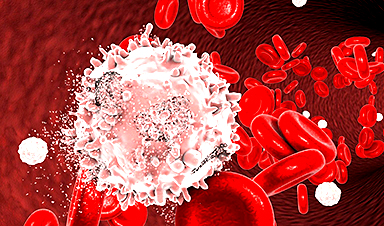
Your Bones May Hold a Hidden Clue to Blood Cancer Survival
For people with blood cancers called myelodysplastic syndromes, osteoporosis may hold an overlooked clue to survival, a three-year observational study suggests. In blood cancers that develop in the bone marrow, an important clue to [...]

Researchers Discover What Reading for Pleasure May Be Doing to Your Brain
Reading for pleasure may offer surprising benefits for the brain, with research linking the habit to better mental health, stronger cognitive abilities, and a lower risk of dementia. Reading for pleasure may do far [...]
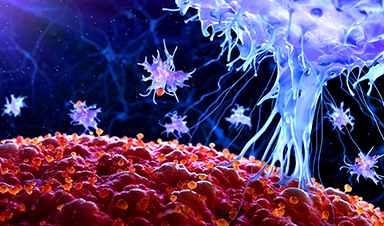
Scientists Discover a Hidden Trigger That Keeps Inflammation Alive
Inflammation persists after proteins detach from immune receptors, revealing a potential target for autoimmune treatments. Since a Nobel Prize-winning discovery in the 1990s identified molecules called Toll-like Receptors as the guardians of the human [...]

A Virus Gives Itself Away the Moment It Attacks
Researchers have found the trigger behind a powerful bacterial defense against viruses. Viruses that prey on bacteria could become an increasingly important tool for treating bacterial infections, particularly as antibiotic resistance makes some infections [...]
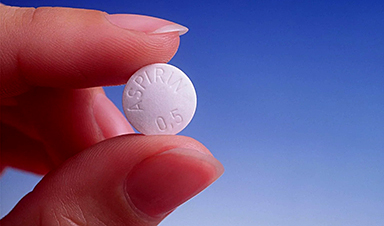
Scientists Discover Aspirin May Slash Dementia Risk by 70% – but Only for Certain People
Aspirin was linked to a sharply lower dementia risk in some older adults, and their genes may hold the clue. A Monash University analysis found that older adults with a particular genetic profile had [...]
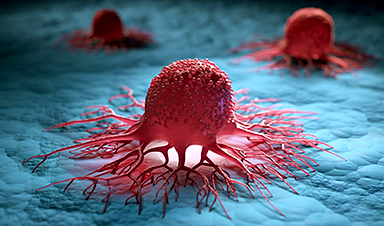
Inflammation May Awaken Dormant Cancer Cells Years After Treatment
The body’s response to inflammation may disturb cancer cells that have been lying silent for years, giving them an opportunity to grow again. Researchers at the Francis Crick Institute have found that gut inflammation [...]

Where do nanoparticles go once they enter the body?
New international best practice guidance, co-written at ANSTO, sets out how to measure where nanoparticles like titanium dioxide end up in the body and how long they remain. The guidance has been shared by [...]
Long-Acting HIV Shots Could Solve a Major Treatment Challenge for Young People
A major African trial suggests that changing how HIV treatment is delivered could significantly improve viral suppression in adolescents. Young people with HIV were more likely to keep the virus suppressed when they received [...]

WHO Factsheets – The top 10 causes of death
In 2023, the 10 leading causes of death accounted for 33 million deaths, or 54% of the total 61 million deaths worldwide. The top global causes of death, in order of total number of lives lost, [...]

Aging Cells May Be Hiding From the Immune System – Scientists Think They Know How
Your immune system is supposed to clear out damaged cells. Researchers may have found how some of them hide and linger as the body ages. Researchers led by Cedars-Sinai Health Sciences University have identified [...]

Your Voice May Reveal How Fast Your Brain Is Aging
Researchers have developed a machine-learning “speech clock” that estimates age from subtle patterns in how people speak and what they say. It is possible that people’s voices may contain certain signals of aging that [...]

Optogenetics Pioneers Win 2026 Nobel Prize in Physiology or Medicine
The 2026 Nobel Prize in Physiology or Medicine has been awarded to Peter Hegemann, Georg Nagel, and Karl Deisseroth for the development of optogenetics, a revolutionary technology that uses light to control individual neurons [...]