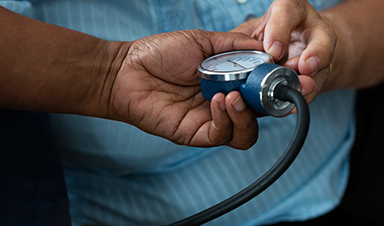
A new method that improves the accuracy of interpreting blood pressure measurements taken at the ankle could be vital for individuals who are unable to have their blood pressure measured on the arm.
A newly developed approach could significantly improve how blood pressure readings taken at the ankle are interpreted, offering a vital solution for people who are unable to have their blood pressure measured on the arm.
Researchers at the University of Exeter Medical School have created a personalized predictive model designed to estimate arm blood pressure more accurately using ankle readings. The study, published in BMJ Open and funded by the National Institute for Health and Care Research (NIHR), analyzed data from more than 33,000 individuals worldwide. The team has also launched an online calculator to help both healthcare professionals and patients make sense of ankle readings with greater precision.
High blood pressure affects more than one billion people across the globe and is a leading contributor to heart disease, stroke, and kidney problems. Because of these risks, ensuring that blood pressure is measured and interpreted correctly is crucial. In most cases, the arm is used for these measurements, but for some people—such as those with disabilities, missing limbs, or movement difficulties after a stroke—this isn't possible.
In such situations, measurements can be taken at the ankle. However, ankle readings tend to be higher than those from the arm, and since current treatment guidelines are based solely on arm measurements, this difference can make accurate diagnosis difficult and increase the likelihood of errors.
The New Predictive Model and Its Impact
Professor Chris Clark from the University of Exeter Medical School led the study and said: "Our new method will give a more accurate blood pressure reading for around two percent more people. This doesn't sound like a big number, but remember, around a third of adults have high blood pressure and once you get into your 60s, it's more than half of the adults. The NHS Health Check Programme diagnoses 38,000 new cases annually in England alone, so two percent equates to 750 fewer potential misdiagnoses per year in England, and tens of thousands globally."
Researchers used statistical modeling on arm and ankle blood pressure readings from 33,710 people (mean age 58 years, 45 percent female) across the world to help describe the relationship between arm and ankle blood pressures, predict arm blood pressure using ankle blood pressure readings, and predict important health outcomes (such as risk of heart attacks) from ankle blood pressure readings.
Addressing Health Inequalities
This research could help address a health inequality by providing accurate and personalized blood pressure measurements for people who previously could not have their blood pressure measured accurately from their arm. It's estimated there are up to 10,000 adults currently living in the UK with upper limb loss, while 75 percent of the country's 1.3 million stroke survivors have upper limb dysfunction, sometimes making it difficult to measure blood pressure from their arm.
The study was supported by the Stroke Association and Thalidomide Trust.
Juliet Bouverie OBE, CEO of the Stroke Association, said: "Someone in the UK has a stroke every five minutes, with high blood pressure accounting for around half of those. Around two-thirds of stroke survivors will leave the hospital with some form of disability, including paralysis in an arm, which can prevent getting accurate blood pressure readings from the affected limb. Many stroke survivors feel anxious about having another stroke, so receiving an accurate blood pressure reading in the ankle will not only provide benefits in the primary prevention of stroke, but importantly in easing the minds of stroke survivors who are already dealing with the devastating impact of stroke."
Professor Kevin Munro, Director of NIHR's Research for Patient Benefit Programme, said: "This research has identified an ingenious solution to an important problem – finding a way to measure blood pressure for people who cannot have it monitored via the upper arm. Keeping track of blood pressure is a vital tool to help keep people healthy, and this NIHR-funded research will help to spot high blood pressure and treat it even more widely."
The online calculator is available at: ABLE-BP Tool
"Why should I not be able to have my blood pressure taken?"
TV presenter Sue Kent, 62, from Swansea, has an upper limb disability caused by the drug Thalidomide, which was prescribed to her mother during pregnancy. She has eight-inch arms, which aren't big enough for blood pressure to be taken.
Sue said: "I rarely had my blood pressure taken when I was younger, but when I did, I used to have a really big cuff they would put around my thigh and take the blood pressure there. Whether it was accurate or not, nobody worried, but I didn't seem to have blood pressure problems.
"But then I had a cataract operation, and somebody took my blood pressure from my ankle, and it was very high. They did it three times and every time it was high, and it made me very worried. They (medical staff) weren't worried and carried on and did the cataract operation, but I was quite distressed."
Sue was diagnosed with Meniere's disease in 2017, which is a rare inner ear condition which has left her partially deaf.
She said: "I was worried I was going to have a stroke because Meniere's can be an indicator the blood flow isn't going to the brain. I knew I couldn't have my blood pressure taken accurately, so I went privately to have dye injected to check everything was OK.
"As you get older, blood pressure is an important indicator of so many things, including things that could be seriously wrong. Prodding about in the dark and guessing isn't really a safe thing to do. You need the right information about your blood pressure."
Sue hopes this new method could potentially help her and thousands of others like her have something most of us take for granted – an accurate blood pressure reading.
She said: "Why should I not be able to have my blood pressure taken when it's available to most people and is a relatively simple thing to do?
"When you're disabled, you're more likely to die younger for a variety of reasons, so this resource tips the scales a bit more in our favor. This could put us on a level playing field with everybody else when it comes to blood pressure. It means reassurance and maybe an early diagnosis if something is wrong."
Reference: "Arm Based on LEg blood pressures (ABLE-BP): can systolic ankle blood pressure measurements predict systolic arm blood pressure? An individual participant data meta-analysis from the INTERPRESS-IPD Collaboration" by Sinead T J McDonagh, Fiona C Warren, James Peter Sheppard, Kate Boddy, Leon Farmer, Helen Shore, Phil Williams, Philip S Lewis, A Jayne Fordham, Una Martin, Victor Aboyans and Christopher Elles Clark, 1 June 2025, BMJ Open.
DOI: 10.1136/bmjopen-2024-094389

News

After only a short training, people in a coma managed to send targeted signals
Researchers have succeeded in communicating with brain-injured patients who are unconscious. They see enormous potential in this for future treatments. Patients who lie motionless in bed after a severe brain injury and do not [...]
MIT Scientists Reprogram Immune Cells Inside the Body To Destroy Cancer
Natural killer cells reprogrammed inside mice eliminated lymphoma tumors and helped damaged livers heal, though whether this approach could help people with cancer or autoimmune disease remains unknown. To make a cancer treatment from [...]
Melanoma mRNA Vaccine Shows Promise in Preventing Disease Recurrence
Key takeaways: Phase 3 trial finds personalized intismeran plus pembrolizumab may better prevent high-risk melanoma recurrence after surgery The trial enrolled 1,137 patients and builds on phase 2 results showing about half the recurrence [...]

Scientists Discover a Powerful New Weapon Against a Dangerous Gut Infection
The promise of an experimental treatment for C. difficile gut infections lies partly in the bacteria it leaves alive, according to early laboratory and mouse research. Broad-spectrum antibiotics can disrupt the gut’s microbial community, [...]
Your Bones May Hold a Hidden Clue to Blood Cancer Survival
For people with blood cancers called myelodysplastic syndromes, osteoporosis may hold an overlooked clue to survival, a three-year observational study suggests. In blood cancers that develop in the bone marrow, an important clue to [...]

Researchers Discover What Reading for Pleasure May Be Doing to Your Brain
Reading for pleasure may offer surprising benefits for the brain, with research linking the habit to better mental health, stronger cognitive abilities, and a lower risk of dementia. Reading for pleasure may do far [...]

Scientists Discover a Hidden Trigger That Keeps Inflammation Alive
Inflammation persists after proteins detach from immune receptors, revealing a potential target for autoimmune treatments. Since a Nobel Prize-winning discovery in the 1990s identified molecules called Toll-like Receptors as the guardians of the human [...]

A Virus Gives Itself Away the Moment It Attacks
Researchers have found the trigger behind a powerful bacterial defense against viruses. Viruses that prey on bacteria could become an increasingly important tool for treating bacterial infections, particularly as antibiotic resistance makes some infections [...]
Scientists Discover Aspirin May Slash Dementia Risk by 70% – but Only for Certain People
Aspirin was linked to a sharply lower dementia risk in some older adults, and their genes may hold the clue. A Monash University analysis found that older adults with a particular genetic profile had [...]

Inflammation May Awaken Dormant Cancer Cells Years After Treatment
The body’s response to inflammation may disturb cancer cells that have been lying silent for years, giving them an opportunity to grow again. Researchers at the Francis Crick Institute have found that gut inflammation [...]
Where do nanoparticles go once they enter the body?
New international best practice guidance, co-written at ANSTO, sets out how to measure where nanoparticles like titanium dioxide end up in the body and how long they remain. The guidance has been shared by [...]

Long-Acting HIV Shots Could Solve a Major Treatment Challenge for Young People
A major African trial suggests that changing how HIV treatment is delivered could significantly improve viral suppression in adolescents. Young people with HIV were more likely to keep the virus suppressed when they received [...]

WHO Factsheets – The top 10 causes of death
In 2023, the 10 leading causes of death accounted for 33 million deaths, or 54% of the total 61 million deaths worldwide. The top global causes of death, in order of total number of lives lost, [...]
Aging Cells May Be Hiding From the Immune System – Scientists Think They Know How
Your immune system is supposed to clear out damaged cells. Researchers may have found how some of them hide and linger as the body ages. Researchers led by Cedars-Sinai Health Sciences University have identified [...]

Your Voice May Reveal How Fast Your Brain Is Aging
Researchers have developed a machine-learning “speech clock” that estimates age from subtle patterns in how people speak and what they say. It is possible that people’s voices may contain certain signals of aging that [...]
Optogenetics Pioneers Win 2026 Nobel Prize in Physiology or Medicine
The 2026 Nobel Prize in Physiology or Medicine has been awarded to Peter Hegemann, Georg Nagel, and Karl Deisseroth for the development of optogenetics, a revolutionary technology that uses light to control individual neurons [...]