Harnessing generative AI, MIT scientists have created groundbreaking antibiotics with unique membrane-targeting mechanisms, offering fresh hope against two of the world’s most formidable drug-resistant pathogens.
With the help of artificial intelligence, MIT researchers have designed entirely new antibiotics capable of tackling two of today’s toughest bacterial threats: drug-resistant Neisseria gonorrhoeae and multi-drug-resistant Staphylococcus aureus (MRSA).
Using generative AI, the team explored an enormous chemical universe, designing more than 36 million hypothetical compounds and screening them computationally for antimicrobial potential. The most promising candidates turned out to be structurally unlike any existing antibiotic and appear to attack bacteria by novel mechanisms, chiefly by disrupting their protective cell membranes.
“We’re excited about the new possibilities that this project opens up for antibiotics development,” says James Collins, senior author of the study and the Termeer Professor of Medical Engineering and Science at MIT. “Our work shows the power of AI from a drug design standpoint, and enables us to exploit much larger chemical spaces that were previously inaccessible.” The results are published in the journal Cell, with MIT postdoc Aarti Krishnan, former postdoc Melis Anahtar ’08, and Jacqueline Valeri, PhD ’23, as lead authors.
Expanding the search
For decades, new antibiotics have largely been minor variations on old ones. In the past 45 years, only a few dozen have been approved by the U.S. Food and Drug Administration, and resistance to many of them is rising fast. Globally, drug-resistant bacterial infections are estimated to contribute to nearly 5 million deaths annually.
Collins and his colleagues at MIT’s Antibiotics-AI Project have already made headlines by using AI to screen existing chemical libraries, discovering candidates such as halicin and abaucin. This time, they pushed further, tasking AI with inventing entirely new molecules that don’t yet exist in any database.
The researchers used two strategies. In one, they began with a known chemical fragment that had antimicrobial activity and asked their algorithms to build full molecules around it. In the other, they let the AI generate plausible molecules from scratch, guided only by chemical rules rather than any specific starting point.
Targeting N. gonorrhoeae
The fragment-based search began with a massive library of about 45 million possible chemical fragments, made from combinations of carbon, nitrogen, oxygen, fluorine, chlorine, and sulfur, plus options from Enamine’s REadily AccessibLe (REAL) space. A machine-learning model previously trained to spot antibacterial activity against N. gonorrhoeae narrowed this pool to 4 million. Filtering out toxic, unstable, or already-known antibiotic-like structures left about 1 million candidates.
Further screening led to a fragment called F1, which the team fed into two generative AI systems. One, chemically reasonable mutations (CReM), tweak a starting molecule by adding, swapping, or removing atoms and groups. The other, a fragment-based variational autoencoder (F-VAE), builds complete molecules by learning how fragments are typically combined, based on over 1 million examples from the ChEMBL database.
These algorithms produced about 7 million F1-containing candidates, which were whittled down to 1,000 and then to 80, which were considered suitable for synthesis. Only two could be made by chemical vendors, and one, dubbed NG1, proved highly effective against N. gonorrhoeae in both lab tests and a mouse model of drug-resistant gonorrhea. NG1 works by interfering with LptA, a protein critical for constructing the bacterium’s outer membrane, fatally compromising the cell.
Designing without constraints
The second approach targeted S. aureus, this time with no predefined fragment. Again, using CReM and a variational autoencoder, the AI generated over 29 million chemically plausible molecules. After applying the same filters, about 90 remained. Twenty-two of these were synthesized, and six showed potent activity against multidrug-resistant S. aureus in lab tests. The most promising, DN1, cleared MRSA skin infections in mice. Like NG1, DN1 appears to damage bacterial membranes, but through broader mechanisms not tied to a single protein.
Next steps
Phare Bio, a nonprofit partner in the Antibiotics-AI Project, is now refining NG1 and DN1 to prepare them for more advanced testing. “We’re exploring analogs and advancing the best candidates preclinically, through medicinal chemistry work,” Collins says. “We’re also excited about applying these platforms toward other bacterial pathogens, notably Mycobacterium tuberculosis and Pseudomonas aeruginosa.”
For a field where resistance often outpaces discovery, the ability to rapidly explore vast, uncharted chemical space offers a fresh advantage. By combining computational muscle with medicinal chemistry, the MIT team hopes to stay ahead in the race against antibiotic resistance and perhaps rewrite the rulebook for how new drugs are found.
- Krishnan, A., Anahtar, M. N., Valeri, J. A., Jin, W., Donghia, N. M., Sieben, L., Luttens, A., Zhang, Y., Modaresi, S. M., Hennes, A., Fromer, J., Bandyopadhyay, P., Chen, J. C., Rehman, D., Desai, R., Edwards, P., Lach, R. S., Aschtgen, M., Gaborieau, M., . . . Collins, J. J. (2025). A generative deep learning approach to de novo antibiotic design. Cell. DOI: 10.1016/j.cell.2025.07.033, https://www.sciencedirect.com/science/article/abs/pii/S0092867425008554

News

Scientists Just Overturned a 100-Year-Old Belief About Bacteria in the Lungs
New findings raise questions about the role of microbes living in the lungs. More than 35 trillion bacteria live throughout the human body, forming microbiomes in the gut, mouth, lungs, skin, and urogenital tract. [...]

GHCE Concept
From the preface of the book Global Health Care Equivalency in the Age of Nanotechnology, Nanomedicine and Artificial Intelligence, Edited by Frank Boehm: Since the publication of my first book (Nanomedical Device and Systems [...]

Novartis, Ionis drug failure spurs questions
Pelacarsen didn’t protect heart health despite lowering levels of a protein particle, “Lp(a),” in a large clinical trial — a result with important implications for cardiovascular drug research. Dive Brief: An RNA drug from [...]
New injectable treatment helps the brain rebuild after stroke
Biomedical engineers at Duke University have created an injectable biomaterial that may help the brain recover from damage left behind by an ischemic stroke. In experiments with mice, the material transformed the cavity created [...]

Scientists Discover a Hidden “Immune Organ” Inside the Skull
Researchers discovered lymph node-like immune hubs inside skull bone marrow that appear to act as rapid-response centers for the brain. For decades, the brain was thought to operate largely apart from the immune system. [...]
Engineered tRNAs and lipid nanoparticles target nonsense mutation cystic fibrosis
Researchers have developed a potential new approach for treating a form of cystic fibrosis caused by so-called nonsense mutations, combining chemically modified transfer RNAs with lipid nanoparticles designed to deliver the therapy directly to [...]
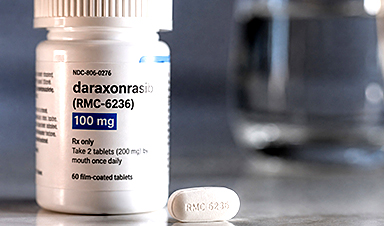
New pancreatic cancer drug carries a $39,800 monthly list price
A groundbreaking treatment for one of the most common forms of pancreatic cancer has been approved in pill form by the FDA. Revolution Medicines’ oral tablet daraxonrasib, branded as Rasonque, reduced the risk of [...]
Researchers Have Discovered a New Way To Reduce Chronic Nerve Pain
A cancer-linked protein called BRAF may help drive chronic nerve pain, and existing cancer drugs targeting it reduced pain sensitivity in preclinical models. Chronic nerve pain can persist long after an injury and often [...]
Our books now available worldwide!
Online Sellers other than Amazon, Routledge, and IOPP Indigo Global Health Care Equivalency in the Age of Nanotechnology, Nanomedicine and Artifcial Intelligence Global Health Care Equivalency In The Age Of Nanotechnology, Nanomedicine And Artificial [...]

Quantum-Enabled Regenerative Health: Reimagining Wellness, Precision Health and Longevity Medicine
Introduction Healthcare is approaching a frontier where the quantum portfolio could influence not only how disease is diagnosed and treated, but how health itself is measured, modeled, predicted and preserved. Quantum computing, quantum simulation, [...]

FDA Clears First-of-Its-Kind Nonmedication Treatment for PTSD
The FDA has cleared a system that uses brain activity data to personalize magnetic stimulation for PTSD, adding a new nonmedication treatment option. Every day in the United States, approximately 17.5 veterans die by suicide, [...]
FDA approves breakthrough drug to treat advanced pancreatic cancer
The Food and Drug Administration (FDA) approved on Wednesday a drug that could extend the survival of those with metastatic pancreatic cancer. The drug, called daraxonrasib, will be sold under the brand name Rasonque [...]

AI Decodes a Hidden DNA Signal Linked to Disease-Causing Mutations
Machine learning identifies the likely “initiator” and enables new predictions about DNA mutations that can cause disease. Every human cell depends on tens of thousands of genes being switched on at the right time [...]

Pope Leo Urges Global Response to Congo’s Deadliest Ebola Outbreak
Pope Leo called for international action to address the Ebola outbreak in the Democratic Republic of Congo. The epidemic has claimed over 2,500 lives and is the nation's largest recorded outbreak. The Pope emphasized [...]

Is there a summer COVID-19 surge this year? Yep, it’s ramping up again
Hantavirus. Ebola. West Nile. Measles. And, of course, cyclospora — that stomach parasite making people miserable across the country. Americans have plenty to worry about this summer. But remember COVID-19? It may not be [...]

Natural Compound in Broccoli Could Help Treat a Rare, Incurable Neurological Disease
Swinburne researchers have discovered how broccoli could help treat an extremely rare and incurable disease that affects only about 200 Australians. A naturally occurring compound in broccoli is being investigated as a possible treatment [...]