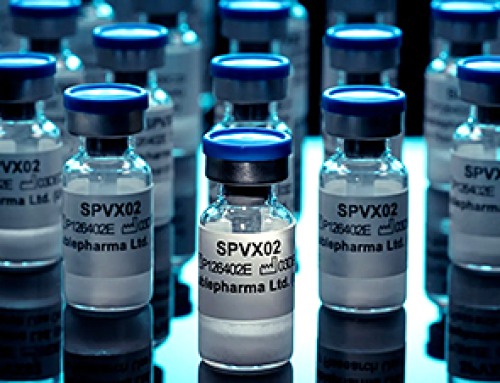
The adapted COVID-19 vaccine made by Moderna targets two different coronavirus variants – the original virus from 2020 and the Omicron variant
An updated version of the COVID-19 vaccine made by Moderna that targets two coronavirus variants (known as a “bivalent” vaccine) has today been approved for adult booster doses by the Medicines and Healthcare products Regulatory Agency (MHRA) after it was found to meet the UK regulator’s standards of safety, quality and effectiveness.
The decision to grant approval for this booster vaccine in the UK was endorsed by the government’s independent expert scientific advisory body, the Commission on Human Medicines, after carefully reviewing the evidence.
In each dose of the booster vaccine, ‘Spikevax bivalent Original/Omicron’, half of the vaccine (25 micrograms) targets the original virus strain from 2020 and the other half (25 micrograms) targets Omicron.
The MHRA’s decision is based on data from a clinical trial which showed that a booster with the bivalent Moderna vaccine triggers a strong immune response against both Omicron (BA.1) and the original 2020 strain. In an exploratory analysis the bivalent vaccine was also found to generate a good immune response against the Omicron sub-variants BA.4 and BA.5.
Safety monitoring showed that the side effects observed were the same as those seen for the original Moderna booster dose and were typically mild and self-resolving, and no serious safety concerns were identified.
Dr June Raine, MHRA Chief Executive said:
“I am pleased to announce the approval of the Moderna bivalent booster vaccine, which was found in the clinical trial to provide a strong immune response against the Omicron BA.1 variant as well as the original 2020 strain.
“The first generation of COVID-19 vaccines being used in the UK continue to provide important protection against the disease and save lives. What this bivalent vaccine gives us is a sharpened tool in our armoury to help protect us against this disease as the virus continues to evolve.
“We have in place a comprehensive safety surveillance strategy for monitoring the safety of all UK-approved COVID-19 vaccines and this will include the vaccine approved today.”
Professor Sir Munir Pirmohamed, Chair of the Commission on Human Medicines said:
“The Commission on Human Medicines and its COVID-19 Vaccines Expert Working Group has independently reviewed the data on safety, quality and effectiveness and agrees with the MHRA’s decision.”
“The virus, SARS-CoV-2, is continually evolving in order to evade the immunity provided by vaccines. This novel bivalent vaccine represents the next step in the development of vaccines to combat the virus, with its ability to lead to a broader immune response than the original vaccine.”
The Joint Committee on Vaccination and Immunisation (JCVI) will advise on how this vaccine should be offered as part of the deployment programme.
Notes to editors
- The Commission on Human Medicines (CHM) advises ministers on the safety, efficacy and quality of medicinal products. The CHM is an advisory non-departmental public body, sponsored by the Department of Health and Social Care.
- The MHRA’s Conditional Marketing Authorisation for the Moderna bivalent booster vaccine is valid in Great Britain only. An emergency use authorisation has been granted for Northern Ireland to ensure access across the whole of the United Kingdom. Both authorisations were made on the basis of the same rigorous evaluation of data.
- More information can be found in the product information
- A recent paper in a Lancet journal suggested that COVID-19 vaccines have prevented up to 20 million deaths in the first year of use

News
Half of vaccines are binned – ‘fridge-free’ versions could change that
Vaccines that do not need to be kept cool in a fridge have been successfully trialed in patients for the first time, say UK scientists. Currently, most vaccines need to be refrigerated or frozen [...]

Mushroom Mystery: The Fungus That Makes People See Tiny Humans
A mushroom sold in markets and served in restaurants in Southwest China has an unusual warning attached to it: cook it thoroughly, or you may start seeing tiny people. For decades, people have reported [...]

Artificial intelligence used to design brand new viruses
Artificial Intelligence has been used to design brand new viruses that are fully functional and can replicate in the laboratory, say US researchers. It is the first time whole genomes have been successfully designed [...]
Molecular Manufacturing: The Future of Nanomedicine – New book from NanoappsMedical Inc.
This book explores the revolutionary potential of atomically precise manufacturing technologies to transform global healthcare, as well as practically every other sector across society. This forward-thinking volume examines how envisaged Factory@Home systems might enable the cost-effective [...]

Moderna kicks off Phase I Ebola trial as Africa readies itself for research
If the Phase I trial is successful, Moderna plans to quickly initiate Phase II and Phase III trials of its Ebola vaccine. Moderna has initiated a Phase I trial of its mRNA Ebola vaccine [...]

3D Human Brain Tissue Model Replicates Alzheimer’s Pathology
Summary: Researchers introduced a highly reproducible three-dimensional human brain tissue model capable of replicating complex neurodegenerative processes in Alzheimer’s disease. Developed over nine years using human stem cells, the self-organizing tissue spheroids integrate functional neurons, [...]
A Common Sugar May Loosen Cancer Cells and Help Them Spread
Chemotherapy may kill most ovarian cancer cells, but the few that survive can turn dangerously active. By releasing fructose, they may help nearby tumor cells break free and spread. Researchers at The Wistar Institute [...]
COVID-19 can wake up dormant viruses in the body, large study confirms
Virus reactivations by SARS-CoV-2 could worsen initial symptoms and increase risk of Long Covid. Early in the COVID-19 pandemic, scientists noticed that a SARS-CoV-2 infection can “wake up” other, dormant viruses already present in [...]

Scientists Discover the Brain May Enter a New Biological Phase Between 50 and 75
A single-cell study reveals major changes in immune cells, genome organization, and gene regulation within the aging human hippocampus, offering important insights into brain aging and dementias associated with age. Between roughly ages 50 [...]

Our books now available worldwide!
Online Sellers other than Amazon, Routledge, and IOPP Indigo Global Health Care Equivalency in the Age of Nanotechnology, Nanomedicine and Artifcial Intelligence Global Health Care Equivalency In The Age Of Nanotechnology, Nanomedicine And Artificial [...]

Unzipping the Code of Life: Scientists Pinpoint Where DNA First Opens
Researchers mapped where DNA first opens and how a helicase gate may release one strand as genome copying begins. Before a cell can divide, it must open its tightly wound DNA and begin copying the entire [...]

Scientists Tested an 8-Hour Eating Window and Found a Surprising Brain Benefit
Limiting the daily eating window may provide brain benefits beyond those associated with weight loss. Eating within a shorter daily window may provide cognitive benefits beyond those associated with weight loss alone, according to [...]

Focused Ultrasound Opens Blood-Brain Barrier to Treat Brain Cancer
Summary: A new study demonstrates that primary brain tumors (gliomas) are particularly receptive to targeted drug delivery using focused ultrasound (FUS) combined with microbubbles. The team developed a high-resolution MRI protocol to track blood-brain barrier [...]

AI’s promise and practical limits in drug discovery
AI tools are becoming increasingly common in early drug discovery, allowing scientists to analyse data and navigate large volumes of research. However, according to Dr Raminderpal Singh, turning that potential into consistent scientific workflows [...]

GHCE Concept
From the preface of the book Global Health Care Equivalency in the Age of Nanotechnology, Nanomedicine and Artificial Intelligence, Edited by Frank Boehm: Since the publication of my first book (Nanomedical Device and Systems [...]

Healthcare Headlines: Challenges and Advances in 2026
Health-related updates reveal financial adjustments by Universal Health Services due to Medicaid reimbursement uncertainties, significant pollution-linked health concerns from French-British oil firm Perenco in Congo, drug trial setbacks, potential restructuring at major medical firms, [...]