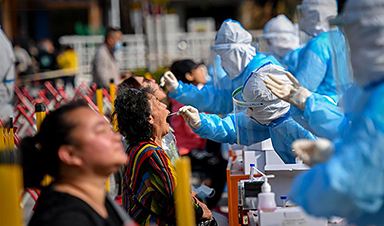
People infected with the Delta variant generally do not have COVID-19 symptoms until two days after they start shedding the coronavirus.
People infected with the Delta variant of SARS-CoV-2 are more likely to spread the virus before developing symptoms than are people infected with earlier versions, suggests a detailed analysis of an outbreak in Guangdong, China.
“It is just tougher to stop,” says Benjamin Cowling, an epidemiologist at the University of Hong Kong and a co-author of the study, which was posted on a preprint server on 13 August.
Cowling and his colleagues analysed exhaustive test data from 101 people in Guangdong who were infected with Delta between May and June this year, and data from those individuals’ close contacts. They found that, on average, people began having symptoms 5.8 days after infection with Delta — 1.8 days after they first tested positive for viral RNA. That left almost two days for individuals to shed viral RNA before they showed any sign of COVID-19.
A dangerous window
An earlier study2 and an unpublished analysis by Cowling and others estimate that before Delta emerged, individuals infected with SARS-CoV-2 took an average of 6.3 days to develop symptoms and 5.5 days to test positive for viral RNA, leaving a narrower window of 0.8 days for oblivious viral shedding.
In the latest work, the researchers also found that those infected with Delta had higher concentrations of viral particles, or viral load, in their bodies than did people infected with the original version of SARS-CoV-2. “Somehow the virus is appearing quicker and in higher amounts,” says Cowling.
As a result, 74% of infections with Delta took place during the presymptomatic phase — a higher proportion than for previous variants. This high rate “helps explain how this variant has been able to outpace both the wild-type virus and other variants to become the dominant strain worldwide”, says Barnaby Young, an infectious-disease clinician at the National Centre for Infectious Diseases in Singapore.
COVID vaccines slash viral spread – but Delta is an unknown
The researchers also calculated Delta’s ‘basic reproduction number’, or R0, which is the average number of people to whom every infected person will spread the virus in a susceptible population. They estimated that Delta has an R0 of 6.4, which is much higher than the R0 of 2–4 estimated for the original version of SARS-CoV-2, says Marm Kilpatrick, an infectious-disease researcher at the University of California, Santa Cruz. “Delta moves a bit faster, but is much more transmissible.”
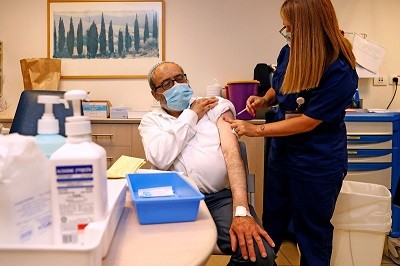
A small number of study participants experienced ‘breakthrough infections’ with Delta after receiving two doses of an inactivated-virus COVID-19 vaccine. But the vaccine reduced participants’ viral loads at the peak of infection.
Vaccinated individuals were also 65% less likely than unvaccinated individuals to infect someone else, although the estimate was based on a very small sample size. This reduction “is significant and reassuring that COVID-19 vaccines remain effective and a vital part of our response to the pandemic”, says Young.
The study has not yet been peer reviewed.

News
A Cambridge Lab Mistake Reveals a Powerful New Way to Modify Drug Molecules
A surprising lab discovery reveals a light-powered way to tweak complex drugs faster, cleaner, and later in development. Researchers at the University of Cambridge have created a new technique for altering complex drug molecules [...]

New book from NanoappsMedical Inc – Molecular Manufacturing: The Future of Nanomedicine
This book explores the revolutionary potential of atomically precise manufacturing technologies to transform global healthcare, as well as practically every other sector across society. This forward-thinking volume examines how envisaged Factory@Home systems might enable the cost-effective [...]

Scientists Discover Simple Saliva Test That Reveals Hidden Diabetes Risk
Researchers have identified a potential new way to assess metabolic health using saliva instead of blood. High insulin levels in the blood, known as hyperinsulinemia, can reveal metabolic problems long before obvious symptoms appear. It is [...]

One Nasal Spray Could Protect Against COVID, Flu, Pneumonia, and More
A single nasal spray vaccine may one day protect against viruses, pneumonia, and even allergies. For decades, scientists have dreamed of creating a universal vaccine capable of protecting against many different pathogens. The idea [...]
New AI Model Predicts Cancer Spread With Incredible Accuracy
Scientists have developed an AI system that analyzes complex gene-expression signatures to estimate the likelihood that a tumor will spread. Why do some tumors spread throughout the body while others remain confined to their [...]

Scientists Discover DNA “Flips” That Supercharge Evolution
In Lake Malawi, hundreds of species of cichlid fish have evolved with astonishing speed, offering scientists a rare opportunity to study how biodiversity arises. Researchers have identified segments of “flipped” DNA that may allow fish to adapt rapidly [...]

Our books now available worldwide!
Online Sellers other than Amazon, Routledge, and IOPP Indigo Global Health Care Equivalency in the Age of Nanotechnology, Nanomedicine and Artifcial Intelligence Global Health Care Equivalency In The Age Of Nanotechnology, Nanomedicine And Artificial [...]
Scientists Discover Why Some COVID Survivors Still Can’t Taste Food Years Later
A new study provides the first direct biological evidence explaining why some people continue to experience taste loss long after recovering from COVID-19. Researchers have uncovered specific biological changes in taste buds that could help [...]

Catching COVID significantly raises the risk of developing kidney disease, researchers find
Catching Covid significantly raises the risk of developing deadly kidney disease, research has shown. The virus was found to increase the chances that patients will develop the incurable condition by around 50 per cent. [...]
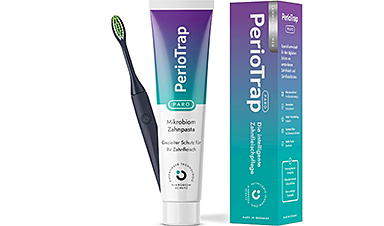
New Toothpaste Stops Gum Disease Without Harming Healthy Bacteria
Researchers have developed a targeted approach to combat periodontitis without disrupting the natural balance of the oral microbiome. The innovation could reshape how gum disease is treated while preserving beneficial bacteria. The human mouth [...]

Plastic Without End: Are We Polluting the Planet for Eternity?
The Kunming Montreal Global Biodiversity Framework calls for the elimination of plastic pollution by 2030. If that goal has been clearly set, why have meaningful measures that create real change still not been implemented? [...]
Scientists Rewire Natural Killer Cells To Attack Cancer Faster and Harder
Researchers tested new CAR designs in NK-92 cells and found the modified cells killed tumor cells more effectively, showing stronger anti-cancer activity. Researchers at the Ribeirão Preto Blood Center and the Center for Cell-Based [...]

New “Cellular” Target Could Transform How We Treat Alzheimer’s Disease
A new study from researchers highlights an unexpected player in Alzheimer’s disease: aging astrocytes. Senescent astrocytes have been identified as a major contributor to Alzheimer’s progression. The cells lose protective functions and fuel inflammation, particularly in [...]

Treating a Common Dental Infection… Effects That Extend Far Beyond the Mouth
Successful root canal treatment may help lower inflammation associated with heart disease and improve blood sugar and cholesterol levels. Treating an infected tooth with a successful root canal procedure may do more than relieve [...]
Microplastics found in prostate tumors in small study
In a new study, researchers found microplastics deep inside prostate cancer tumors, raising more questions about the role the ubiquitous pollutants play in public health. The findings — which come from a small study of 10 [...]
All blue-eyed people have this one thing in common
All Blue-Eyed People Have This One Thing In Common Blue Eyes Aren’t Random—Research Traces Them Back to One Prehistoric Human It sounds like a myth at first — something you’d hear in a folklore [...]