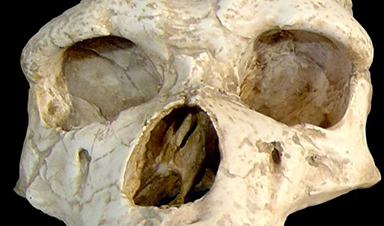
Everybody loves Neandertals, those big-brained brutes we supposedly outcompeted and ultimately replaced using our sharp tongues and quick, delicate minds. But did we really, though? Is it mathematically possible that we could yet be them, and they us?
By the same token, could not the impossibly singular Mitochondrial Eve, her contemporary Y-chromosome Adam, and even the “Out of Africa” hypothesis simply be convenient fictions paleogeneticists tell each other at conferences to give their largely arbitrary haplotype designations and subsequently derived evolutionary trees more credence?
Perhaps one of the best ways to try to answer this question is to ask what the coronavirus has to say about the issue. Svante Pääbo, director of the genetics department at the Max Planck Institute certainly believes that Homo sapiens Neanderthalensis, or just Homo Neanderthalensis, if you prefer, is extinct. Pääbo, the son of 1982 Noble laureate Sune Bergström, has made a nice living off of Neandertal bones, finding gene after gene that is distinctly “Neandertal.” In 1997, Pääbo successfully sequenced mitochondrial DNA from a specimen found in Feldhofer grotto in the Neander valley. Fast-forwarding past a few recent PR disasters, the Germans were able to capture the productive Swede and set him upon the task of dealing with these inconvenient heirloom skeletons that kept showing up.
This September, Pääbo and colleague Hugo Zeberg announced that the major genetic risk factor for severe COVID-19 is inherited from Neanderthals. (We note that Nature publications prefer to include the h.) By any measure, this is a bold statement. The team found that severe COVID-19 disease is associated with specific genetic variants in six genes within a 50K-base-pair-long region of chromosome 3 that derived directly from a Neanderthal heritage. Similar investigations have also identified a protective Neanderthal haplotype on chromosome (chr) 12 that reduces the risk of severe COVID-9, and a protective region on chromosome 9 that is associated with the ABO blood groups.
Not content to rest on their laurels, Pääbo and Zeberg have just kicked things up a notch. The pair recently reported on the bioRxiv preprint server that another exclusively Neandertal variant, this time in the promoter region of the DPP4 gene at chr2q24.2, is really pulling the strings on COVID susceptibility. DPP4 is a widely expressed extracellular dipeptidyl peptidase involved in immune function and glucose metabolism. As it happens, DPP4 is also the receptor gene for the MERS coronavirus. Now we are getting somewhere.
Image Credit: Wikipedia
Post by Amanda Scott, NA CEO. Follow her on twitter @tantriclens
Thanks to Heinz V. Hoenen. Follow him on twitter: @HeinzVHoenen

News

Scientists Discover Simple Saliva Test That Reveals Hidden Diabetes Risk
Researchers have identified a potential new way to assess metabolic health using saliva instead of blood. High insulin levels in the blood, known as hyperinsulinemia, can reveal metabolic problems long before obvious symptoms appear. It is [...]

One Nasal Spray Could Protect Against COVID, Flu, Pneumonia, and More
A single nasal spray vaccine may one day protect against viruses, pneumonia, and even allergies. For decades, scientists have dreamed of creating a universal vaccine capable of protecting against many different pathogens. The idea [...]
New AI Model Predicts Cancer Spread With Incredible Accuracy
Scientists have developed an AI system that analyzes complex gene-expression signatures to estimate the likelihood that a tumor will spread. Why do some tumors spread throughout the body while others remain confined to their [...]

Scientists Discover DNA “Flips” That Supercharge Evolution
In Lake Malawi, hundreds of species of cichlid fish have evolved with astonishing speed, offering scientists a rare opportunity to study how biodiversity arises. Researchers have identified segments of “flipped” DNA that may allow fish to adapt rapidly [...]
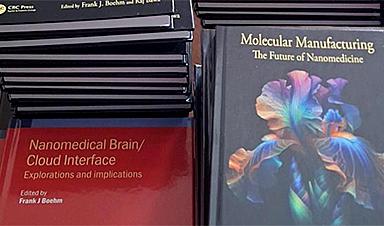
Our books now available worldwide!
Online Sellers other than Amazon, Routledge, and IOPP Indigo Global Health Care Equivalency in the Age of Nanotechnology, Nanomedicine and Artifcial Intelligence Global Health Care Equivalency In The Age Of Nanotechnology, Nanomedicine And Artificial [...]
Scientists Discover Why Some COVID Survivors Still Can’t Taste Food Years Later
A new study provides the first direct biological evidence explaining why some people continue to experience taste loss long after recovering from COVID-19. Researchers have uncovered specific biological changes in taste buds that could help [...]
Catching COVID significantly raises the risk of developing kidney disease, researchers find
Catching Covid significantly raises the risk of developing deadly kidney disease, research has shown. The virus was found to increase the chances that patients will develop the incurable condition by around 50 per cent. [...]
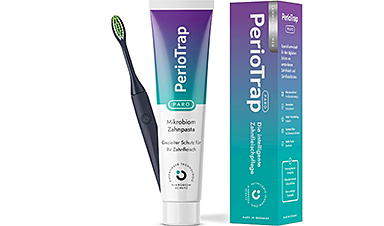
New Toothpaste Stops Gum Disease Without Harming Healthy Bacteria
Researchers have developed a targeted approach to combat periodontitis without disrupting the natural balance of the oral microbiome. The innovation could reshape how gum disease is treated while preserving beneficial bacteria. The human mouth [...]
Plastic Without End: Are We Polluting the Planet for Eternity?
The Kunming Montreal Global Biodiversity Framework calls for the elimination of plastic pollution by 2030. If that goal has been clearly set, why have meaningful measures that create real change still not been implemented? [...]
Scientists Rewire Natural Killer Cells To Attack Cancer Faster and Harder
Researchers tested new CAR designs in NK-92 cells and found the modified cells killed tumor cells more effectively, showing stronger anti-cancer activity. Researchers at the Ribeirão Preto Blood Center and the Center for Cell-Based [...]
New “Cellular” Target Could Transform How We Treat Alzheimer’s Disease
A new study from researchers highlights an unexpected player in Alzheimer’s disease: aging astrocytes. Senescent astrocytes have been identified as a major contributor to Alzheimer’s progression. The cells lose protective functions and fuel inflammation, particularly in [...]
Treating a Common Dental Infection… Effects That Extend Far Beyond the Mouth
Successful root canal treatment may help lower inflammation associated with heart disease and improve blood sugar and cholesterol levels. Treating an infected tooth with a successful root canal procedure may do more than relieve [...]
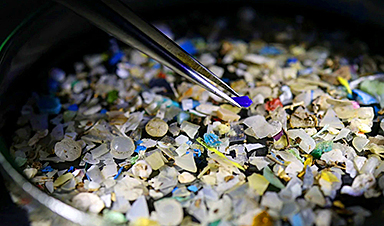
Microplastics found in prostate tumors in small study
In a new study, researchers found microplastics deep inside prostate cancer tumors, raising more questions about the role the ubiquitous pollutants play in public health. The findings — which come from a small study of 10 [...]
All blue-eyed people have this one thing in common
All Blue-Eyed People Have This One Thing In Common Blue Eyes Aren’t Random—Research Traces Them Back to One Prehistoric Human It sounds like a myth at first — something you’d hear in a folklore [...]
Scientists reveal how exercise protects the brain from Alzheimer’s
Researchers at UC San Francisco have identified a biological process that may explain why exercise sharpens thinking and memory. Their findings suggest that physical activity strengthens the brain's built in defense system, helping protect [...]
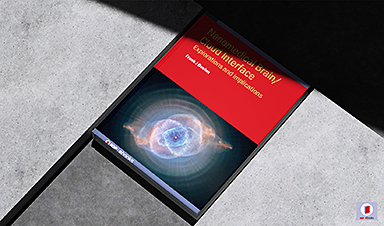
NanoMedical Brain/Cloud Interface – Explorations and Implications. A new book from Frank Boehm
New book from Frank Boehm, NanoappsMedical Inc Founder: This book explores the future hypothetical possibility that the cerebral cortex of the human brain might be seamlessly, safely, and securely connected with the Cloud via [...]