When reactor number four in Chernobyl exploded, it triggered the worst nuclear disaster in history, one which the surrounding area still has not yet recovered from.
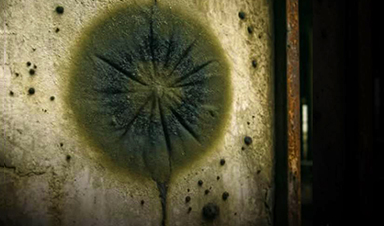
After the disaster at the Ukrainian nuclear power plant, scientists working in the ruined remains of reactor four discovered a strange black mould that was growing over the building walls despite the dangerous levels of radiation around it.
Indeed, the radiation actually didn’t seem to be doing much damage to this fungus and it appeared to be growing in environments where no human would be expected to survive.
Indeed, the Royal Society of Biology reckons this friendly fungus is ‘eating gamma radiation for breakfast’, which is a pretty darn cool thing for it to do, after scientists realised that the fungus appeared to be actively seeking out areas with higher radiation.
What is the black fungus discovered in Chernobyl reactor 4?

Reactor number four at Chernobyl is contained, but the area has been profoundly affected
(Brendan Hoffman/Getty Images)
Its official fancy name is ‘Cladosporium sphaerospermum’, which is a more scientific way of referring to the fungus than calling it the black stuff growing on the walls in Chernobyl.
The fungus had been seen and examined a whole century before Chernobyl, but it’s something plenty of people would have stayed away from – although it could actually be pretty useful.
Whatever it might be used for, it’s undeniable that after the Chernobyl disaster this fungus found itself in an environment where it could not just survive but also thrive.
Why does the black fungus consume gamma radiation?
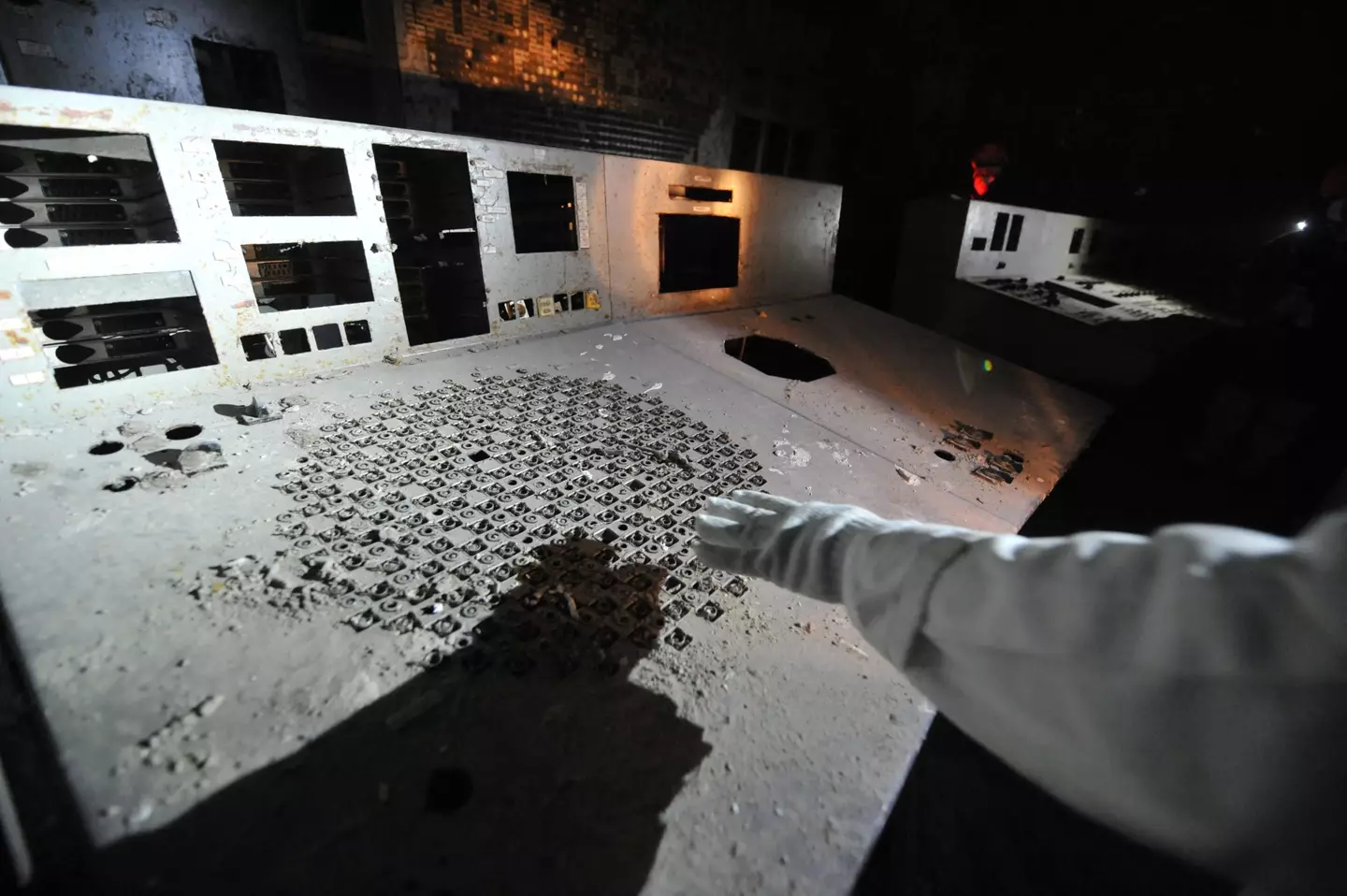
Before Russia’s invasion people could take tours of Chernobyl (SERGEI SUPINSKY/AFP via Getty Images)
Here’s the science-y bit, this black fungus in Chernobyl is part of a family of ‘radiotrophic fungi’ which can feed of ionising radiation, which is quite neat.
A study into the matter found that these fungi could basically eat radiation and use it to keep doing what they’re doing.
It’s somewhat like photosynthesis where plants take in sunlight to fuel their metabolic process, only this time the sunlight is ionising radiation.
It’s known as radiosynthesis, and there’s plenty of radiation to gobble up in Chernobyl.
As for why this all works it seems to be thanks to melanin, that pigment which gives us our skin and eye colours.
The Cladosporium sphaerospermum has a dark shell made of layers of melanin and this takes the energy from the radiation and uses it to grow the fungus.
What does the discovery mean and why it could be a good thing?
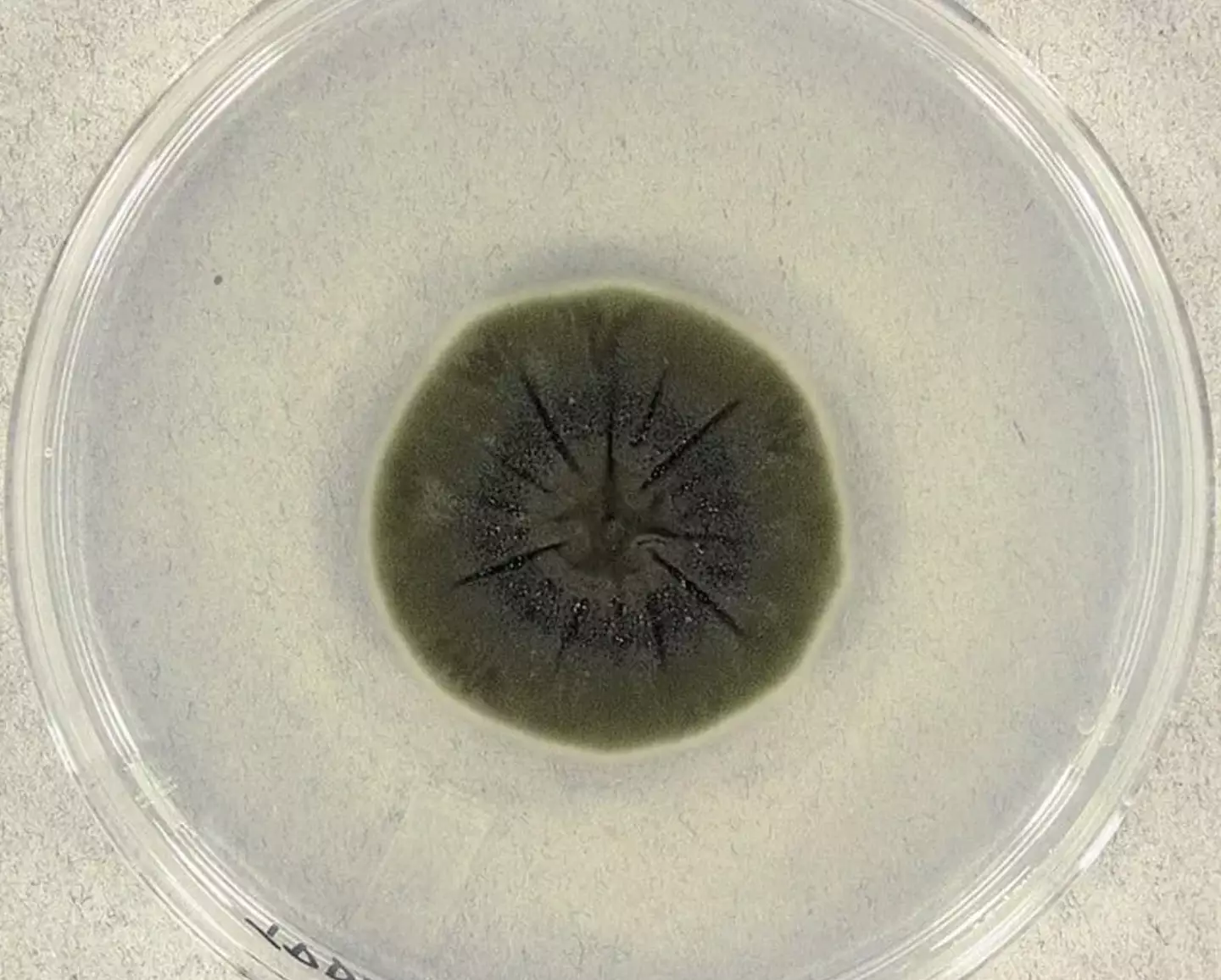
It may look sinister but it could actually be a huge help (Medmyco/Wikimedia)
While the idea of a strange black fungus that consumes radiation sounds like the starting point of a particularly sinister film where we get attacked by whatever mutated monster comes out of the fungus, this thing actually seems to be quite a help.
If this fungus can eat radiation then it could be a handy tool in areas affected by the ionising poison, though we shouldn’t expect it to gobble up a nuclear disaster’s worth of radiation.
According to Forbes, some of the fungus has been sent into space for tests aboard the International Space Station in an attempt to work out whether it could help protect astronauts from cosmic radiation.
Even if it can’t undo the damage at Chernobyl, there could be some great uses for it.

News
Scientists Discover a Hidden Trigger That Keeps Inflammation Alive
Inflammation persists after proteins detach from immune receptors, revealing a potential target for autoimmune treatments. Since a Nobel Prize-winning discovery in the 1990s identified molecules called Toll-like Receptors as the guardians of the human [...]
A Virus Gives Itself Away the Moment It Attacks
Researchers have found the trigger behind a powerful bacterial defense against viruses. Viruses that prey on bacteria could become an increasingly important tool for treating bacterial infections, particularly as antibiotic resistance makes some infections [...]
Scientists Discover Aspirin May Slash Dementia Risk by 70% – but Only for Certain People
Aspirin was linked to a sharply lower dementia risk in some older adults, and their genes may hold the clue. A Monash University analysis found that older adults with a particular genetic profile had [...]
Inflammation May Awaken Dormant Cancer Cells Years After Treatment
The body’s response to inflammation may disturb cancer cells that have been lying silent for years, giving them an opportunity to grow again. Researchers at the Francis Crick Institute have found that gut inflammation [...]

Where do nanoparticles go once they enter the body?
New international best practice guidance, co-written at ANSTO, sets out how to measure where nanoparticles like titanium dioxide end up in the body and how long they remain. The guidance has been shared by [...]
Long-Acting HIV Shots Could Solve a Major Treatment Challenge for Young People
A major African trial suggests that changing how HIV treatment is delivered could significantly improve viral suppression in adolescents. Young people with HIV were more likely to keep the virus suppressed when they received [...]

WHO Factsheets – The top 10 causes of death
In 2023, the 10 leading causes of death accounted for 33 million deaths, or 54% of the total 61 million deaths worldwide. The top global causes of death, in order of total number of lives lost, [...]
Aging Cells May Be Hiding From the Immune System – Scientists Think They Know How
Your immune system is supposed to clear out damaged cells. Researchers may have found how some of them hide and linger as the body ages. Researchers led by Cedars-Sinai Health Sciences University have identified [...]

Your Voice May Reveal How Fast Your Brain Is Aging
Researchers have developed a machine-learning “speech clock” that estimates age from subtle patterns in how people speak and what they say. It is possible that people’s voices may contain certain signals of aging that [...]
Optogenetics Pioneers Win 2026 Nobel Prize in Physiology or Medicine
The 2026 Nobel Prize in Physiology or Medicine has been awarded to Peter Hegemann, Georg Nagel, and Karl Deisseroth for the development of optogenetics, a revolutionary technology that uses light to control individual neurons [...]

Molecular Manufacturing: The Future of Nanomedicine – From NanoappsMedical Inc.
This book explores the revolutionary potential of atomically precise manufacturing technologies to transform global healthcare, as well as practically every other sector across society. This forward-thinking volume examines how envisaged Factory@Home systems might enable the cost-effective [...]

What is ‘American Covid’ and how bad is it?
Cases of so-called ‘American Covid’ are on the rise in the UK. The strain is officially called XFG, or ‘Stratus’, and is the most common variant in North America, hence the name. It might soon [...]
Researcher at Russian plague laboratory dies of ‘unknown’ infection
Russian authorities have imposed "anti-epidemic measures" after a laboratory worker at an institute in Siberia dedicated to studying the plague and other infectious diseases died of a mysterious illness. The researcher, a 28-year-old female [...]

GHCE Concept
From the preface of the book Global Health Care Equivalency in the Age of Nanotechnology, Nanomedicine and Artificial Intelligence, Edited by Frank Boehm: Since the publication of my first book (Nanomedical Device and Systems [...]
A Surprising Brain Signal Could Explain Why Eating Less Protein Extends Lifespan
A new paper suggests that limiting protein intake triggers a coordinated response throughout the body that may help explain how protein restriction affects healthy aging. Animals respond to protein restriction, or reduced protein in [...]

Back and shoulder surgery is often worse than useless
Millions of operations should be scrapped SIX IN TEN Britons have surgery at some point. So do lots of Americans, at a cost of perhaps $500bn a year, a third of all spending on [...]