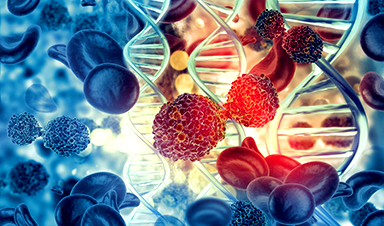
Cancer's strongest gene switches push DNA into damaging overdrive, creating repeated breaks and repairs that may fuel tumor evolution while exposing possible therapeutic weak spots.
A new study indicates that cancer can harm its own genetic material by forcing critical genes to work at unusually high levels. Scientists discovered that some of the strongest genetic "on switches" in cancer cells, known as super-enhancers, drive exceptionally intense gene activity. This constant high activity places strain on DNA and can lead to dangerous breaks in the genetic material.
Cancer cells can often repair this type of damage. However, the repair process is not always precise. When DNA repeatedly breaks and is repaired in the same areas, the chance of mistakes increases, allowing mutations to accumulate over time. In other words, the same biological mechanisms that allow cancer cells to grow quickly may also make their DNA more vulnerable. This may help explain how tumors continue to evolve and sometimes become more aggressive.
Study Reveals Hidden Source of DNA Instability
The study, published in Science Advances, was led by PhD student Osama Hidmi under the supervision of Prof. Rami Aqeilan at the Hebrew University of Jerusalem. The research highlights a previously underappreciated source of genetic instability in cancer. The scientists discovered that DNA breaks frequently appear in the same regions where cancer cells push growth-related genes to operate at their highest levels.
Their investigation centered on super-enhancers, segments of DNA that act as powerful regulatory hubs. These regions boost the activity of nearby genes and help maintain the gene programs that drive cancer growth.
To investigate the problem, the researchers used a highly sensitive genome mapping technique to create detailed maps of double-strand breaks. This form of damage occurs when both strands of the DNA molecule snap, making it one of the most severe types of genetic injury. The team found that these breaks were not scattered randomly across the genome. Instead, they clustered in genes controlled by super-enhancers. This pattern suggests that when cancer cells push certain genes to operate continuously at very high levels, the strain can trigger DNA breaks.
Repeated DNA Damage and Repair Cycles
The researchers also monitored a natural cellular signal that marks damaged DNA and summons repair systems. Their results indicated that cancer cells repeatedly break and repair DNA within these highly active genetic regions. Although this repair activity helps tumors stay alive, frequent repair attempts increase the chance of small errors. Over time, those errors can accumulate as new mutations.
"Cancer cells rely on super-enhancers to keep growth genes running at high speed," said Prof. Rami Aqeilan. "What we found is that this same high-output activity can put real strain on the DNA, creating break hotspots that the cell has to repair again and again. That cycle may help tumors survive in the short term, but it also increases the risk of mutations that can fuel cancer's evolution."
"What is especially exciting," added Osama Hidmi, the PhD student who led the study, "Because cancer cells depend on these high-stress DNA regions to keep growing, they may also be more vulnerable there. This opens the door to treatments that target the very processes tumors rely on to survive."
Implications for Cancer Evolution and Treatment
DNA damage and repair play a central role in how cancers grow, adapt, and develop resistance to therapies. This research provides new insight into where some of the most important damage occurs and why it happens. By revealing that the most powerful gene control regions in cancer are also areas of repeated DNA stress, the findings highlight potential weak points within tumors.
These areas may be especially sensitive to therapies designed to interrupt excessive gene activity or disrupt DNA repair mechanisms. Understanding this relationship could help scientists develop strategies that make it more difficult for cancers to evolve and adapt.
By demonstrating how cancer's drive for rapid growth can destabilize its own genetic material, the study adds an important piece to understanding why tumors are both aggressive and genetically unstable. It also suggests that this instability might eventually be used to help fight the disease.
Reference: "Super-enhancers shape the landscape and repair dynamics of transcription-associated DNA breaks in cancer" by Osama Hidmi, Diala Shatleh, Sara Oster Flayshman, Jonathan Monin and Rami I. Aqeilan, 25 May 2025, Science Advances.
DOI:10.1101/2025.05.25.655982
This study was supported by a grant from the Israel Science Foundation (ISF) [No. 1056/21].

News – Curated by Amanda Scott, Alias Group Creative
Follow her on Bluesky
Cancer’s Deadly Paradox: How Tumors Break Their Own DNA To Keep Growing
Cancer’s strongest gene switches push DNA into damaging overdrive, creating repeated breaks and repairs that may fuel tumor evolution while exposing possible therapeutic weak spots. A new study indicates that cancer can harm its own genetic [...]

NanoMedical Brain/Cloud Interface – Explorations and Implications. A new book from Frank Boehm
New book from Frank Boehm, NanoappsMedical Inc Founder: This book explores the future hypothetical possibility that the cerebral cortex of the human brain might be seamlessly, safely, and securely connected with the Cloud via [...]
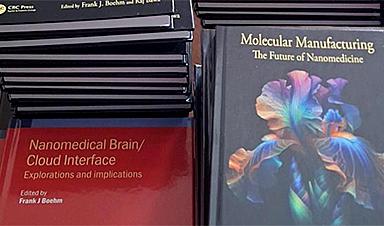
Our books now available worldwide!
Online Sellers other than Amazon, Routledge, and IOPP Indigo Global Health Care Equivalency in the Age of Nanotechnology, Nanomedicine and Artifcial Intelligence Global Health Care Equivalency In The Age Of Nanotechnology, Nanomedicine And Artificial [...]
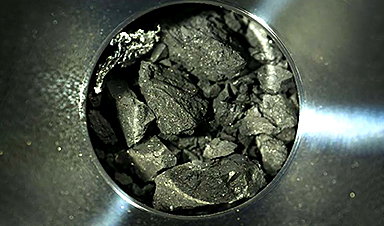
Ryugu asteroid samples contain all DNA and RNA building blocks, bolstering origin-of-life theories
All the essential ingredients to make the DNA and RNA underpinning life on Earth have been discovered in samples collected from the asteroid Ryugu, scientists said Monday. The discovery comes after these building blocks [...]

Is Berberine Really a “Natural Ozempic”?
Often labeled a “natural Ozempic,” berberine is widely discussed as a metabolic aid. Yet research suggests its influence may lie deeper. In recent years, berberine has gained significant attention as a supposed “natural way” [...]
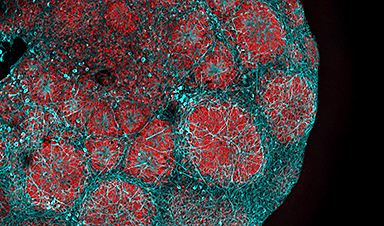
Viagra Ingredient Shows Promise for Rare Childhood Brain Disease in Surprising Study
A rare childhood disease with no approved treatment may have an unexpected new therapeutic candidate. Sildenafil, the active ingredient also sold under the brand name Viagra, may help reduce symptoms in people with Leigh [...]

In a first for China, Neuracle’s implantable brain-computer interface wins approval
In a landmark development, Neuracle Medical Technology has secured the country’s first-ever approval for an implantable brain-computer interface (BCI) system designed to restore hand motor function in patients with spinal cord injuries, in a [...]
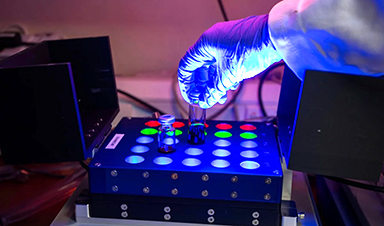
A Cambridge Lab Mistake Reveals a Powerful New Way to Modify Drug Molecules
A surprising lab discovery reveals a light-powered way to tweak complex drugs faster, cleaner, and later in development. Researchers at the University of Cambridge have created a new technique for altering complex drug molecules [...]

New book from NanoappsMedical Inc – Molecular Manufacturing: The Future of Nanomedicine
This book explores the revolutionary potential of atomically precise manufacturing technologies to transform global healthcare, as well as practically every other sector across society. This forward-thinking volume examines how envisaged Factory@Home systems might enable the cost-effective [...]

Scientists Discover Simple Saliva Test That Reveals Hidden Diabetes Risk
Researchers have identified a potential new way to assess metabolic health using saliva instead of blood. High insulin levels in the blood, known as hyperinsulinemia, can reveal metabolic problems long before obvious symptoms appear. It is [...]

One Nasal Spray Could Protect Against COVID, Flu, Pneumonia, and More
A single nasal spray vaccine may one day protect against viruses, pneumonia, and even allergies. For decades, scientists have dreamed of creating a universal vaccine capable of protecting against many different pathogens. The idea [...]
New AI Model Predicts Cancer Spread With Incredible Accuracy
Scientists have developed an AI system that analyzes complex gene-expression signatures to estimate the likelihood that a tumor will spread. Why do some tumors spread throughout the body while others remain confined to their [...]

Scientists Discover DNA “Flips” That Supercharge Evolution
In Lake Malawi, hundreds of species of cichlid fish have evolved with astonishing speed, offering scientists a rare opportunity to study how biodiversity arises. Researchers have identified segments of “flipped” DNA that may allow fish to adapt rapidly [...]

Scientists Discover Why Some COVID Survivors Still Can’t Taste Food Years Later
A new study provides the first direct biological evidence explaining why some people continue to experience taste loss long after recovering from COVID-19. Researchers have uncovered specific biological changes in taste buds that could help [...]

Catching COVID significantly raises the risk of developing kidney disease, researchers find
Catching Covid significantly raises the risk of developing deadly kidney disease, research has shown. The virus was found to increase the chances that patients will develop the incurable condition by around 50 per cent. [...]

New Toothpaste Stops Gum Disease Without Harming Healthy Bacteria
Researchers have developed a targeted approach to combat periodontitis without disrupting the natural balance of the oral microbiome. The innovation could reshape how gum disease is treated while preserving beneficial bacteria. The human mouth [...]