Damage to the brainstem – the brain’s ‘control center’ – is behind long-lasting physical and psychiatric effects of severe Covid-19 infection, a study suggests.
Using ultra-high-resolution scanners that can see the living brain in fine detail, researchers from the Universities of Cambridge and Oxford were able to observe the damaging effects Covid-19 can have on the brain.
The study team scanned the brains of 30 people who had been admitted to hospital with severe Covid-19 early in the pandemic, before vaccines were available. The researchers found that Covid-19 infection damages the region of the brainstem associated with breathlessness, fatigue and anxiety.
The powerful MRI scanners used for the study, known as 7-Tesla or 7T scanners, can measure inflammation in the brain. Their results, published in the journal Brain, will help scientists and clinicians understand the long-term effects of Covid-19 on the brain and the rest of the body. Although the study was started before the long-term effects of Covid were recognised, it will help to better understand this condition.
The brainstem, which connects the brain to the spinal cord, is the control center for many basic life functions and reflexes. Clusters of nerve cells in the brainstem, known as nuclei, regulate and process essential bodily functions such as breathing, heart rate, pain and blood pressure.
Things happening in and around the brainstem are vital for quality of life, but it had been impossible to scan the inflammation of the brainstem nuclei in living people, because of their tiny size and difficult position. Usually, scientists only get a good look at the brainstem during post-mortem examinations.”
Dr. Catarina Rua, first author from the Department of Clinical Neurosciences, University of Cambridge
“The brainstem is the critical junction box between our conscious selves and what is happening in our bodies,” said Professor James Rowe, also from the Department of Clinical Neurosciences, who co-led the research. “The ability to see and understand how the brainstem changes in response to Covid-19 will help explain and treat the long-term effects more effectively.”
In the early days of the Covid-19 pandemic, before effective vaccines were available, post-mortem studies of patients who had died from severe Covid-19 infections showed changes in their brainstems, including inflammation. Many of these changes were thought to result from a post-infection immune response, rather than direct virus invasion of the brain.
“People who were very sick early in the pandemic showed long-lasting brain changes, likely caused by an immune response to the virus. But measuring that immune response is difficult in living people,” said Rowe. “Normal hospital-type MRI scanners can’t see inside the brain with the kind of chemical and physical detail we need.”
“But with 7T scanners, we can now measure these details. The active immune cells interfere with the ultra-high magnetic field, so that we’re able to detect how they are behaving,” said Rua. “Cambridge was special because we were able to scan even the sickest and infectious patients, early in the pandemic.”
Many of the patients admitted to hospital early in the pandemic reported fatigue, breathlessness and chest pain as troubling long-lasting symptoms. The researchers hypothesised these symptoms were in part the result of damage to key brainstem nuclei, damage which persists long after Covid-19 infection has passed.
The researchers saw that multiple regions of the brainstem, in particular the medulla oblongata, pons and midbrain, showed abnormalities consistent with a neuroinflammatory response. The abnormalities appeared several weeks after hospital admission, and in regions of the brain responsible for controlling breathing.
“The fact that we see abnormalities in the parts of the brain associated with breathing strongly suggests that long-lasting symptoms are an effect of inflammation in the brainstem following Covid-19 infection,” said Rua. “These effects are over and above the effects of age and gender, and are more pronounced in those who had had severe Covid-19.”
In addition to the physical effects of Covid-19, the 7T scanners provided evidence of some of the psychiatric effects of the disease. The brainstem monitors breathlessness, as well as fatigue and anxiety. “Mental health is intimately connected to brain health, and patients with the most marked immune response also showed higher levels of depression and anxiety,” said Rowe. “Changes in the brainstem caused by Covid-19 infection could also lead to poor mental health outcomes, because of the tight connection between physical and mental health.”
The researchers say the results could aid in the understanding of other conditions associated with inflammation of the brainstem, like MS and dementia. The 7T scanners could also be used to monitor the effectiveness of different treatments for brain diseases.
“This was an incredible collaboration, right at the peak of the pandemic, when testing was very difficult, and I was amazed how well the 7T scanners worked,” said Rua. “I was really impressed with how, in the heat of the moment, the collaboration between lots of different researchers came together so effectively.”
The research was supported in part by the NIHR Cambridge Biomedical Research Centre, the NIHR Oxford Biomedical Research Centre, and the University of Oxford COVID Medical Sciences Division Rapid Response Fund.
Rua, C., et al. (2024). Quantitative susceptibility mapping at 7 T in COVID-19: brainstem effects and outcome associations. Brain. doi.org/10.1093/brain/awae215

News
Scientists Just Overturned a 100-Year-Old Belief About Bacteria in the Lungs
New findings raise questions about the role of microbes living in the lungs. More than 35 trillion bacteria live throughout the human body, forming microbiomes in the gut, mouth, lungs, skin, and urogenital tract. [...]
GHCE Concept
From the preface of the book Global Health Care Equivalency in the Age of Nanotechnology, Nanomedicine and Artificial Intelligence, Edited by Frank Boehm: Since the publication of my first book (Nanomedical Device and Systems [...]

Novartis, Ionis drug failure spurs questions
Pelacarsen didn’t protect heart health despite lowering levels of a protein particle, “Lp(a),” in a large clinical trial — a result with important implications for cardiovascular drug research. Dive Brief: An RNA drug from [...]
New injectable treatment helps the brain rebuild after stroke
Biomedical engineers at Duke University have created an injectable biomaterial that may help the brain recover from damage left behind by an ischemic stroke. In experiments with mice, the material transformed the cavity created [...]
Scientists Discover a Hidden “Immune Organ” Inside the Skull
Researchers discovered lymph node-like immune hubs inside skull bone marrow that appear to act as rapid-response centers for the brain. For decades, the brain was thought to operate largely apart from the immune system. [...]
Engineered tRNAs and lipid nanoparticles target nonsense mutation cystic fibrosis
Researchers have developed a potential new approach for treating a form of cystic fibrosis caused by so-called nonsense mutations, combining chemically modified transfer RNAs with lipid nanoparticles designed to deliver the therapy directly to [...]
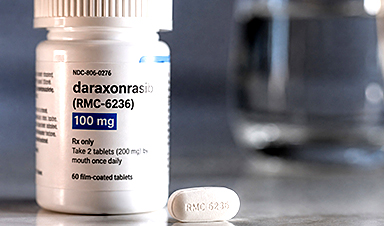
New pancreatic cancer drug carries a $39,800 monthly list price
A groundbreaking treatment for one of the most common forms of pancreatic cancer has been approved in pill form by the FDA. Revolution Medicines’ oral tablet daraxonrasib, branded as Rasonque, reduced the risk of [...]
Researchers Have Discovered a New Way To Reduce Chronic Nerve Pain
A cancer-linked protein called BRAF may help drive chronic nerve pain, and existing cancer drugs targeting it reduced pain sensitivity in preclinical models. Chronic nerve pain can persist long after an injury and often [...]

Our books now available worldwide!
Online Sellers other than Amazon, Routledge, and IOPP Indigo Global Health Care Equivalency in the Age of Nanotechnology, Nanomedicine and Artifcial Intelligence Global Health Care Equivalency In The Age Of Nanotechnology, Nanomedicine And Artificial [...]

Quantum-Enabled Regenerative Health: Reimagining Wellness, Precision Health and Longevity Medicine
Introduction Healthcare is approaching a frontier where the quantum portfolio could influence not only how disease is diagnosed and treated, but how health itself is measured, modeled, predicted and preserved. Quantum computing, quantum simulation, [...]

FDA Clears First-of-Its-Kind Nonmedication Treatment for PTSD
The FDA has cleared a system that uses brain activity data to personalize magnetic stimulation for PTSD, adding a new nonmedication treatment option. Every day in the United States, approximately 17.5 veterans die by suicide, [...]
FDA approves breakthrough drug to treat advanced pancreatic cancer
The Food and Drug Administration (FDA) approved on Wednesday a drug that could extend the survival of those with metastatic pancreatic cancer. The drug, called daraxonrasib, will be sold under the brand name Rasonque [...]

AI Decodes a Hidden DNA Signal Linked to Disease-Causing Mutations
Machine learning identifies the likely “initiator” and enables new predictions about DNA mutations that can cause disease. Every human cell depends on tens of thousands of genes being switched on at the right time [...]

Pope Leo Urges Global Response to Congo’s Deadliest Ebola Outbreak
Pope Leo called for international action to address the Ebola outbreak in the Democratic Republic of Congo. The epidemic has claimed over 2,500 lives and is the nation's largest recorded outbreak. The Pope emphasized [...]

Is there a summer COVID-19 surge this year? Yep, it’s ramping up again
Hantavirus. Ebola. West Nile. Measles. And, of course, cyclospora — that stomach parasite making people miserable across the country. Americans have plenty to worry about this summer. But remember COVID-19? It may not be [...]

Natural Compound in Broccoli Could Help Treat a Rare, Incurable Neurological Disease
Swinburne researchers have discovered how broccoli could help treat an extremely rare and incurable disease that affects only about 200 Australians. A naturally occurring compound in broccoli is being investigated as a possible treatment [...]