About nanoappsmedical

NanoApps Medical - Official website

The new field of sonogenetics uses sound waves to control the behavior of brain cells

What if you didn’t need surgery to implant a pacemaker on a faulty heart? What if you could control your blood sugar levels without an injection of insulin, or mitigate the onset of a seizure without even pushing a button? I and a team of scientists in my laboratory at the Salk Institute are [...]
By |2019-08-18T15:55:20+00:00August 18th, 2019|Categories: News|0 Comments

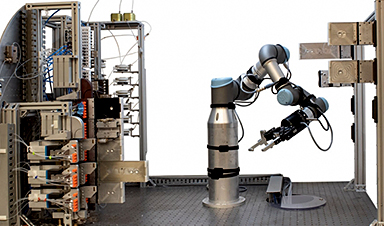
Guided by AI, robotic platform automates molecule manufacture

Guided by artificial intelligence and powered by a robotic platform, a system developed by MIT researchers moves a step closer to automating the production of small molecules that could be used in medicine, solar energy, and polymer chemistry. The system, described in the August 8 issue of Science, could free up bench chemists from a [...]

By |2019-08-17T09:37:17+00:00August 17th, 2019|Categories: News|0 Comments

Damaged hearts rewired with carbon nanotube fibers

Thin, flexible fibers made of carbon nanotubes have now proven able to bridge damaged heart tissues and deliver the electrical signals needed to keep those hearts beating. Scientists at Texas Heart Institute (THI) report they have used biocompatible fibers invented at Rice University in studies that showed sewing them directly into damaged tissue can restore electrical [...]

By |2019-08-16T17:16:48+00:00August 16th, 2019|Categories: News|0 Comments

A new way to hoard resources in nano-sized factories targeted for biotechnology

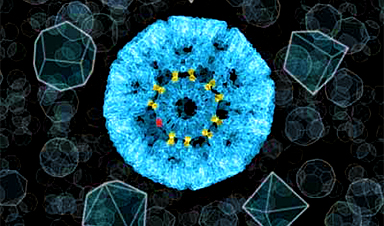
The lab of Cheryl Kerfeld at Michigan State University has created a synthetic nano-sized factory, based on natural ones found in bacteria. This research could someday lead to new medical, industrial or bioenergy applications. The new study is published in Metabolic Engineering ("A designed bacterial microcompartment shell with tunable composition and precision cargo [...]

By |2019-08-15T16:35:44+00:00August 15th, 2019|Categories: News|0 Comments

Scientists develop novel nano-vaccine for melanoma

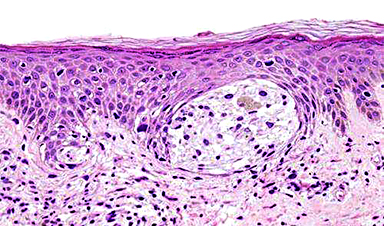
Melanoma in skin biopsy with H&E stain — this case may represent superficial spreading melanoma. Credit: Wikipedia/CC BY-SA 3.0 Researchers at Tel Aviv University have developed a novel nano-vaccine for melanoma, the most aggressive type of skin cancer. Their innovative approach has so far proven effective in preventing the development of melanoma in mouse [...]

By |2019-08-12T15:08:54+00:00August 12th, 2019|Categories: News|0 Comments

Controlling the shape-shifting skeletons of cells

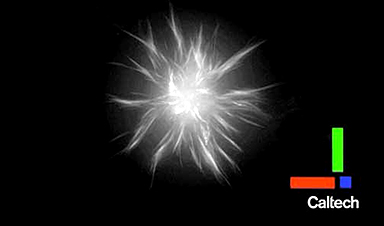
You know you have a skeleton, but did you know that your cells have skeletons, too? Cellular skeletons, or cytoskeletons, are shapeshifting networks of tiny protein filaments, enabling cells to propel themselves, carry cargo, and divide. Now, an interdisciplinary team of Caltech researchers has designed a way to study and manipulate the cytoskeleton in [...]

By |2019-08-10T07:40:23+00:00August 10th, 2019|Categories: News|0 Comments

Google Maps for tissue – Resembles Google Maps in 3D mode

Modern light microscopic techniques provide extremely detailed insights into organs, but the terabytes of data they produce are usually nearly impossible to process. New software, developed by a team led by MDC scientist Dr. Stephan Preibisch and presented in Nature Methods ("BigStitcher: Reconstructing high-resolution image datasets of cleared and expanded samples"), is helping researchers [...]

By |2019-08-10T05:47:36+00:00August 10th, 2019|Categories: News|0 Comments

Gold glue really does bond nanocages, ‘contradicting’ logic

It has long been known that gold can be used to do things that philosophers have never even dreamed of. The Institute of Nuclear Physics of the Polish Academy of Sciences in Cracow has confirmed the existence of 'gold glue': bonds involving gold atoms, capable of permanently bonding protein rings. Skilfully used by an [...]

By |2019-08-08T04:05:05+00:00August 8th, 2019|Categories: News|0 Comments

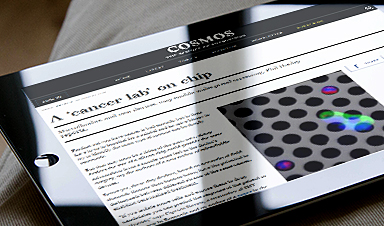
A ‘cancer lab’ on chip

Finding out you have cancer is bad enough, but to then have to go to hospital for a painful and invasive biopsy to try to identify the exact type of tumor can be deeply traumatic. But that may soon be a thing of the past: new, cheap devices the size of a silicon chip [...]

By |2019-08-05T07:19:55+00:00August 5th, 2019|Categories: News|0 Comments

Six paths to the nonsurgical future of brain-machine interfaces

DARPA has awarded funding to six organizations to support the Next-Generation Nonsurgical Neurotechnology (N3) program, first announced in March 2018. Battelle Memorial Institute, Carnegie Mellon University, Johns Hopkins University Applied Physics Laboratory, Palo Alto Research Center (PARC), Rice University, and Teledyne Scientific are leading multidisciplinary teams to develop high-resolution, bidirectional brain-machine interfaces for use [...]

By |2019-08-03T13:32:55+00:00August 3rd, 2019|Categories: News|0 Comments
Go to Top