Using machine learning to improve living.
A groundbreaking machine-learning study has revealed the optimal drug combinations to prevent the recurrence of COVID-19 after initial infection. Interestingly, the ideal combination differs among patients.
Using real-world data from a hospital in China, the UC Riverside-led study discovered that factors such as age, weight, and other health conditions dictate which drug combinations most effectively reduce recurrence rates. This finding has been published in the journal Frontiers in Artificial Intelligence.
That the data came from China is significant for two reasons. First, when patients are treated for COVID-19 in the U.S., it is normally with one or two drugs. Early in the pandemic, doctors in China could prescribe as many as eight different drugs, enabling analysis of more drug combinations. Second, COVID-19 patients in China must quarantine in a government-run hotel after being discharged from the hospital, which allows researchers to learn about reinfection rates in a more systematic way.
The study project began in April 2020, about a month into the pandemic. At the time, most studies were focused on death rates. However, doctors in Shenzhen, near Hong Kong, were more concerned about recurrence rates because fewer people there were dying.
"Surprisingly, nearly 30% of patients became positive again within 28 days of being released from the hospital," said Jiayu Liao, associate professor of bioengineering and study co-author.
Data for more than 400 COVID patients was included in the study. Their average age was 45, most were infected with moderate cases of the virus, and the group was evenly divided by gender. Most were treated with one of various combinations of an antiviral, an anti-inflammatory, and an immune-modulating drug, such as interferon or hydroxychloroquine.
That various demographic groups had better success with different combinations can be traced to the way the virus operates.
"COVID-19 suppresses interferon, a protein cells make to inhibit invading viruses. With defenses lowered, COVID can replicate until the immune system explodes in the body, and destroys tissues," explained Liao.
People who had weaker immune systems prior to COVID infection required an immune-boosting drug to fight the infection effectively. Younger peoples' immune systems become overactive with infection, which can lead to excessive tissue inflammation and even death. To prevent this, younger people require an immune suppressant as part of their treatment.
"When we get treatment for diseases, many doctors tend to offer one solution for people 18 and up. We should now reconsider age differences, as well as other disease conditions, such as diabetes and obesity," Liao said.
Most of the time, when conducting drug efficacy tests, scientists design a clinical trial in which people having the same disease and baseline characteristics are randomly assigned to either treatment or control groups. But that approach does not consider other medical conditions that may affect how the drug works — or doesn't work — for specific sub-groups.
Because this study utilized real-world data, the researchers had to adjust for factors that could affect the outcomes they observed. For example, if a certain drug combination was given mostly to older people and proved ineffective, it would not be clear whether the drug is to blame or the person's age.
"For this study, we pioneered a technique to attack the challenge of confounding factors by virtually matching people with similar characteristics who were undergoing different treatment combinations," Cui said. "In this way, we could generalize the efficacy of treatment combinations in different subgroups."
While COVID-19 is better understood today, and vaccines have greatly reduced death rates, there remains much to be learned about treatments and preventing reinfections. "Now that recurrence is more of a concern, I hope people can use these results," Cui said.
Machine learning has been used in many areas related to COVID, such as disease diagnosis, vaccine development, and drug design, in addition to this new analysis of multi-drug combinations. Liao believes that technology will have an even bigger role to play going forward.
"In medicine, machine learning and artificial intelligence have not yet had as much impact as I believe they will in the future," Liao said. "This project is a great example of how we can move toward truly personalized medicine."
Reference: "Learning from real world data about combinatorial treatment selection for COVID-19" by Song Zhai, Zhiwei Zhang, Jiayu Liao and Xinping Cui, 3 April 2023, Frontiers in Artificial Intelligence.
DOI: 10.3389/frai.2023.1123285

News
After only a short training, people in a coma managed to send targeted signals
Researchers have succeeded in communicating with brain-injured patients who are unconscious. They see enormous potential in this for future treatments. Patients who lie motionless in bed after a severe brain injury and do not [...]
MIT Scientists Reprogram Immune Cells Inside the Body To Destroy Cancer
Natural killer cells reprogrammed inside mice eliminated lymphoma tumors and helped damaged livers heal, though whether this approach could help people with cancer or autoimmune disease remains unknown. To make a cancer treatment from [...]
Melanoma mRNA Vaccine Shows Promise in Preventing Disease Recurrence
Key takeaways: Phase 3 trial finds personalized intismeran plus pembrolizumab may better prevent high-risk melanoma recurrence after surgery The trial enrolled 1,137 patients and builds on phase 2 results showing about half the recurrence [...]
Scientists Discover a Powerful New Weapon Against a Dangerous Gut Infection
The promise of an experimental treatment for C. difficile gut infections lies partly in the bacteria it leaves alive, according to early laboratory and mouse research. Broad-spectrum antibiotics can disrupt the gut’s microbial community, [...]
Your Bones May Hold a Hidden Clue to Blood Cancer Survival
For people with blood cancers called myelodysplastic syndromes, osteoporosis may hold an overlooked clue to survival, a three-year observational study suggests. In blood cancers that develop in the bone marrow, an important clue to [...]

Researchers Discover What Reading for Pleasure May Be Doing to Your Brain
Reading for pleasure may offer surprising benefits for the brain, with research linking the habit to better mental health, stronger cognitive abilities, and a lower risk of dementia. Reading for pleasure may do far [...]
Scientists Discover a Hidden Trigger That Keeps Inflammation Alive
Inflammation persists after proteins detach from immune receptors, revealing a potential target for autoimmune treatments. Since a Nobel Prize-winning discovery in the 1990s identified molecules called Toll-like Receptors as the guardians of the human [...]
A Virus Gives Itself Away the Moment It Attacks
Researchers have found the trigger behind a powerful bacterial defense against viruses. Viruses that prey on bacteria could become an increasingly important tool for treating bacterial infections, particularly as antibiotic resistance makes some infections [...]
Scientists Discover Aspirin May Slash Dementia Risk by 70% – but Only for Certain People
Aspirin was linked to a sharply lower dementia risk in some older adults, and their genes may hold the clue. A Monash University analysis found that older adults with a particular genetic profile had [...]
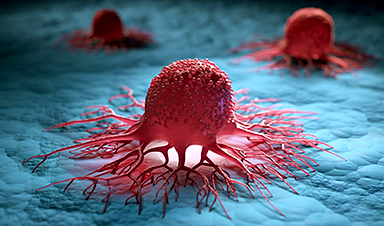
Inflammation May Awaken Dormant Cancer Cells Years After Treatment
The body’s response to inflammation may disturb cancer cells that have been lying silent for years, giving them an opportunity to grow again. Researchers at the Francis Crick Institute have found that gut inflammation [...]
Where do nanoparticles go once they enter the body?
New international best practice guidance, co-written at ANSTO, sets out how to measure where nanoparticles like titanium dioxide end up in the body and how long they remain. The guidance has been shared by [...]
Long-Acting HIV Shots Could Solve a Major Treatment Challenge for Young People
A major African trial suggests that changing how HIV treatment is delivered could significantly improve viral suppression in adolescents. Young people with HIV were more likely to keep the virus suppressed when they received [...]

WHO Factsheets – The top 10 causes of death
In 2023, the 10 leading causes of death accounted for 33 million deaths, or 54% of the total 61 million deaths worldwide. The top global causes of death, in order of total number of lives lost, [...]
Aging Cells May Be Hiding From the Immune System – Scientists Think They Know How
Your immune system is supposed to clear out damaged cells. Researchers may have found how some of them hide and linger as the body ages. Researchers led by Cedars-Sinai Health Sciences University have identified [...]
Your Voice May Reveal How Fast Your Brain Is Aging
Researchers have developed a machine-learning “speech clock” that estimates age from subtle patterns in how people speak and what they say. It is possible that people’s voices may contain certain signals of aging that [...]
Optogenetics Pioneers Win 2026 Nobel Prize in Physiology or Medicine
The 2026 Nobel Prize in Physiology or Medicine has been awarded to Peter Hegemann, Georg Nagel, and Karl Deisseroth for the development of optogenetics, a revolutionary technology that uses light to control individual neurons [...]