Engineers have developed a passive evaporative cooling membrane that dramatically improves heat removal for electronics and data centers
Engineers at the University of California San Diego have created an innovative cooling system designed to greatly enhance the energy efficiency of data centers and high-performance electronic devices. This new approach relies on a specially engineered fiber membrane that naturally removes heat through evaporation. It provides an effective and energy-saving alternative to conventional cooling methods such as fans, heat sinks, and liquid pumps, while also potentially reducing the large amounts of water used by many existing systems.
The breakthrough is described in detail in a study published in the journal Joule.
As artificial intelligence (AI) and cloud computing continue to grow, so does the demand for data processing, and the heat that accompanies it. Cooling now represents as much as 40% of a data center's total energy consumption. If current growth continues, global energy demand for cooling could more than double by 2030.
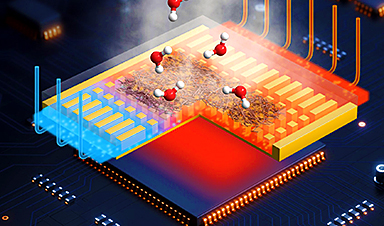
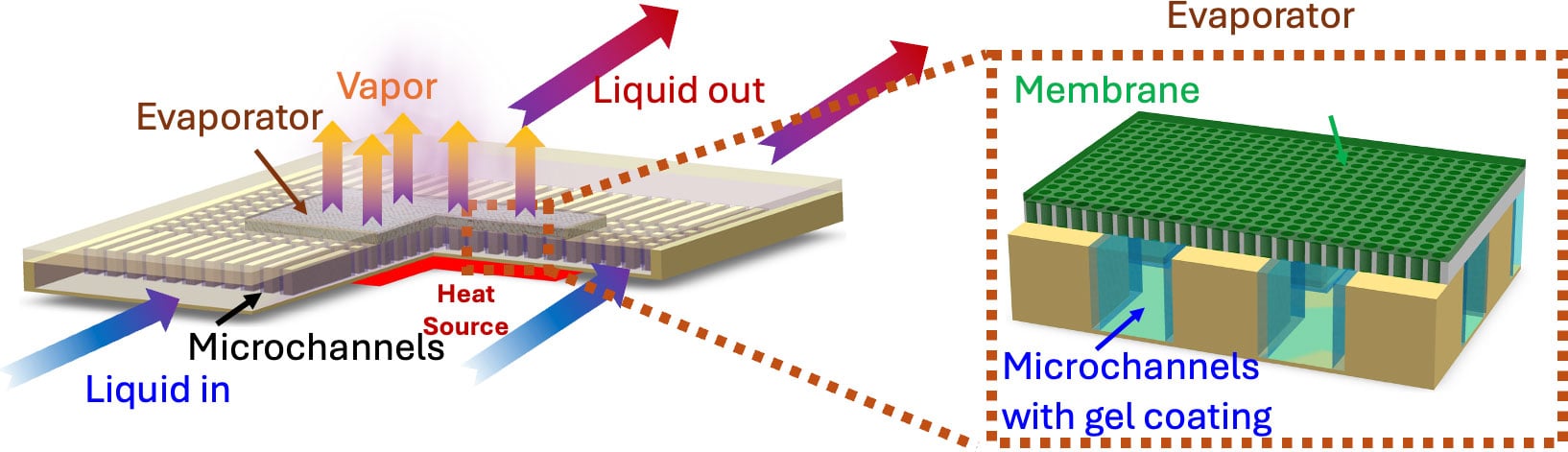
The newly developed evaporative cooling system may help slow this trend. It operates using an inexpensive fiber membrane made up of countless interconnected microscopic pores that draw cooling liquid across its surface through capillary action. When the liquid evaporates, it removes heat from the underlying electronics without the need for additional energy. The membrane is placed above microchannels that supply the liquid, allowing heat to dissipate efficiently from the components below.
Harnessing Evaporation for Efficient Heat Dissipation
"Compared to traditional air or liquid cooling, evaporation can dissipate higher heat flux while using less energy," said Renkun Chen, professor in the Department of Mechanical and Aerospace Engineering at the UC San Diego Jacobs School of Engineering, who co-led the project with professors Shengqiang Cai and Abhishek Saha, both from the same department. Mechanical and aerospace engineering Ph.D. student Tianshi Feng and postdoctoral researcher Yu Pei, both members of Chen's research group, are co-first authors on the study.
Many applications currently rely on evaporation for cooling. Heat pipes in laptops and evaporators in air conditioners are some examples, explained Chen. But applying it effectively to high-power electronics has been a challenge.
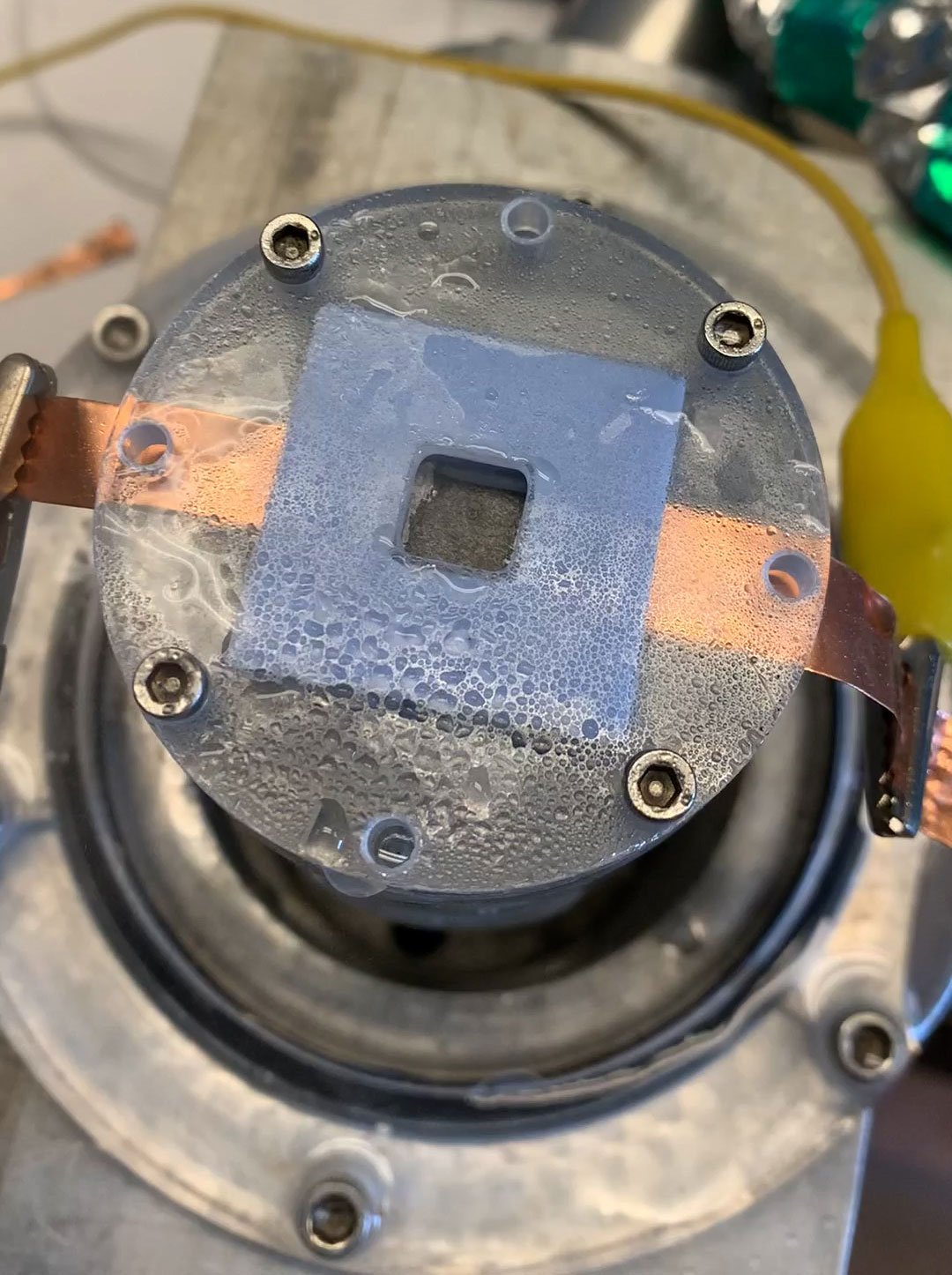
Previous attempts using porous membranes—which have large surface areas ideal for evaporation—failed because the pores were often either too small, causing clogging, or too large, leading to unwanted boiling.
"Here, we use porous fiber membranes with interconnected pores with the right size," said Chen. This design achieves efficient evaporation without those downsides.
Record-Breaking Performance and Future Potential
When tested across variable heat fluxes, the membrane achieved record-breaking performance. It managed heat fluxes exceeding 800 watts of heat per square centimeter—one of the highest levels ever recorded for this kind of cooling system. It also proved stable over multiple hours of operation.
"This success showcases the potential of reimagining materials for entirely new applications," said Chen. "These fiber membranes were originally designed for filtration, and no one had previously explored their use in evaporation. We recognized that their unique structural characteristics—interconnected pores and just the right pore size—could make them ideal for efficient evaporative cooling. What surprised us was that, with the right mechanical reinforcement, they not only withstood the high heat flux–they performed extremely well under it."
While the current results are promising, Chen says the technology is still operating well below its theoretical limit. The team is now working to refine the membrane and optimize performance. Next steps include integrating it into prototypes of cold plates, which are flat components that attach to chips like CPUs and GPUs to dissipate heat. The team is also launching a startup company to commercialize the technology.
Reference: "High-flux and stable thin-film evaporation from fiber membranes with interconnected pores" by Tianshi Feng, Yu Pei, Haowen Zhang, Brooklyn Asai, Gaoweiang Dong, Atharva Joshi, Abhishek Saha, Shengqiang Cai and Renkun Chen, 13 June 2025, Joule.
DOI: 10.1016/j.joule.2025.101975
This research was supported by the National Science Foundation (grants CMMI-1762560 and DMR-2005181). The work was performed in part at the San Diego Nanotechnology Infrastructure (SDNI) at UC San Diego, a member of the National Nanotechnology Coordinated Infrastructure, which is supported by the National Science Foundation (grant ECCS-2025752).
Disclosures: A patent related to this work was filed by the Regents of the University of California (PCT Application No. PCT/US24/46923.). The authors declare that they have no other competing interests.

News

Cancer’s Hidden Antioxidant Shield Helps It Escape the Immune System
Blocking an antioxidant protein that tumors use to suppress immune attacks improved cancer immunotherapy responses in mice. Cancer cells can release antioxidants that interfere with the immune cells trying to kill them. Researchers have [...]

Scientists Find a Berry Compound That Helps Muscle Cells Burn Fat
Pterostilbene, a compound found naturally in some foods, affects how skeletal muscles process fats by stabilizing a protein called PPARδ and increasing its signaling activity. Pterostilbene, a natural compound found in blueberries, grapes, and [...]

Two Hidden Forces Help Build the Human Brain Before Birth
Scientists have uncovered two surprising forces that help guide how the human brain forms before birth. Before birth, the human brain is shaped in large part by an unusual class of stem cells known [...]

Researchers Uncover a Hidden Trigger Behind Chronic Inflammation
The findings offer new insights that could help guide the development of future therapies. A protein called human resistin may help flip on one of the immune system’s most powerful inflammatory switches. Researchers at [...]
Scientists Have Uncovered Previously Hidden Microbial Activity on Human Skin
The most abundant microbes on your skin may not be the ones doing most of the work. Human skin supports vast communities of bacteria, fungi, and viruses that can influence its protective barrier, immune [...]

Brazilian Tree Compounds Fight COVID-19 on Multiple Fronts
Scientists found compounds in a Brazilian tree that hit SARS-CoV-2 on multiple fronts, revealing a promising new lead in the search for COVID-19 treatments. Researchers have found that galloylquinic acids extracted from the leaves [...]

Cutting Two Amino Acids Slowed Prostate Cancer in Mice
A newly identified link between amino acid metabolism and cholesterol production may help prostate tumors adapt to hormone therapy. Prostate cancer can find ways around treatments designed to deprive tumors of the hormones they [...]

Largest-Ever Physics Survey Raises New Doubts About Our Model of the Universe
Physicists around the world remain deeply divided on key mysteries of the universe, from dark matter to quantum gravity. The standard cosmological model failed to gain majority support, and no leading theory dominated the [...]

Scientists Just Overturned a 100-Year-Old Belief About Bacteria in the Lungs
New findings raise questions about the role of microbes living in the lungs. More than 35 trillion bacteria live throughout the human body, forming microbiomes in the gut, mouth, lungs, skin, and urogenital tract. [...]

GHCE Concept
From the preface of the book Global Health Care Equivalency in the Age of Nanotechnology, Nanomedicine and Artificial Intelligence, Edited by Frank Boehm: Since the publication of my first book (Nanomedical Device and Systems [...]

Novartis, Ionis drug failure spurs questions
Pelacarsen didn’t protect heart health despite lowering levels of a protein particle, “Lp(a),” in a large clinical trial — a result with important implications for cardiovascular drug research. Dive Brief: An RNA drug from [...]

New injectable treatment helps the brain rebuild after stroke
Biomedical engineers at Duke University have created an injectable biomaterial that may help the brain recover from damage left behind by an ischemic stroke. In experiments with mice, the material transformed the cavity created [...]

Scientists Discover a Hidden “Immune Organ” Inside the Skull
Researchers discovered lymph node-like immune hubs inside skull bone marrow that appear to act as rapid-response centers for the brain. For decades, the brain was thought to operate largely apart from the immune system. [...]

Engineered tRNAs and lipid nanoparticles target nonsense mutation cystic fibrosis
Researchers have developed a potential new approach for treating a form of cystic fibrosis caused by so-called nonsense mutations, combining chemically modified transfer RNAs with lipid nanoparticles designed to deliver the therapy directly to [...]
New pancreatic cancer drug carries a $39,800 monthly list price
A groundbreaking treatment for one of the most common forms of pancreatic cancer has been approved in pill form by the FDA. Revolution Medicines’ oral tablet daraxonrasib, branded as Rasonque, reduced the risk of [...]

Researchers Have Discovered a New Way To Reduce Chronic Nerve Pain
A cancer-linked protein called BRAF may help drive chronic nerve pain, and existing cancer drugs targeting it reduced pain sensitivity in preclinical models. Chronic nerve pain can persist long after an injury and often [...]