For decades, researchers have been looking for ways to destroy cancer cells in a targeted manner without further weakening the body. But for many patients whose immune system is severely impaired by chemotherapy or radiation, such therapies often remain ineffective. Now Japanese scientists are providing a possible way out: a combination of two bacteria that control each other and attack cancer even without the help of the immune system.
The new therapy could help above all those people whose immune system is exhausted after cancer therapy – and for whom there are hardly any treatment options so far.
Two microbes, one task
A research team led by Eijiro Miyako from the Japan Advanced Institute of Science and Technology has combined two natural bacterial species: Proteus mirabilis and Rhodopseudomonas palustris. In a ratio of three to 97 percent, they form a consortium that the researchers call "AUN" – after a Japanese term for harmony.
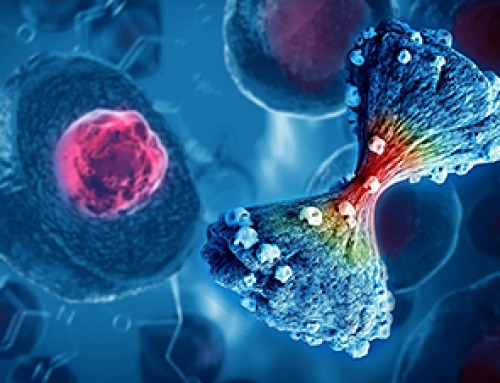
These two microbes behave like partners: Proteus mirabilis penetrates deep into tumor tissue and changes its shape there to attack cancer cells. Rhodopseudomonas palustris regulates the process and prevents the bacteria from getting out of control or triggering inflammation. This creates a finely balanced balance that destroys tumors from the inside out, but spares healthy tissue.
"After 150 years, a new chapter in bacteria-based cancer therapy is finally beginning," says study leader Miyako. He is alluding to the fact that scientists first researched bacterial cancer treatment 150 years ago.
"Suffocating" the tumor
In the study published in the journal Nature Biomedical Engineering, the scientists investigated what happens in the body when AUN enters the bloodstream. The bacteria find their way to the tumour and begin to change its blood supply. Small clots form in the fine vessels, which only occur in the tumour tissue. As a result, the cancer is cut off from oxygen – it "suffocates" from the inside.
At the same time, the bacteria form fibre-like structures with which they directly attack cancer cells. This combined effect leads to a massive necrosis, i.e. to the death of the tumour tissue.
Teamwork significantly increases the impact
The team found that a two-stage treatment is particularly effective: first a small dose to accustom the immune system to the bacteria, followed by a higher dose. This procedure led to a complete decrease in tumours in all experiments – while at the same time being well tolerated.
Hope even for weak patients
Classic immunotherapies, such as so-called checkpoint inhibitors or CAR-T cell therapies, only work when the body's own defences are intact. In people who have already had several chemotherapy treatments, they usually remain unsuccessful. This is exactly where the new concept cats in: The bacteria attack tumours independently of Defence cells.
In the study, the researchers reported:
AUN completely eliminated tumours – even in animals whose immune system was barely active.
This opens up a completely new way of treatment for patients who have previously had no chance of immunotherapy.
No genetically modified microbes
Particularly remarkable: The researchers did not have to genetically modify the microbes. Both species exist in nature – Proteus mirabilis can also be found in small quantities in the human body, Rhodopseudomonas palustris in soils and waters.
They adapt in the tumour environment: one bacterium becomes more mobile and aggressive, the other ensures that the attack remains targeted. If unwanted reactions occur, the system can be stopped with common antibiotics. This could make the use for patients one day much safer than previous bacterial therapies.
Clinical study planned
The method is not yet approved for clinical practice. The team around Miyako is currently preparing the first studies with humans. In the coming years, safety, dosage and efficacy are to be tested.
The goal is to develop a therapy that fights tumours regardless of the state of the immune system. If this succeeds, AUN therapy could create a new treatment option – for those patients who previously had no hope of recovery.
Summary:
- A Japanese study shows that two naturally occurring bacteria can destroy cancer without needing the immune system.
- The bacteria specifically block the blood supply to cancer cells and trigger their death, while healthy cells are spared.
- The method is considered a hope for patients whose immune system is severely weakened after chemotherapy or radiation therapy.
Von Anne Bajrica
The original of this article "New bacterial therapy destroys cancer even with a weakened immune system" comes from Smart Up News.

News

Scientists Discover Simple Saliva Test That Reveals Hidden Diabetes Risk
Researchers have identified a potential new way to assess metabolic health using saliva instead of blood. High insulin levels in the blood, known as hyperinsulinemia, can reveal metabolic problems long before obvious symptoms appear. It is [...]

One Nasal Spray Could Protect Against COVID, Flu, Pneumonia, and More
A single nasal spray vaccine may one day protect against viruses, pneumonia, and even allergies. For decades, scientists have dreamed of creating a universal vaccine capable of protecting against many different pathogens. The idea [...]
New AI Model Predicts Cancer Spread With Incredible Accuracy
Scientists have developed an AI system that analyzes complex gene-expression signatures to estimate the likelihood that a tumor will spread. Why do some tumors spread throughout the body while others remain confined to their [...]

Scientists Discover DNA “Flips” That Supercharge Evolution
In Lake Malawi, hundreds of species of cichlid fish have evolved with astonishing speed, offering scientists a rare opportunity to study how biodiversity arises. Researchers have identified segments of “flipped” DNA that may allow fish to adapt rapidly [...]
Our books now available worldwide!
Online Sellers other than Amazon, Routledge, and IOPP Indigo Global Health Care Equivalency in the Age of Nanotechnology, Nanomedicine and Artifcial Intelligence Global Health Care Equivalency In The Age Of Nanotechnology, Nanomedicine And Artificial [...]
Scientists Discover Why Some COVID Survivors Still Can’t Taste Food Years Later
A new study provides the first direct biological evidence explaining why some people continue to experience taste loss long after recovering from COVID-19. Researchers have uncovered specific biological changes in taste buds that could help [...]
Catching COVID significantly raises the risk of developing kidney disease, researchers find
Catching Covid significantly raises the risk of developing deadly kidney disease, research has shown. The virus was found to increase the chances that patients will develop the incurable condition by around 50 per cent. [...]
New Toothpaste Stops Gum Disease Without Harming Healthy Bacteria
Researchers have developed a targeted approach to combat periodontitis without disrupting the natural balance of the oral microbiome. The innovation could reshape how gum disease is treated while preserving beneficial bacteria. The human mouth [...]
Plastic Without End: Are We Polluting the Planet for Eternity?
The Kunming Montreal Global Biodiversity Framework calls for the elimination of plastic pollution by 2030. If that goal has been clearly set, why have meaningful measures that create real change still not been implemented? [...]
Scientists Rewire Natural Killer Cells To Attack Cancer Faster and Harder
Researchers tested new CAR designs in NK-92 cells and found the modified cells killed tumor cells more effectively, showing stronger anti-cancer activity. Researchers at the Ribeirão Preto Blood Center and the Center for Cell-Based [...]
New “Cellular” Target Could Transform How We Treat Alzheimer’s Disease
A new study from researchers highlights an unexpected player in Alzheimer’s disease: aging astrocytes. Senescent astrocytes have been identified as a major contributor to Alzheimer’s progression. The cells lose protective functions and fuel inflammation, particularly in [...]
Treating a Common Dental Infection… Effects That Extend Far Beyond the Mouth
Successful root canal treatment may help lower inflammation associated with heart disease and improve blood sugar and cholesterol levels. Treating an infected tooth with a successful root canal procedure may do more than relieve [...]
Microplastics found in prostate tumors in small study
In a new study, researchers found microplastics deep inside prostate cancer tumors, raising more questions about the role the ubiquitous pollutants play in public health. The findings — which come from a small study of 10 [...]
All blue-eyed people have this one thing in common
All Blue-Eyed People Have This One Thing In Common Blue Eyes Aren’t Random—Research Traces Them Back to One Prehistoric Human It sounds like a myth at first — something you’d hear in a folklore [...]
Scientists reveal how exercise protects the brain from Alzheimer’s
Researchers at UC San Francisco have identified a biological process that may explain why exercise sharpens thinking and memory. Their findings suggest that physical activity strengthens the brain's built in defense system, helping protect [...]
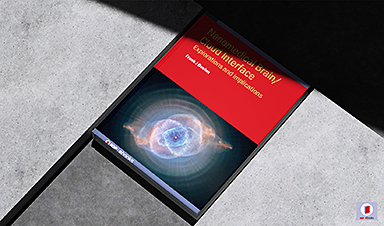
NanoMedical Brain/Cloud Interface – Explorations and Implications. A new book from Frank Boehm
New book from Frank Boehm, NanoappsMedical Inc Founder: This book explores the future hypothetical possibility that the cerebral cortex of the human brain might be seamlessly, safely, and securely connected with the Cloud via [...]