A brain cap and smart algorithms may one day help paralyzed patients turn thought into movement—no surgery required.
People with spinal cord injuries often experience partial or complete loss of movement in their arms or legs. In many cases, the nerves in the limbs themselves still function, and the brain continues to produce normal signals. The problem is the injury to the spinal cord, which blocks communication between the brain and the rest of the body.
Researchers are now exploring ways to reconnect those signals without repairing the spinal cord itself.
Using Brain Scans to Capture Movement Intent
In a study published today (January 20) in APL Bioengineering by AIP Publishing, scientists from universities in Italy and Switzerland examined whether electroencephalography (EEG) could help link brain activity to limb movement. Their work focused on testing whether this noninvasive technology could read the brain's movement signals and make them useful again.
When someone attempts to move a paralyzed limb, their brain still produces the same electrical patterns associated with that action. If these signals can be detected and interpreted, they could be sent to a spinal cord stimulator, which may then activate the nerves responsible for movement in that limb.
Why Avoid Brain Implants
Much of the earlier research in this field has relied on surgically implanted electrodes to read movement-related signals directly from the brain. Although those systems have shown promise, the researchers wanted to see if EEG could offer a safer alternative.
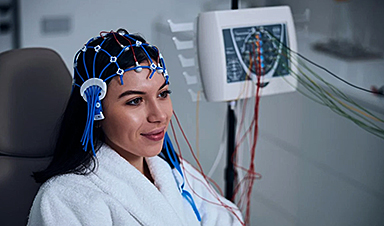
EEG systems are worn as caps fitted with multiple electrodes that record brain activity from the scalp. While they may appear complex or intimidating, the researchers argue that they are far less risky than implanting hardware into the brain or spinal cord.
"It can cause infections; it's another surgical procedure," said author Laura Toni. "We were wondering whether that could be avoided."
Limits of EEG Technology
Reading movement signals through EEG presents significant technical challenges. Because the electrodes sit on the surface of the head, they have difficulty detecting activity that originates deeper inside the brain. This limitation affects some movements more than others.
Signals related to arm and hand motion are easier to detect because they originate closer to the outer regions of the brain. Movements involving the legs and feet are harder to decode because those signals come from areas located deeper and closer to the center.
"The brain controls lower limb movements mainly in the central area, while upper limb movements are more on the outside," said Toni. "It's easier to have a spatial mapping of what you're trying to decode compared to the lower limbs."
Machine Learning Helps Decode Brain Signals
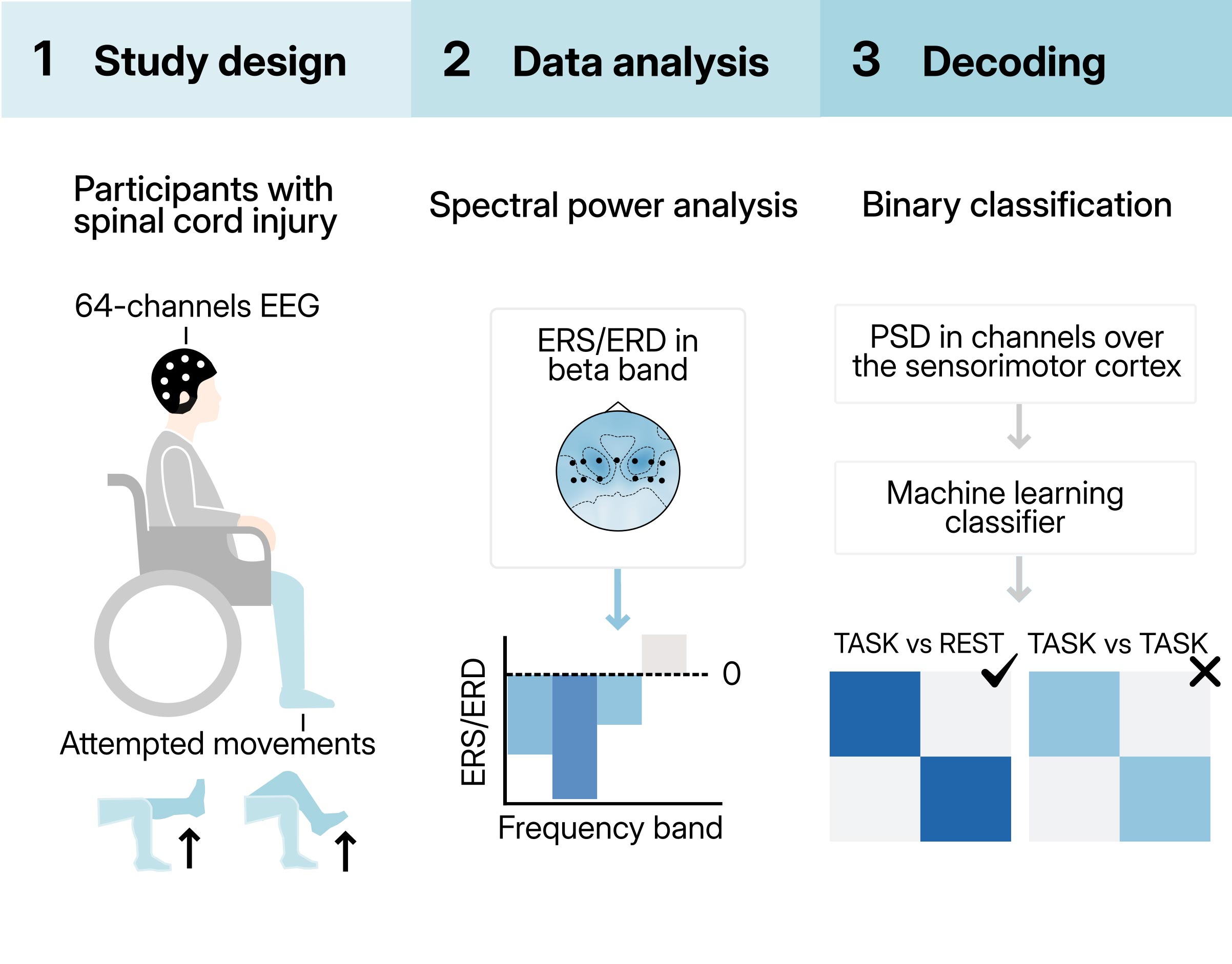
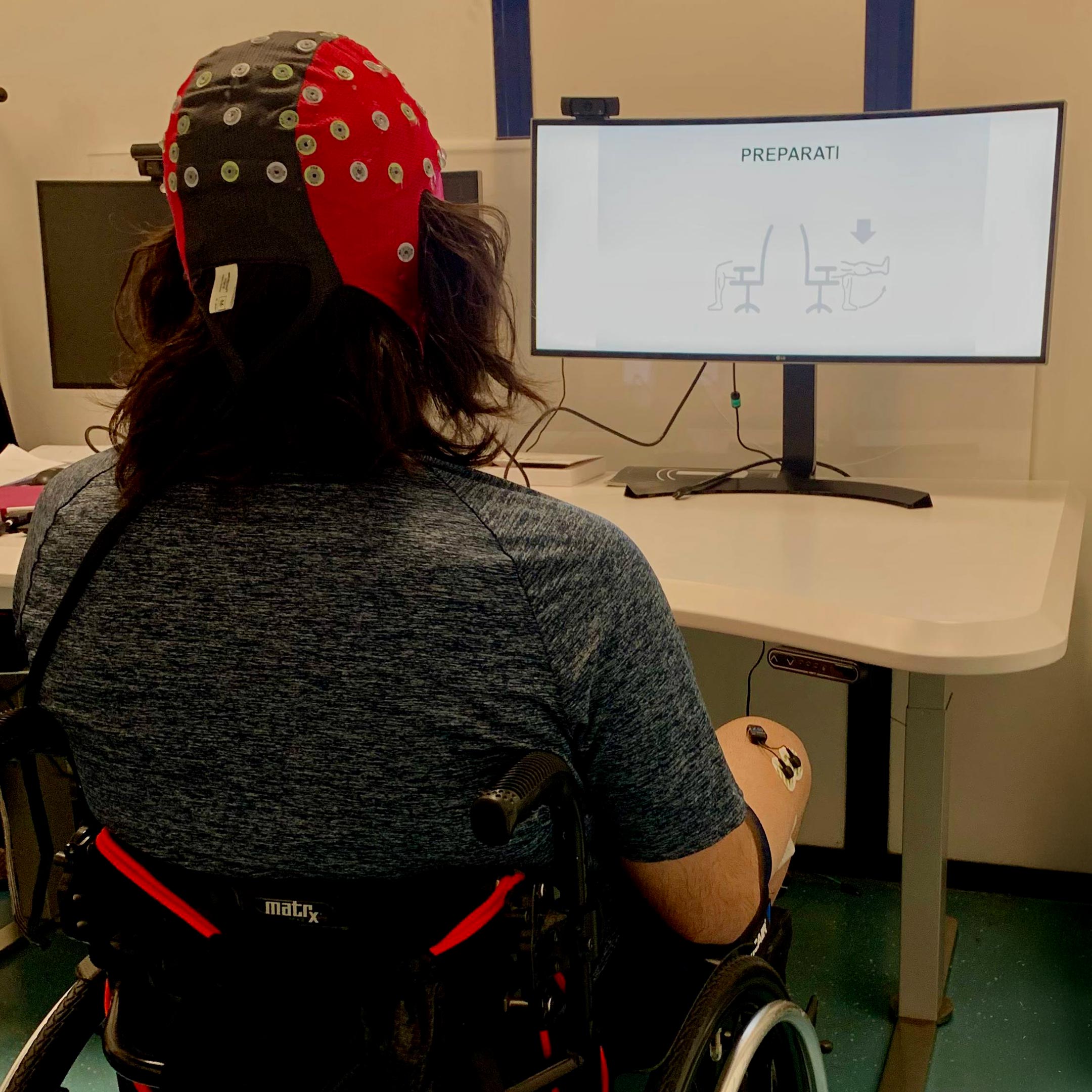
To make sense of the limited EEG data, the researchers used a machine learning algorithm designed to analyze small and complex datasets. During testing, patients wore EEG caps while attempting simple movements. The team recorded the brain activity produced during these efforts and trained the algorithm to sort and classify the signals.
The system was able to reliably tell when a person was trying to move versus when they were not. However, it struggled to distinguish between different types of movement attempts.
What Comes Next
The researchers believe their approach can be improved with further development. Future work will focus on refining the algorithm so it can identify specific actions such as standing, walking, or climbing. They also hope to explore how these decoded signals could be used to activate implanted stimulators in patients undergoing recovery.
If successful, this method could move noninvasive brain scanning closer to helping people with spinal cord injuries regain meaningful movement.
Reference: "Decoding lower-limb movement attempts from electro-encephalographic signals in spinal cord injury patients" by Laura Toni, Valeria De Seta, Luigi Albano, Daniele Emedoli, Aiden Xu, Vincent Mendez, Filippo Agnesi, Sandro Iannaccone, Pietro Mortini, Silvestro Micera and Simone Romeni, 20 January 2026, APL Bioengineering.
DOI: 10.1063/5.0297307

News
New AI Model Predicts Cancer Spread With Incredible Accuracy
Scientists have developed an AI system that analyzes complex gene-expression signatures to estimate the likelihood that a tumor will spread. Why do some tumors spread throughout the body while others remain confined to their [...]

Scientists Discover DNA “Flips” That Supercharge Evolution
In Lake Malawi, hundreds of species of cichlid fish have evolved with astonishing speed, offering scientists a rare opportunity to study how biodiversity arises. Researchers have identified segments of “flipped” DNA that may allow fish to adapt rapidly [...]

Our books now available worldwide!
Online Sellers other than Amazon, Routledge, and IOPP Indigo Global Health Care Equivalency in the Age of Nanotechnology, Nanomedicine and Artifcial Intelligence Global Health Care Equivalency In The Age Of Nanotechnology, Nanomedicine And Artificial [...]

Scientists Discover Why Some COVID Survivors Still Can’t Taste Food Years Later
A new study provides the first direct biological evidence explaining why some people continue to experience taste loss long after recovering from COVID-19. Researchers have uncovered specific biological changes in taste buds that could help [...]

Catching COVID significantly raises the risk of developing kidney disease, researchers find
Catching Covid significantly raises the risk of developing deadly kidney disease, research has shown. The virus was found to increase the chances that patients will develop the incurable condition by around 50 per cent. [...]

New Toothpaste Stops Gum Disease Without Harming Healthy Bacteria
Researchers have developed a targeted approach to combat periodontitis without disrupting the natural balance of the oral microbiome. The innovation could reshape how gum disease is treated while preserving beneficial bacteria. The human mouth [...]

Plastic Without End: Are We Polluting the Planet for Eternity?
The Kunming Montreal Global Biodiversity Framework calls for the elimination of plastic pollution by 2030. If that goal has been clearly set, why have meaningful measures that create real change still not been implemented? [...]
Scientists Rewire Natural Killer Cells To Attack Cancer Faster and Harder
Researchers tested new CAR designs in NK-92 cells and found the modified cells killed tumor cells more effectively, showing stronger anti-cancer activity. Researchers at the Ribeirão Preto Blood Center and the Center for Cell-Based [...]
New “Cellular” Target Could Transform How We Treat Alzheimer’s Disease
A new study from researchers highlights an unexpected player in Alzheimer’s disease: aging astrocytes. Senescent astrocytes have been identified as a major contributor to Alzheimer’s progression. The cells lose protective functions and fuel inflammation, particularly in [...]

Treating a Common Dental Infection… Effects That Extend Far Beyond the Mouth
Successful root canal treatment may help lower inflammation associated with heart disease and improve blood sugar and cholesterol levels. Treating an infected tooth with a successful root canal procedure may do more than relieve [...]
Microplastics found in prostate tumors in small study
In a new study, researchers found microplastics deep inside prostate cancer tumors, raising more questions about the role the ubiquitous pollutants play in public health. The findings — which come from a small study of 10 [...]

All blue-eyed people have this one thing in common
All Blue-Eyed People Have This One Thing In Common Blue Eyes Aren’t Random—Research Traces Them Back to One Prehistoric Human It sounds like a myth at first — something you’d hear in a folklore [...]
Scientists reveal how exercise protects the brain from Alzheimer’s
Researchers at UC San Francisco have identified a biological process that may explain why exercise sharpens thinking and memory. Their findings suggest that physical activity strengthens the brain's built in defense system, helping protect [...]

NanoMedical Brain/Cloud Interface – Explorations and Implications. A new book from Frank Boehm
New book from Frank Boehm, NanoappsMedical Inc Founder: This book explores the future hypothetical possibility that the cerebral cortex of the human brain might be seamlessly, safely, and securely connected with the Cloud via [...]

Deadly Pancreatic Cancer Found To “Wire Itself” Into the Body’s Nerves
A newly discovered link between pancreatic cancer and neural signaling reveals a promising drug target that slows tumor growth by blocking glutamate uptake. Pancreatic cancer is among the most deadly cancers, and scientists are [...]
This Simple Brain Exercise May Protect Against Dementia for 20 Years
A long-running study following thousands of older adults suggests that a relatively brief period of targeted brain training may have effects that last decades. Starting in the late 1990s, close to 3,000 older adults [...]