A surprising lab discovery reveals a light-powered way to tweak complex drugs faster, cleaner, and later in development.
Researchers at the University of Cambridge have created a new technique for altering complex drug molecules using light instead of hazardous chemicals. The advance could speed up drug development and improve how medicines are produced.
The work, published today (March 12) in Nature Synthesis, introduces what the researchers describe as an "anti-Friedel–Crafts" reaction. In traditional Friedel–Crafts chemistry, powerful reagents or metal catalysts are required under demanding laboratory conditions. Because of these harsh requirements, the reaction typically takes place early in the manufacturing process, followed by many additional steps to complete the final drug.
The Cambridge method flips this approach. Instead of making changes at the beginning, scientists can now adjust drug molecules much later in the production process.
LED Light Powers a Cleaner Chemical Reaction
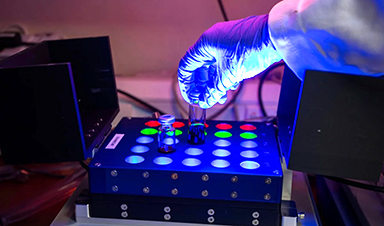
The reaction does not rely on heavy metal catalysts. Instead, it is activated by an LED lamp at ambient temperature. Once the light initiates the reaction, it starts a chain process that forms new carbon–carbon bonds under gentle conditions and without toxic or costly chemicals.
In practical terms, chemists can now modify a finished or nearly finished drug molecule rather than dismantling it and rebuilding it piece by piece. That conventional process can take months.
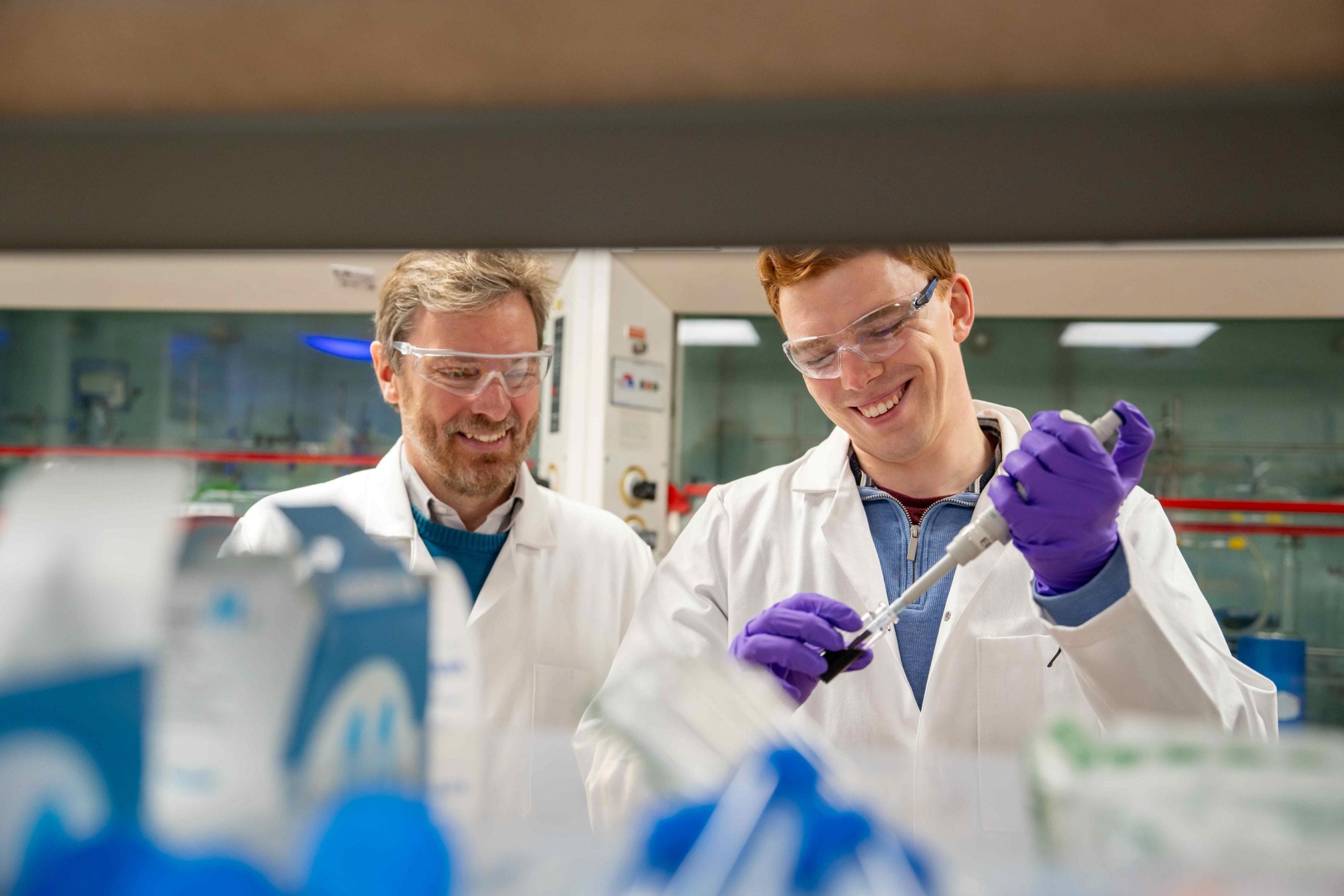
"We've found a new way to make precise changes to complex drug molecules, particularly ones that have been exceptionally difficult to modify in the past," said David Vahey, first author and a PhD researcher at St John's College, Cambridge.
"Scientists can spend months rebuilding large parts of a molecule just to test one small change. Now, instead of doing a multistep process for hundreds of molecules, scientists can start with their hit and make small modifications later on."
"This reaction lets scientists make precise adjustments much later in the process, under mild conditions and without relying on toxic or expensive reagents. That opens chemical space that has been hard to access before and gives medicinal chemists a cleaner, more efficient tool for exploring new versions of a drug."
Faster Drug Development With Less Waste
Reducing the number of steps in chemical synthesis lowers the amount of chemicals required, cuts energy use, and reduces environmental impact. It also saves time for chemists working to refine new medicines.
The reaction is highly selective, allowing researchers to alter one specific part of a molecule without disturbing other delicate sections. This precision is crucial in drug development, where even small structural changes can influence how well a medicine works, how it behaves inside the body, or whether it causes unwanted side effects.
The discovery also addresses one of the most fundamental tasks in chemistry: creating carbon–carbon bonds. These bonds form the backbone of countless substances, from fuels to complex biological molecules.
Because the reaction tolerates many different chemical groups on a molecule, a property chemists call "high functional-group tolerance," it is particularly useful for late-stage optimization. This phase of drug development involves fine-tuning molecules to improve their effectiveness and safety.
By avoiding heavy metal catalysts and reducing lengthy synthetic processes, the approach could also significantly cut chemical waste and energy use in pharmaceutical manufacturing. This is increasingly important as the industry works to reduce its environmental footprint.
Inspiration From Sustainable Chemistry
Vahey works in the research group of Professor Erwin Reisner at Cambridge. Reisner's team is known for developing chemistry systems inspired by photosynthesis. Their work often focuses on using sunlight to convert waste, water, and the greenhouse gas carbon dioxide into useful chemicals and fuels.
Reisner, Professor of Energy and Sustainability in the Yusuf Hamied Department of Chemistry and lead author of the study, said the importance of the discovery lies in expanding what chemists can accomplish under practical conditions while supporting greener chemical production.
"This is a new way to make a fundamental carbon–carbon bond, and that's why the potential impact is so great. It also means chemists can avoid an undesirable and inefficient drug modification process."
The researchers tested the reaction on a wide variety of drug-like molecules and showed that it can work in continuous-flow systems often used in industrial production. Collaboration with AstraZeneca helped evaluate whether the method could meet the real-world requirements of large-scale pharmaceutical development.
"Transitioning the chemical industry to a sustainable industry is arguably one of the most difficult parts of the whole energy transition," explained Reisner.
A Breakthrough Born From a Failed Experiment
The discovery emerged from a laboratory setback, a pattern seen in several well-known scientific breakthroughs, including X-rays, penicillin, Viagra, and modern weight-loss medications.
"Failure after failure, then we found something we weren't expecting in the mess – a real diamond in the rough. And it is all thanks to a failed control experiment," Vahey said.
He had been testing a photocatalyst, but removed it during a control experiment. Surprisingly, the reaction still worked and sometimes performed even better without the catalyst.
At first, the unusual product appeared to be an error. Instead of discarding the result, the researchers decided to investigate it further. Reisner said this decision was critical.
"Recognising the value in the unexpected is probably one of the key characteristics of a successful scientist," he said.
10 Famous Accidental Scientific Discoveries
X-rays (1895)
Wilhelm Conrad Röntgen discovered X-rays while studying electrical currents passing through glass tubes. He noticed a nearby screen glowing unexpectedly, revealing a new type of radiation that allowed doctors to view the inside of the human body without surgery.
Radioactivity (1898)
Marie Curie observed that certain uranium-containing minerals emitted much more radiation than uranium alone could explain. This unexpected finding led to the discovery of polonium and radium and helped establish modern nuclear physics and chemistry.
Vulcanized rubber (1839)
Charles Goodyear discovered vulcanization when a mixture of natural rubber and sulfur accidentally landed on a hot surface. Instead of melting, the rubber became strong and elastic. The process made rubber practical for industrial use and later enabled tires and many other products.
Penicillin (1928)
Alexander Fleming discovered penicillin when mould contaminated a laboratory dish and killed surrounding bacteria. The accidental observation led to the development of the first widely used antibiotic and revolutionized modern medicine.
Teflon (1938)
Chemist Roy Plunkett accidentally created Teflon while experimenting with refrigerant gases. The new material proved extremely slippery and heat resistant, eventually becoming widely used in nonstick cookware and many industrial applications.
Super glue (1942)
Harry Coover was attempting to create transparent plastics when he produced a substance that bonded almost instantly to many surfaces. Later marketed as super glue, it became widely used in homes, industry and medical settings.
LSD (1943)
Swiss chemist Albert Hofmann accidentally absorbed a small amount of a compound he had synthesized and discovered its powerful psychological effects. The substance, lysergic acid diethylamide (LSD), later played an important role in neuroscience research and also became controversial in popular culture.
Pulsars (1967)
Graduate student Jocelyn Bell Burnell noticed regular radio pulses while analyzing radio telescope data. Initially thought to be interference, the signals turned out to be the first evidence of pulsars, rapidly rotating neutron stars that opened an entirely new field of astrophysics.
Viagra (1990s)
Researchers at Pfizer were testing a medication intended to treat angina when trial participants reported an unexpected side effect. The drug was later developed as Viagra and is now widely prescribed for erectile dysfunction.
Weight loss injections (2021)
Scientists studying treatments for Type 2 diabetes found that drugs mimicking the hormone GLP-1 also caused significant weight loss in patients. Medications such as Ozempic and Mounjaro, originally created for diabetes, were later developed for obesity treatment, marking a major shift in medical approaches to weight management.
AI Helps Predict New Chemical Reactions
"We generate enormous amounts of data, and increasingly we use artificial intelligence to help analyze it. We have an algorithm that can predict reactivity. AI helps because we don't need chemists to do endless trial and error, but an algorithm will only follow the rules it has been given. It still takes a human being to look at something that appears wrong and ask whether it might actually be something new."
In this case, Vahey recognized that the strange result might represent something important and chose to explore it further.
"David could have dismissed it as a failed control," Reisner said. "Instead, he stopped and thought about what he was seeing. That moment, choosing to investigate rather than ignore it, is where discovery happens."
After identifying how the reaction works, the researchers partnered with Trinity College Dublin to develop machine learning models that could predict where the reaction would occur on entirely new molecules that had not yet been tested experimentally.
By learning patterns from known chemistry, the AI system can simulate potential reactions before scientists perform them in the laboratory. This approach helps researchers identify promising drug candidates more quickly while reducing trial and error.
For Vahey, the discovery adds a powerful new capability to the tools used in drug discovery and pharmaceutical development.
He said: "What industry and other researchers do with it next – that's where the future impact lies. For us, the lab is mostly average to bad days. The good days are very good days."
Reisner added: "As a chemist, you only need one or two good days a year – and those can come from a failed experiment."
Reference: "Anti-Friedel–Crafts alkylation via electron donor–acceptor photoinitiation" by David M. Vahey, Manting Mu, Shannon A. Bonke, Timo Sommer, Prithvi Vangal, Carl Mallia, Max García-Melchor and Erwin Reisner, 12 March 2026, Nature Synthesis.
DOI: 10.1038/s44160-026-00994-w

News – Curated by Amanda Scott, Alias Group Creative
Follow her on Bluesky
A Cambridge Lab Mistake Reveals a Powerful New Way to Modify Drug Molecules
A surprising lab discovery reveals a light-powered way to tweak complex drugs faster, cleaner, and later in development. Researchers at the University of Cambridge have created a new technique for altering complex drug molecules [...]
New book from NanoappsMedical Inc – Molecular Manufacturing: The Future of Nanomedicine
This book explores the revolutionary potential of atomically precise manufacturing technologies to transform global healthcare, as well as practically every other sector across society. This forward-thinking volume examines how envisaged Factory@Home systems might enable the cost-effective [...]

Scientists Discover Simple Saliva Test That Reveals Hidden Diabetes Risk
Researchers have identified a potential new way to assess metabolic health using saliva instead of blood. High insulin levels in the blood, known as hyperinsulinemia, can reveal metabolic problems long before obvious symptoms appear. It is [...]

One Nasal Spray Could Protect Against COVID, Flu, Pneumonia, and More
A single nasal spray vaccine may one day protect against viruses, pneumonia, and even allergies. For decades, scientists have dreamed of creating a universal vaccine capable of protecting against many different pathogens. The idea [...]
New AI Model Predicts Cancer Spread With Incredible Accuracy
Scientists have developed an AI system that analyzes complex gene-expression signatures to estimate the likelihood that a tumor will spread. Why do some tumors spread throughout the body while others remain confined to their [...]

Scientists Discover DNA “Flips” That Supercharge Evolution
In Lake Malawi, hundreds of species of cichlid fish have evolved with astonishing speed, offering scientists a rare opportunity to study how biodiversity arises. Researchers have identified segments of “flipped” DNA that may allow fish to adapt rapidly [...]
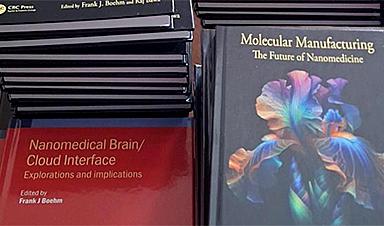
Our books now available worldwide!
Online Sellers other than Amazon, Routledge, and IOPP Indigo Global Health Care Equivalency in the Age of Nanotechnology, Nanomedicine and Artifcial Intelligence Global Health Care Equivalency In The Age Of Nanotechnology, Nanomedicine And Artificial [...]

Scientists Discover Why Some COVID Survivors Still Can’t Taste Food Years Later
A new study provides the first direct biological evidence explaining why some people continue to experience taste loss long after recovering from COVID-19. Researchers have uncovered specific biological changes in taste buds that could help [...]
Catching COVID significantly raises the risk of developing kidney disease, researchers find
Catching Covid significantly raises the risk of developing deadly kidney disease, research has shown. The virus was found to increase the chances that patients will develop the incurable condition by around 50 per cent. [...]
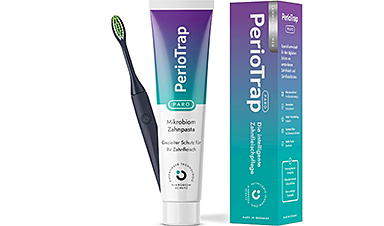
New Toothpaste Stops Gum Disease Without Harming Healthy Bacteria
Researchers have developed a targeted approach to combat periodontitis without disrupting the natural balance of the oral microbiome. The innovation could reshape how gum disease is treated while preserving beneficial bacteria. The human mouth [...]
Plastic Without End: Are We Polluting the Planet for Eternity?
The Kunming Montreal Global Biodiversity Framework calls for the elimination of plastic pollution by 2030. If that goal has been clearly set, why have meaningful measures that create real change still not been implemented? [...]
Scientists Rewire Natural Killer Cells To Attack Cancer Faster and Harder
Researchers tested new CAR designs in NK-92 cells and found the modified cells killed tumor cells more effectively, showing stronger anti-cancer activity. Researchers at the Ribeirão Preto Blood Center and the Center for Cell-Based [...]
New “Cellular” Target Could Transform How We Treat Alzheimer’s Disease
A new study from researchers highlights an unexpected player in Alzheimer’s disease: aging astrocytes. Senescent astrocytes have been identified as a major contributor to Alzheimer’s progression. The cells lose protective functions and fuel inflammation, particularly in [...]

Treating a Common Dental Infection… Effects That Extend Far Beyond the Mouth
Successful root canal treatment may help lower inflammation associated with heart disease and improve blood sugar and cholesterol levels. Treating an infected tooth with a successful root canal procedure may do more than relieve [...]
Microplastics found in prostate tumors in small study
In a new study, researchers found microplastics deep inside prostate cancer tumors, raising more questions about the role the ubiquitous pollutants play in public health. The findings — which come from a small study of 10 [...]

All blue-eyed people have this one thing in common
All Blue-Eyed People Have This One Thing In Common Blue Eyes Aren’t Random—Research Traces Them Back to One Prehistoric Human It sounds like a myth at first — something you’d hear in a folklore [...]