Nanotechnology, Nanomedicine, and AI: Toward the Dream of Global Health Care Equivalency

“Progress in medicine, global access to information and a global age pyramid that is already turning upside-down will increase the demand for good health care. This in turn will increase life expectancy and drive innovation. This re-enforcing circle will change societies’ views on health care. Whereas today it is seen as a cost that needs to be controlled — which slows down progress — it might become the global driving force of innovation and humanity, replacing other areas of public investment focus.”
Harald Stock, President & CEO, ArjoHuntleigh
Introduction
We are very fortunate indeed to be living at a time where the speed of advances in medical technologies is such that we can expect to live increasingly healthier and longer lives; far beyond what would ever have been imagined as possible only a century ago. However, in contrast to our natural inalienable human rights to life, liberty, and the pursuit of happiness, our equally important right to good health (and by extension good health care), which is critical for all of us, is unfortunately either in disarray, dysfunctional, or completely neglected on a global scale.
The State of Health Care Today
A news item released on December 2017, by the World Health Organization (WHO) entitled: “World Bank and WHO: Half the world lacks access to essential health services, 100 million still pushed into extreme poverty because of health expenses”, reported that “800 million people spend at least 10 percent of their household budgets on health expenses for themselves, a sick child or other family member. For almost 100 million people these expenses are high enough to push them into extreme poverty, forcing them to survive on just $1.90 or less a day.” A 2017 report authored by Dr. Margaret Chan (Director-General, WHO) stated that “Nearly 2 billion people have no access to basic medicines, causing a cascade of preventable misery and suffering.” The current state of affairs in the developed world for those who are fortunate enough to have access to medical care, in some cases includes the burden of $1000 per dose, and from $100,000 to $1.21 million per year in individual drug expenditures alone.
What is Global Health Care Equivalency (GHCE)?
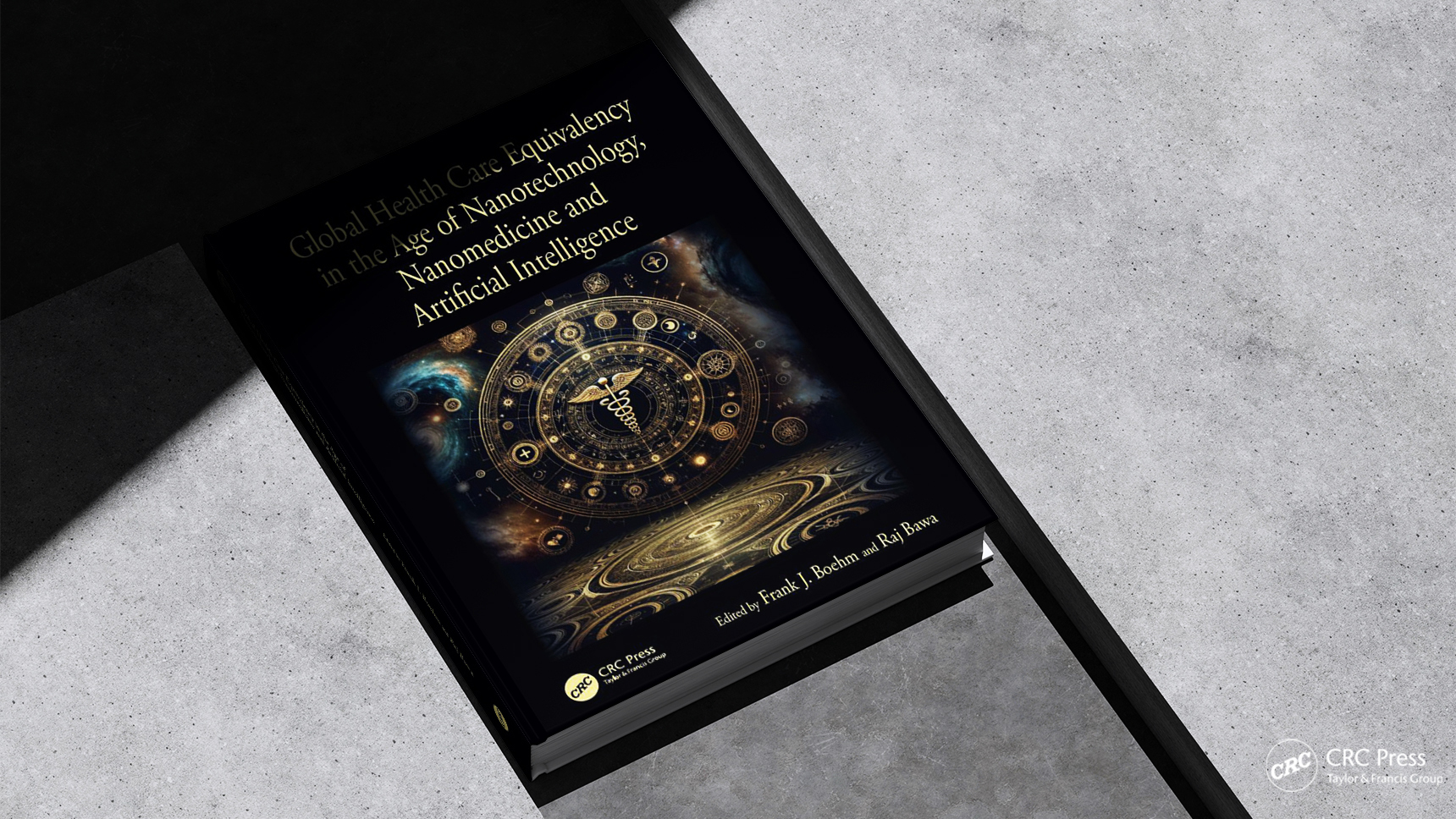
Looking ahead over the next 10-30 years, with the rapid emergence of, and synergies between, the disciplines of nanotechnology, nanomedicine, and AI, we can envisage a future world where any individual on the planet has access to the same advanced and cost effective nanomedical diagnostic and therapeutic technologies, no matter how wealthy or impoverished they are, no matter where they happen to reside, or under what conditions they live. Progress toward this goal will be incremental, with each successive wave of nanomedical technologies being more advanced than the previous wave. The tipping point will arrive with the emergence of Molecular Manufacturing (MM), http://ieet.org/index.php/IEET/more/boehm20160115, which will make possible the cost effective fabrication of the classes of advanced autonomous nanomedical devices that Boehm describes in his first book: Nanomedical Device and Systems Design: Challenges, Possibilities, Visions. A situation may then well arise where the entire human population will finally come to realize the inalienable human right of optimal health for life through the establishment of a worldwide health care system under the moniker: “Global Health Care Equivalency” (GHCE). The details and vision for GHCE will be articulated in an upcoming book: Nanotechnology, Nanomedicine, and AI: Toward the Dream of Global Health Care Equivalency that is currently being generated by the originator of this concept (Frank Boehm – CEO of NanoApps Medical Incorporated) in collaboration with numerous thought leading authors.
Perceived Benefits of GHCE
The attainment of GHCE might serve to significantly reduce the perception of individuals in the developing world of being marginalized, at least in terms of health care, which may ultimately translate to conflict reduction. In the developed world, GHCE would serve to dramatically reduce health care expenditures across the board. Progress toward this goal will be incremental, with each successive wave of nanomedical technologies being more advanced than the previous wave. The tipping point will arrive with the emergence of Molecular Manufacturing (MM), http://ieet.org/index.php/IEET/more/boehm20160115, which will make possible the cost effective fabrication of the types of advanced autonomous nanomedical devices that Boehm describes in his first book: Nanomedical Device and Systems Design: Challenges, Possibilities, Visions.
It is worth noting here that all nations on a global scale stand to benefit immensely when their citizens are healthy, as they would save hundreds of millions, if not billions of dollars in health-related expenditures, not to mention lost work hours and overall productivity, due to illness and its associated incapacities.
The core essence of GHCE is aptly conveyed in the thought below:
“In a world facing considerable uncertainty, international health development is a unifying – and uplifting – force for the good of humanity.”
Dr Chan, WHO Director-General
What is Molecular Manufacturing (MM)
The first mention of the possibility of MM emerged through the words of Dr. Richard Feynman in 1959, via his famous talk, “Plenty of Room at the Bottom”, where he spoke of the possibility of the controlled manipulation of matter at the atomic level. Dr. Eric Drexler described the remarkable capabilities that he envisioned for a conceptual molecular assembler in his 1986 book, Engines of Creation. In 2003, Chris Phoenix generated a paper that articulated the Design of a Primitive Nanofactory. Dr. Robert Freitas Jr. et al., have extensively investigated Diamond MechanoSynthesis and personalized Nanofactories from 2002 to the present.
Once MM is developed, it will have the capacity to fabricate just about any consumer item or food, as well as advanced autonomous nanomedical robots from elemental atoms and molecules, guided by AI-driven specifications. By virtue of these fundamental feed stocks, it will likely become very cost effective to fabricate (physician prescribed) nanomedical devices to address virtually any condition that ails us, in one’s own home, via Factory@Home (F@H) units, which might be manifest as countertop microwave-sized appliances that are extensively distributed worldwide. Concurrently, home based atomic and molecular “disassembly” units would be able to completely recycle, sort, and repackage practically any type of material according to its specific atomic and molecular species, which could again be used to supply the F@H units for fabrication.
Awaking the Dream
Although the attainment of GHCE would indeed be a truly extraordinary achievement, we must keenly recognize that in reality, such a massive undertaking on a global scale will require intense and sustained high spirited collaboration between like minded individuals who have widely varied backgrounds within diverse areas of expertise. Highly specialized laboratories, dynamic administrative institutions, regulatory bodies, and government agencies worldwide will also be vital prerequisites for its realization, as will significant resources and time. We are all amazing individuals, each with our own unique talents and expertise that might contribute and be applied to this noble enterprise. Our working together might culminate in a positive critical mass on a global scale toward the actual realization of GHCE, which would ultimately be of benefit for each and every one of us, as we are finally “all” supported in our natural human right of optimal health for life.
News
Scientists Discover the Brain Protein That Helps Alzheimer’s Spread Through the Brain
Scientists have identified a brain protein that may help Alzheimer’s spread, revealing a potential new target for slowing the disease’s progression. Alzheimer’s disease is closely linked to the accumulation of a toxic form of the protein [...]
How Immune Dysregulation Contributes to Psychiatric Disorders
Introduction Growing evidence suggests that disruptions in immune function may play an important role in the development and progression of psychiatric disorders. However, immune mechanisms probably contribute more strongly in some patients than others, [...]

Electrostatic Discharge Boosts Triboelectric Nanogenerator Current and Enables DC Output
Controlled electrical discharges could enable triboelectric nanogenerators to achieve higher peak currents, extending nano-enabled energy harvesting into chemical processing and self-powered sensing. Paper: Electrostatic discharge as a breakthrough strategy for triboelectric nanogenerators. A new review [...]
Swiss laboratory uses old drugs against rare diseases
Researchers at the University of Geneva are combing through collections of approved drugs to find new therapies for rare diseases – with some success. This approach is gaining traction around the world, while pharmaceutical [...]
Nanozyme Aptasensors Show Promise for Faster Food, Health, and Environmental Testing
By pairing robust artificial enzymes with highly selective aptamers, nanozyme aptasensors could help detect disease biomarkers, pathogens, and contaminants faster, but the review shows that real-world deployment still depends on overcoming matrix interference, biofouling, [...]
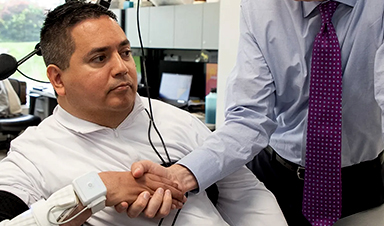
Paralyzed Man Feels Sensation Again With Brain Stimulation Device
Aneuroprosthetic system has allowed a man with paralysis to grasp and lift objects and feel touch again. The device helped 42-year-old Keith Thomas of Massapequa, New York, who was paralyzed from the chest down [...]
Global Cancer Cases Could Surge 67% by 2050, New Report Warns
New data reveal major geographic disparities and highlight the urgent need for global action on prevention, early detection, and equitable access to treatment. For roughly one in five people worldwide, cancer will become part [...]

A Deadly Ebola-Like Virus Is Spreading. Are We Ready?
BU virologist Nancy Sullivan says the Bundibugyo outbreak in the Democratic Republic of the Congo underscores the need for broader outbreak preparedness. The death of a nurse marked the moment health officials recognized that [...]
Why Most Animal Viruses Never Become Human Pandemics
From receptor mismatch to risky human-animal interfaces, this article explains why spillover is common but true pandemic emergence remains rare. Introduction Humans are constantly exposed to animal viruses through farming, wildlife contact, and the [...]

Stem cell organoids repair heart microvessels in coronary artery disease models
A Stanford University team has shown that vascular organoids derived from human stem cells can repair the heart’s microvessel network in pigs with ischaemic heart disease – a proof-of-concept advancement that could open new therapeutic [...]

Goodbye GP waiting rooms, hello prevention at home
Prevention is suddenly everywhere in NHS reform. The recent £340m community pharmacy deal is moving more services onto the high street. Community Diagnostic Centres are being expanded, and the Neighbourhood Health Framework sets out [...]
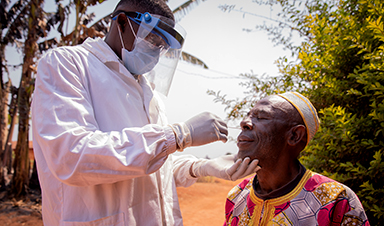
Ebola control is weakened by mistrust and cultural insensitivity
Effective response depends on cooperation with communities and frontline workers, writes Zaeem ul Haq The current Bundibugyo Ebola outbreak in the Democratic Republic of the Congo (DRC) and Uganda is exposing dangerous gaps in [...]

Building the Brain Requires Millions of Dangerous DNA Breaks
Scientists discovered that building a healthy brain involves an unexpected step: young neurons routinely break and rapidly repair their own DNA. As the brain develops, newly formed nerve cells must travel through tightly packed tissue [...]

One Tiny Change May Explain How Viruses Jump From Bats to Humans
Scientists found that one tiny genetic change may determine whether a bat virus stays in bats or becomes a human threat. Most infectious disease outbreaks begin when a virus or other pathogen crosses from animals into [...]

Scientists Discover 250+ Genes That Could Lead to New Ways To Prevent Melanoma
The world’s largest study of mole genetics identified hundreds of genes tied to melanoma risk, uncovering potential new drug targets and paving the way for more accurate melanoma screening and prevention. Researchers at QIMR [...]
Breakthrough Diabetes Treatment Reprograms the Immune System
An engineered stem cell therapy reversed new-onset Type 1 diabetes in mice by shifting the immune system away from attacking insulin-producing cells. For more than a century, people with Type 1 diabetes have relied [...]