Invisible plastics in the air are infiltrating our bodies and cities. Scientists reveal the urgent health dangers and outline bold solutions for a cleaner, safer future.
In a recent review article published in the journal Ecotoxicology and Environmental Safety, researchers discussed the sources, detection methods, health impacts, and mitigation strategies for airborne microplastics and nanoplastics.
Microplastics and nanoplastics are increasingly common in urban atmospheric particulate matter, posing significant health risks through environmental exposure and inhalation. Experts warn that urgent attention is needed to understand their distribution and implement effective public health policies to mitigate their impacts.
Growing presence of airborne plastics
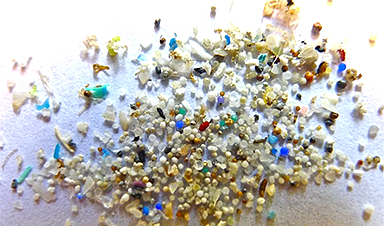
Microplastics (less than 5 mm) and nanoplastics (less than 1 μm) originate from the breakdown of larger plastic items and are commonly found in urban and industrial areas. These particles can be inhaled, ingested, or absorbed through the skin, contributing to oxidative stress, inflammation, and the development of chronic diseases, including cardiovascular disorders.
Recent studies have detected microplastics in human blood, lung tissue, and vascular plaques. In urban centers like Zhengzhou and Guangzhou, PM2.5-bound microplastics are especially prevalent and concerning due to their ability to penetrate deeply into the respiratory system. Microplastics are widespread in these cities, highlighting the urban specificity of this issue.
Notably, indoor air, particularly in spaces with synthetic textiles and carpets, contains higher concentrations than outdoor air. It is estimated that an average person inhales around 69,000 plastic particles annually, with indoor exposure playing a dominant role. The review notes this estimate is based on daily inhalation of approximately 190 microplastic particles per person.
Polyethylene terephthalate (PET)-based microplastics and nanoplastics are especially concerning due to their ability to adsorb other pollutants, such as nitrogen dioxide and sulfur dioxide. This adsorption is primarily driven by electrostatic and dispersion forces and depends on the polarity and atomic constitution of the pollutants, with PET’s adsorption ability being comparable to carbon-based and metal surfaces.
These adsorbed pollutants can enhance the toxicity and environmental persistence of airborne plastics, making them not just standalone pollutants but also effective carriers of other harmful substances.
Sources and distribution patterns
Airborne particulate plastics come from a variety of sources. Urban and industrial areas, marine environments, and indoor spaces all contribute to their presence. Common types include polystyrene, polyethylene, polypropylene, and polyethylene terephthalate (PET). Environmental factors, such as UV exposure, wind patterns, and seasonal changes, also influence their abundance and dispersion.
Textile fibers are a major source of indoor microplastics. Activities, such as wearing and washing synthetic clothes, release tiny fibers into the air. Fleece and interlock fabrics, in particular, shed particles small enough to be inhaled.
Roadside dust, tire wear, and other degraded plastic debris, such as that from landfill leachate and abrasion from traffic-related non-exhaust particulate matter, further contribute to outdoor concentrations, creating a complex and multifaceted pollution landscape.
Health risks and biological impacts
Inhaled microplastics and nanoplastics can penetrate deeply into the respiratory tract, where they may cause inflammation, cellular damage, and long-term health issues. Studies on human lung and airway cells exposed to microplastics, particularly polypropylene, polyamide, and tire wear particles, have shown reduced cell viability and increased production of inflammatory markers.
In organoid models, nylon fibers disrupt the expression of genes such as Hoxa5, which are crucial for lung development. Other research suggests microplastics can interfere with immune responses.
In a mouse model of coronavirus disease 2019 (COVID-19), microplastics altered key inflammatory and immune signaling pathways. Additionally, some nanoplastics triggered mitochondrial dysfunction and ferroptosis, a form of cell death, in lung cells. When combined with diesel exhaust, the inflammatory effects intensified.
Exposure during pregnancy also raises concern. In rats, maternal exposure to polystyrene nanoplastics caused cardiovascular dysfunction in both the mother and fetus. In humans, microplastics have been found in lung tissues, bronchoalveolar lavage fluid, and even the brain.
Lung biopsies from 11 out of 13 patients contained microplastics, mainly polypropylene and PET. Samples from both adults and children, particularly urban dwellers and smokers, revealed the presence of synthetic fibers, including polyacrylic and polyester.
Perhaps most strikingly, microplastics have been found in human carotid artery plaques and the olfactory bulb, suggesting a possible link between plastic pollution and neurological or cardiovascular disease. In one study of 304 patients, the presence of microplastics in carotid artery plaques was associated with a more than fourfold increase in risk for myocardial infarction, stroke, or death.
Detection and measurement
The review highlights advances in detection technologies, including Fourier-transform infrared (FTIR) and Raman spectroscopy, scanning electron microscopy (SEM/EDX), mass spectrometry, and real-time cytometry with machine learning. However, the review also emphasizes the importance of developing standardized and rapid real-time/online measurement techniques for airborne microplastics and nanoplastics, particularly for urban environments where PM2.5-bound plastics are of greatest concern. These methods allow for increasingly sensitive and rapid detection of airborne microplastics and nanoplastics, though standardization and affordability remain challenges.
Solutions and research pathways
Given the extent of airborne plastic contamination and its potential health consequences, the need for targeted mitigation strategies is urgent. Reducing plastic production and improving waste management are essential first steps.
Advanced air and water filtration technologies, such as coagulation, flocculation, and high-efficiency particulate air filters, can help reduce environmental exposure. However, the review also notes that proper disposal and management of collected microplastics, such as those captured in HEPA filters, are essential to prevent re-entry into the environment.
Toxicological research should continue exploring how particle size, shape, and chemical composition influence biological effects. Meanwhile, faster and more affordable detection techniques for atmospheric microplastics and nanoplastics are needed, along with standardized sampling protocols to allow comparisons across studies and regions.
Bioremediation technologies also hold promise. Utilizing algae, fungi, and bacteria to break down plastics in air and water systems could provide sustainable solutions. Likewise, integrating nanotechnology and advanced oxidation processes into existing filtration systems could enhance their efficiency.
Policymakers must strengthen regulations on single-use plastics and enforce proper disposal of plastic waste, especially captured particles from air filters and wastewater systems, to prevent them from re-entering the environment. Promoting biodegradable alternatives and sustainable production practices will also play a key role.
Public education is another critical component. Integrating plastic pollution awareness into school curricula and launching outreach campaigns targeting consumers, industries, and policymakers can foster behavioral changes, such as reducing plastic use and improving recycling habits.
Finally, interdisciplinary collaboration is essential. Bringing together experts in toxicology, public health, materials science, and engineering can accelerate innovation and develop comprehensive, scalable solutions that address complex challenges. Global research networks and dedicated funding can further support this collective effort.
The review emphasizes that long-term health effects, especially in vulnerable populations such as children and pregnant women, are not yet fully understood and remain a priority for future research.
Conclusions
Airborne microplastics and nanoplastics represent a growing environmental and health challenge. Their ability to carry toxic substances, penetrate deep into the human body, and contribute to chronic disease highlights the urgency of a coordinated response.
Through scientific innovation, policy reform, and public engagement, society can begin to address this invisible but serious threat. An integrated, collaborative approach is vital to protecting both human health and the planet’s ecosystems.
- Air pollution and its impacts on health: Focus on microplastics and nanoplastics. Wang, L., Lin, Y., Liu, W., Lee, Y., Chiu, H. Ecotoxicology and Environmental Safety (2025). DOI: 10.1016/j.ecoenv.2025.118402, https://www.sciencedirect.com/science/article/pii/S0147651325007389

News

Too Much RNA Can Drain a Cell’s Energy, Scientists Discover
A virus may cripple a cell’s power supply simply by producing too much of a molecule the cell needs to survive. New research from the Texas A&M College of Veterinary Medicine and Biomedical Sciences [...]

West African scientists warn of weakening health systems and urge stronger outbreak detection
LOME, Togo (AP) — West African laboratory scientists called on governments Friday to strengthen capacity to detect disease outbreaks to avoid another major outbreak, saying health systems across the region are becoming weaker. Participants [...]

A Little-Known Protein Could Point to a New Way To Treat Alzheimer’s
A study suggests that increasing SORLA protein levels could help treat Alzheimer’s disease and other disorders involving tau protein. Increasing SORLA, a protein with a protective role in the brain, helped mice withstand damage [...]
Cancer’s Hidden Antioxidant Shield Helps It Escape the Immune System
Blocking an antioxidant protein that tumors use to suppress immune attacks improved cancer immunotherapy responses in mice. Cancer cells can release antioxidants that interfere with the immune cells trying to kill them. Researchers have [...]

Scientists Find a Berry Compound That Helps Muscle Cells Burn Fat
Pterostilbene, a compound found naturally in some foods, affects how skeletal muscles process fats by stabilizing a protein called PPARδ and increasing its signaling activity. Pterostilbene, a natural compound found in blueberries, grapes, and [...]

Two Hidden Forces Help Build the Human Brain Before Birth
Scientists have uncovered two surprising forces that help guide how the human brain forms before birth. Before birth, the human brain is shaped in large part by an unusual class of stem cells known [...]
Researchers Uncover a Hidden Trigger Behind Chronic Inflammation
The findings offer new insights that could help guide the development of future therapies. A protein called human resistin may help flip on one of the immune system’s most powerful inflammatory switches. Researchers at [...]
Scientists Have Uncovered Previously Hidden Microbial Activity on Human Skin
The most abundant microbes on your skin may not be the ones doing most of the work. Human skin supports vast communities of bacteria, fungi, and viruses that can influence its protective barrier, immune [...]
Brazilian Tree Compounds Fight COVID-19 on Multiple Fronts
Scientists found compounds in a Brazilian tree that hit SARS-CoV-2 on multiple fronts, revealing a promising new lead in the search for COVID-19 treatments. Researchers have found that galloylquinic acids extracted from the leaves [...]
Cutting Two Amino Acids Slowed Prostate Cancer in Mice
A newly identified link between amino acid metabolism and cholesterol production may help prostate tumors adapt to hormone therapy. Prostate cancer can find ways around treatments designed to deprive tumors of the hormones they [...]

Largest-Ever Physics Survey Raises New Doubts About Our Model of the Universe
Physicists around the world remain deeply divided on key mysteries of the universe, from dark matter to quantum gravity. The standard cosmological model failed to gain majority support, and no leading theory dominated the [...]
Scientists Just Overturned a 100-Year-Old Belief About Bacteria in the Lungs
New findings raise questions about the role of microbes living in the lungs. More than 35 trillion bacteria live throughout the human body, forming microbiomes in the gut, mouth, lungs, skin, and urogenital tract. [...]

GHCE Concept
From the preface of the book Global Health Care Equivalency in the Age of Nanotechnology, Nanomedicine and Artificial Intelligence, Edited by Frank Boehm: Since the publication of my first book (Nanomedical Device and Systems [...]

Novartis, Ionis drug failure spurs questions
Pelacarsen didn’t protect heart health despite lowering levels of a protein particle, “Lp(a),” in a large clinical trial — a result with important implications for cardiovascular drug research. Dive Brief: An RNA drug from [...]
New injectable treatment helps the brain rebuild after stroke
Biomedical engineers at Duke University have created an injectable biomaterial that may help the brain recover from damage left behind by an ischemic stroke. In experiments with mice, the material transformed the cavity created [...]

Scientists Discover a Hidden “Immune Organ” Inside the Skull
Researchers discovered lymph node-like immune hubs inside skull bone marrow that appear to act as rapid-response centers for the brain. For decades, the brain was thought to operate largely apart from the immune system. [...]