Society has a lot to thank for nanoscience. From improved health monitoring to reducing the size of electronics, scientists’ ability to delve deeper and better understand chemistry at the nanoscale has opened up numerous untold benefits. Today, various nanotechnologies are continuing to shift from the lab to the market, creating what is set to be an overall multi–billion pound sector in the coming decades.
An article published in the journal Nano Letters earlier this year proposed what the next 25 years of nanoscience might look like. Among the big issues that society must grapple with in the coming years, the environment, health and technology issues will undoubtedly have an outsized impact on nanoscience, pushing the field forwards.
Improving health and environment
Nanoparticles cornered a large part of nanotechnology research early on and in recent years for drug delivery vehicles, explains Katsuhiko Ariga at the University of Tokyo, Japan. He says that our bodies can release molecules like neurotransmitters in response to a signal and nanoscience needs to copy this. ‘Intelligent release of drugs – by constructing controlled nanostructures – is the goal going forward’. Such systems may include nanobots and other active materials that respond to stimuli like chemical gradients, magnetic fields or sound waves, and can differentiate between different cell types for targeted drug delivery.
‘[However], there are still significant challenges for nanomedicine, especially related to therapeutics,’ says Teri Odom, at Northwestern University in the US, who led the Nano Letters article. ‘For example, there is still not yet an actively targeted nanoconstruct that has been [US Food and Drug Administration] approved.’
Aside from nanomedicine, nanotechnology can also benefit health monitoring by improving wearable electronics and sensors, such as those currently found in many smartwatches. Creating materials that balance their electronic and mechanical performance is a challenge for the field. But overcoming this issue may lead to materials with enhanced sensing capabilities and improved integration within our bodies.
‘One [other] area that I think will become increasingly important is the impact of nanotechnology on the environment,’ adds Odom. ‘Over the last years, there have been good discussions about the risks of nanoscience but less on how nanoscience can benefit the environment.’
Membranes with angstrom-sized nanochannels, for example, could serve to help desalinate seawater or reclaim precious metals from industrial waste. Nanoscale catalysts could also help convert pollutants into usable products, helping to create a circular synthetic loop of various commodity chemicals. Manufacturing such membranes and catalysts on an industrial scale is challenging, however, as atomic-level precision is needed in macroscale structures.
Next-generation technology
Andrea Ferrari, director of the Cambridge Graphene Centre in the UK, stresses that artificial intelligence (AI) will be both important and influential in nanotechnology in the coming decades. He explains that developing a novel nanomaterial can take a long time, yet with the help of AI and other computational methods, new and unexpected materials may be discovered much more quickly.
‘AI data centres also require a vast amount of energy, so we also need new materials to meet the demands of such centres,’ he says. Strategies to increase energy generation will likely see advancements in perovskite photovoltaic cells and commercially viable fuels made using solar power.
‘Nanomaterials are [also] very much being looked at to expand the capacities of different battery technologies,’ says Douglas Natelson, a nanoscientist at Rice University in the US. Novel nanomaterials for battery electrodes and supercapacitors will result in higher interface surface areas, allowing for better energy storage, necessary to aid the transition to intermittent sources of renewable energy such as wind and solar.
Going quantum
The next generation of computing will likely be driven by quantum technology, which is capable of solving certain classes of problems that would take far too long with conventional computers. Chemists are interested in this type of computing as it lends itself well to chemical modelling and there is interest in using it to solve problems such as the fixation of nitrogen by the nitrogenase enzyme. Arrays of around 1000 quantum bits – qubits – operating at ultralow temperatures are the current limits of quantum computing. Reducing qubits’ size and error rate, and finding a way to integrate them into existing technology, will require developments in all areas of nanoscience.
Ariga thinks that efforts to make materials that exhibit quantum phenomena at the macroscopic level will have to be stepped up, building on the quantum properties of zero–dimensional quantum dots and one–dimensional carbon nanowires.
Connecting the nanoscale world to the macroscopic one is also being made possible by building up layers of 2D materials held together with van der Waals forces, either mechanically or using chemical vapour deposition. These methods allow for precision engineering of electronic structures by varying layer order, twist angles and the type of defect.
‘There’s a lot of fundamental work that still needs to be done on just understanding these 2D materials and growing them at scale,’ says Natelson. Developments in microscopic techniques will offer better resolution on atomic positions below a sub-angstrom scale. Detectors that can capture a range of events – from chemical reactions to quantum effects – on the order of milli to picoseconds (10-12s) using sub-watt power supplies may also unlock real-time monitoring of in-situ experiments. Machine learning and AI may also play their part in aiding data analysis and help automate characterisation of new materials.
Regulating a growing field
Since the start of nanoscience as a field several decades ago, policymakers have developed ethical and safety standards in parallel with the science. ‘The safety recommendations you would make for a block of something is different to the same 1kg of stuff ground up into 10nm particles,’ say Natelson, adding that nanoparticles interact with the environment differently to standard chemicals.
However, it is estimated that fewer than 20% of nanomaterials on the market adhere to current international guidelines on exposure and toxicity testing protocols, limiting their effectiveness at evaluating material’s effect on health and the environment.
Nanomaterials can vary in size, shape and surface chemistry. This variability makes it difficult to standardise safety assessments, even when such materials are made using a standard synthetic procedure.
Natelson believes that ‘one of the real goals is to be able to efficiently and accurately assess concerns – you don’t want it to take 30 years to figure out what the impacts [of a nanomaterial] are’. Developing standardised, high-throughput structure–toxicity assays with shorter turnaround times would increase the proportion of nanomaterials being tested efficiently.
‘There’s no shortage of technical challenges that we face in the world and nanotechnology is not going to solve all of them … but I think that there are certain aspects where nanoscience is certainly going to be important,’ says Natelson.
‘Many important outcomes that have benefitted human health and society – including mRNA vaccines, quantum-dot displays … and advanced battery electrode materials – [are due to nanoscience],’ says Odom. She believes that chemists will continue to play an important role in advancing discoveries,’ but recognises that ‘it will take many disciplines working closely together for the most significant breakthroughs’.
References
W Shim et al, Nano Lett, 2025, 25, 12789 (DOI: 10.1021/acs.nanolett.5c04115)

News
Largest-Ever Physics Survey Raises New Doubts About Our Model of the Universe
Physicists around the world remain deeply divided on key mysteries of the universe, from dark matter to quantum gravity. The standard cosmological model failed to gain majority support, and no leading theory dominated the [...]

Scientists Just Overturned a 100-Year-Old Belief About Bacteria in the Lungs
New findings raise questions about the role of microbes living in the lungs. More than 35 trillion bacteria live throughout the human body, forming microbiomes in the gut, mouth, lungs, skin, and urogenital tract. [...]

GHCE Concept
From the preface of the book Global Health Care Equivalency in the Age of Nanotechnology, Nanomedicine and Artificial Intelligence, Edited by Frank Boehm: Since the publication of my first book (Nanomedical Device and Systems [...]
Novartis, Ionis drug failure spurs questions
Pelacarsen didn’t protect heart health despite lowering levels of a protein particle, “Lp(a),” in a large clinical trial — a result with important implications for cardiovascular drug research. Dive Brief: An RNA drug from [...]
New injectable treatment helps the brain rebuild after stroke
Biomedical engineers at Duke University have created an injectable biomaterial that may help the brain recover from damage left behind by an ischemic stroke. In experiments with mice, the material transformed the cavity created [...]
Scientists Discover a Hidden “Immune Organ” Inside the Skull
Researchers discovered lymph node-like immune hubs inside skull bone marrow that appear to act as rapid-response centers for the brain. For decades, the brain was thought to operate largely apart from the immune system. [...]
Engineered tRNAs and lipid nanoparticles target nonsense mutation cystic fibrosis
Researchers have developed a potential new approach for treating a form of cystic fibrosis caused by so-called nonsense mutations, combining chemically modified transfer RNAs with lipid nanoparticles designed to deliver the therapy directly to [...]
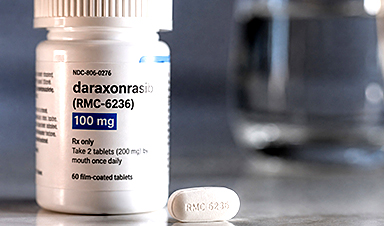
New pancreatic cancer drug carries a $39,800 monthly list price
A groundbreaking treatment for one of the most common forms of pancreatic cancer has been approved in pill form by the FDA. Revolution Medicines’ oral tablet daraxonrasib, branded as Rasonque, reduced the risk of [...]

Researchers Have Discovered a New Way To Reduce Chronic Nerve Pain
A cancer-linked protein called BRAF may help drive chronic nerve pain, and existing cancer drugs targeting it reduced pain sensitivity in preclinical models. Chronic nerve pain can persist long after an injury and often [...]
Our books now available worldwide!
Online Sellers other than Amazon, Routledge, and IOPP Indigo Global Health Care Equivalency in the Age of Nanotechnology, Nanomedicine and Artifcial Intelligence Global Health Care Equivalency In The Age Of Nanotechnology, Nanomedicine And Artificial [...]

Quantum-Enabled Regenerative Health: Reimagining Wellness, Precision Health and Longevity Medicine
Introduction Healthcare is approaching a frontier where the quantum portfolio could influence not only how disease is diagnosed and treated, but how health itself is measured, modeled, predicted and preserved. Quantum computing, quantum simulation, [...]

FDA Clears First-of-Its-Kind Nonmedication Treatment for PTSD
The FDA has cleared a system that uses brain activity data to personalize magnetic stimulation for PTSD, adding a new nonmedication treatment option. Every day in the United States, approximately 17.5 veterans die by suicide, [...]
FDA approves breakthrough drug to treat advanced pancreatic cancer
The Food and Drug Administration (FDA) approved on Wednesday a drug that could extend the survival of those with metastatic pancreatic cancer. The drug, called daraxonrasib, will be sold under the brand name Rasonque [...]

AI Decodes a Hidden DNA Signal Linked to Disease-Causing Mutations
Machine learning identifies the likely “initiator” and enables new predictions about DNA mutations that can cause disease. Every human cell depends on tens of thousands of genes being switched on at the right time [...]

Pope Leo Urges Global Response to Congo’s Deadliest Ebola Outbreak
Pope Leo called for international action to address the Ebola outbreak in the Democratic Republic of Congo. The epidemic has claimed over 2,500 lives and is the nation's largest recorded outbreak. The Pope emphasized [...]

Is there a summer COVID-19 surge this year? Yep, it’s ramping up again
Hantavirus. Ebola. West Nile. Measles. And, of course, cyclospora — that stomach parasite making people miserable across the country. Americans have plenty to worry about this summer. But remember COVID-19? It may not be [...]