Mind reading: Long a science fiction fantasy, today an increasingly concrete scientific goal. Researchers at Stanford University have succeeded in decoding internal language in real time thanks to a brain implant and artificial intelligence. A technological feat with promising applications, but also dizzying ethical implications.
An unprecedented technological advance
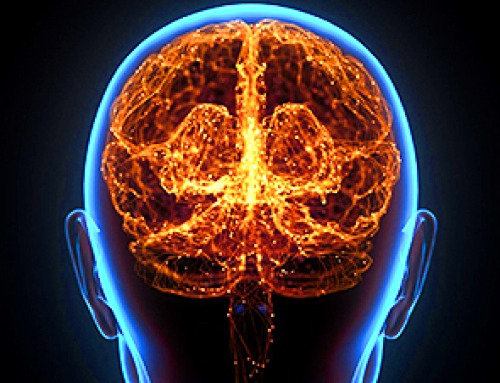
For the first time, a team of neuroscientists has succeeded in translating silent thoughts in real time – that is, what a person thinks they are saying without moving their lips or making a sound. This technology is based on a brain-machine interface (BMI), a brain implant equipped with microelectrodes that is inserted into the motor cortex – the area of the brain responsible for language.
Unlike previous devices that required patients to physically pronounce words, this new device directly decodes the neural activity of internal language. Combined with an artificial intelligence system, the implant achieves 74% accuracy in transcribing imaginary sentences. A world first!
"This is the first time we've understood what brain activity looks like when a person is simply thinking about talking," said Erin Kunz, lead author of the study, which was published in the journal Cell.
A revolution for paralyzed patients
The study participants – who suffered from severe paralysis due to amyotrophic lateral sclerosis (ALS) or a stroke – were able to communicate through thoughts. They imagined saying sentences that the algorithm analyzed phoneme by phoneme to reconstruct words and then related messages.
This technology could give language back to people who had lost their language by providing them with a fluid, fast and non-exhaustive means of communication. Professor Frank Willett, co-author of the study, points out that "this system could soon allow for a complete reconstruction of language based solely on thought."
A medical miracle … with ethical limits
Mind reading, however, raises a question: How far can – or should – you go? During tests, researchers found that the implant could sometimes intercept unwanted thoughts – words that the participants had not consciously expressed. This permeability between private thoughts and communicative intention represents a major data protection problem.
"The further we progress, the more transparent our brains become. We are entering an era of cerebral transparency, where it is becoming more urgent to set boundaries," warns lawyer and bioethicist Nita Farahany in an interview with NPR.
This revolutionary implant is not only a scientific achievement: it also forces us to rethink our right to privacy, freedom of thought, and mental security. What happens outside the regulated medical environment as technology becomes more precise and accessible?
"The line between private thoughts and voluntary expression of opinion is blurred. It's important to ensure that users have full control over what they share. The mind must remain a sanctuary," Cohen Marcus Lionel Brown, a bioethicist at Wollongong University, told the New York Times.
A technical answer: the mental password
To prevent involuntary mind leaks, the Stanford team implemented a mental blocking system. Certain thoughts could only be decrypted by the system with a mental password, such as an activation key. In the study, the phrase "Chitty Chitty Bang Bang" was used as a password. The system could only decipher private thoughts if this sentence was mentally activated. The success rate of this filtering is over 98%.
In conclusion, brain-machine interfaces represent a great step forward for people with disabilities. In the long term, they could also revolutionize the way we interact with our devices – phones, computers, vehicles – through thoughts alone. However, as the researchers themselves emphasize, every technical step must be accompanied by a strict ethical framework. The future of neural communication may already be here – but it must be designed with caution.

News
Cutting Two Amino Acids Slowed Prostate Cancer in Mice
A newly identified link between amino acid metabolism and cholesterol production may help prostate tumors adapt to hormone therapy. Prostate cancer can find ways around treatments designed to deprive tumors of the hormones they [...]

Largest-Ever Physics Survey Raises New Doubts About Our Model of the Universe
Physicists around the world remain deeply divided on key mysteries of the universe, from dark matter to quantum gravity. The standard cosmological model failed to gain majority support, and no leading theory dominated the [...]

Scientists Just Overturned a 100-Year-Old Belief About Bacteria in the Lungs
New findings raise questions about the role of microbes living in the lungs. More than 35 trillion bacteria live throughout the human body, forming microbiomes in the gut, mouth, lungs, skin, and urogenital tract. [...]

GHCE Concept
From the preface of the book Global Health Care Equivalency in the Age of Nanotechnology, Nanomedicine and Artificial Intelligence, Edited by Frank Boehm: Since the publication of my first book (Nanomedical Device and Systems [...]

Novartis, Ionis drug failure spurs questions
Pelacarsen didn’t protect heart health despite lowering levels of a protein particle, “Lp(a),” in a large clinical trial — a result with important implications for cardiovascular drug research. Dive Brief: An RNA drug from [...]
New injectable treatment helps the brain rebuild after stroke
Biomedical engineers at Duke University have created an injectable biomaterial that may help the brain recover from damage left behind by an ischemic stroke. In experiments with mice, the material transformed the cavity created [...]
Scientists Discover a Hidden “Immune Organ” Inside the Skull
Researchers discovered lymph node-like immune hubs inside skull bone marrow that appear to act as rapid-response centers for the brain. For decades, the brain was thought to operate largely apart from the immune system. [...]

Engineered tRNAs and lipid nanoparticles target nonsense mutation cystic fibrosis
Researchers have developed a potential new approach for treating a form of cystic fibrosis caused by so-called nonsense mutations, combining chemically modified transfer RNAs with lipid nanoparticles designed to deliver the therapy directly to [...]
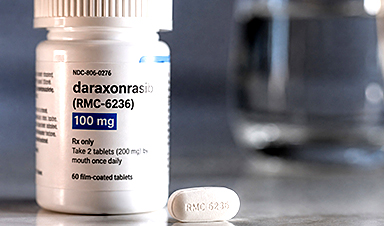
New pancreatic cancer drug carries a $39,800 monthly list price
A groundbreaking treatment for one of the most common forms of pancreatic cancer has been approved in pill form by the FDA. Revolution Medicines’ oral tablet daraxonrasib, branded as Rasonque, reduced the risk of [...]
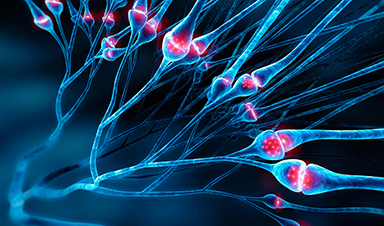
Researchers Have Discovered a New Way To Reduce Chronic Nerve Pain
A cancer-linked protein called BRAF may help drive chronic nerve pain, and existing cancer drugs targeting it reduced pain sensitivity in preclinical models. Chronic nerve pain can persist long after an injury and often [...]
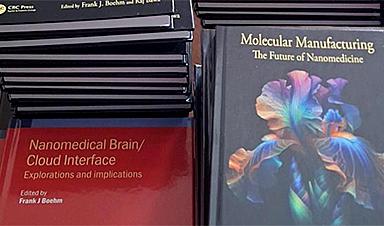
Our books now available worldwide!
Online Sellers other than Amazon, Routledge, and IOPP Indigo Global Health Care Equivalency in the Age of Nanotechnology, Nanomedicine and Artifcial Intelligence Global Health Care Equivalency In The Age Of Nanotechnology, Nanomedicine And Artificial [...]

Quantum-Enabled Regenerative Health: Reimagining Wellness, Precision Health and Longevity Medicine
Introduction Healthcare is approaching a frontier where the quantum portfolio could influence not only how disease is diagnosed and treated, but how health itself is measured, modeled, predicted and preserved. Quantum computing, quantum simulation, [...]

FDA Clears First-of-Its-Kind Nonmedication Treatment for PTSD
The FDA has cleared a system that uses brain activity data to personalize magnetic stimulation for PTSD, adding a new nonmedication treatment option. Every day in the United States, approximately 17.5 veterans die by suicide, [...]

FDA approves breakthrough drug to treat advanced pancreatic cancer
The Food and Drug Administration (FDA) approved on Wednesday a drug that could extend the survival of those with metastatic pancreatic cancer. The drug, called daraxonrasib, will be sold under the brand name Rasonque [...]
AI Decodes a Hidden DNA Signal Linked to Disease-Causing Mutations
Machine learning identifies the likely “initiator” and enables new predictions about DNA mutations that can cause disease. Every human cell depends on tens of thousands of genes being switched on at the right time [...]

Pope Leo Urges Global Response to Congo’s Deadliest Ebola Outbreak
Pope Leo called for international action to address the Ebola outbreak in the Democratic Republic of Congo. The epidemic has claimed over 2,500 lives and is the nation's largest recorded outbreak. The Pope emphasized [...]