Artificial Intelligence and its developments have had a revolutionary impact on society, and healthcare is not an exception. China has made massive strides in AI integrated healthcare, and continues to do so as AI tools are deployed in hospitals across the country.
China’s ambitions for artificial intelligence are staggering. The country is projected to invest more than US$1.4 trillion into AI development by 2030, a figure that eclipses the GDP of many nations. But what’s perhaps more astonishing is where some of that investment is already landing: hospitals powered not by humans, but by AI doctors.
In 2024, Tsinghua University made headlines with the launch of the world’s first AI hospital, Agent Hospital—a concept that blends virtual AI agents, clinical care, and real-world pilot deployment into one tightly integrated system. Now that vision is being refined, tested, and expanded across China in what might be one of the most ambitious attempts to reimagine modern healthcare.
What is Agent Hospital, and why does it matter?
Tsinghua’s Agent Hospital was made up of 14 AI doctors upon launch. At its core, is MedAgent-Zero, the self-evolving AI framework developed by the University’s AIR (Institute for AI Industry Research). Moreover, in November of 2024, the “Zijing AI Doctor” was launched. Developed by a Tsinghua University spin-out start-up, Zijing Zhikang, to serve as the core component in AI Agent’s ecosystem.1 The system features 42 AI doctors across 21 clinical specialties, covering over 300 diseases. Furthermore, each specialty has trained its virtual agents on over ten common conditions. And finally, by creating a pool of half a million synthetic patient cases to test and evolve diagnostic accuracy. These AI doctors can treat 10,000 patients with 93% accuracy in a matter of days, a feat that would take real doctors years to complete.
Furthermore, these doctors aren’t chatbots; they’re AI systems capable of autonomously working with AI generated patients in a fully-fledged closed-loop ecosystem.
The system underwent internal testing in November of 2024, in which the closed-loop environment was used to rapidly and extensively evolve the AI doctor agents. Moreover, internal testing enabled vast simulation, and refinement using virtual patient data and clinical workflows. Consequently, the system was made ready to undergo public pilot testing, which has since greatly superseded internal testing.
Transition from Internal Simulation to Public Deployment
The inauguration ceremony for Tsinghua Agent Hospital held last April marked this transition into public deployment.2 During the event, the system’s integration with Chang Gung Hospital was announced, emphasizing the institute’s commitment and ambition to revolutionize healthcare.
From ophthalmology and respiratory medicine to radiological diagnostics, AI doctors take on tasks traditionally handled by their human counterparts—streamlining workflows, offering real-time recommendations, and lowering the barrier to care.
Garnering international attention, the event highlighted China’s AI Hospital model to address physician shortages, and improve healthcare access, especially in underserved regions.
Beyond clinical deployment and streamlining medical services, the system will serve as educational groundwork at Tsinghua. As a result, educational integration will catalyze the rise of a new generation of “AI-collaborative physicians.”
Beijing Tsinghua Chang Gung Hospital – Physical hospital, digital core
May 2025 marked a symbolic and strategic milestone: the Phase II expansion of Beijing Tsinghua Chang Gung Hospital, adding 500 new beds, raising its capacity to 1,500 inpatients and up to 10,000 outpatients daily.3 However, while the physical infrastructure grew, the real story was in the digital layer being embedded alongside it.
AI now supports nearly every step of the patient journey—from digital admissions and predictive alerts to infusion management, diagnostics, and mobile nursing stations. The hospital even partnered with the Tsinghua Academy of Arts and Design to incorporate “healing architecture,” merging technology with cultural aesthetics for a more human-centered experience.
This is not a case of slapping AI on top of a legacy system. This is a full rethinking of what a hospital can be when clinical need, AI capability, and design philosophy converge.

News
MIT Scientists Reprogram Immune Cells Inside the Body To Destroy Cancer
Natural killer cells reprogrammed inside mice eliminated lymphoma tumors and helped damaged livers heal, though whether this approach could help people with cancer or autoimmune disease remains unknown. To make a cancer treatment from [...]

Melanoma mRNA Vaccine Shows Promise in Preventing Disease Recurrence
Key takeaways: Phase 3 trial finds personalized intismeran plus pembrolizumab may better prevent high-risk melanoma recurrence after surgery The trial enrolled 1,137 patients and builds on phase 2 results showing about half the recurrence [...]

Scientists Discover a Powerful New Weapon Against a Dangerous Gut Infection
The promise of an experimental treatment for C. difficile gut infections lies partly in the bacteria it leaves alive, according to early laboratory and mouse research. Broad-spectrum antibiotics can disrupt the gut’s microbial community, [...]
Your Bones May Hold a Hidden Clue to Blood Cancer Survival
For people with blood cancers called myelodysplastic syndromes, osteoporosis may hold an overlooked clue to survival, a three-year observational study suggests. In blood cancers that develop in the bone marrow, an important clue to [...]

Researchers Discover What Reading for Pleasure May Be Doing to Your Brain
Reading for pleasure may offer surprising benefits for the brain, with research linking the habit to better mental health, stronger cognitive abilities, and a lower risk of dementia. Reading for pleasure may do far [...]
Scientists Discover a Hidden Trigger That Keeps Inflammation Alive
Inflammation persists after proteins detach from immune receptors, revealing a potential target for autoimmune treatments. Since a Nobel Prize-winning discovery in the 1990s identified molecules called Toll-like Receptors as the guardians of the human [...]
A Virus Gives Itself Away the Moment It Attacks
Researchers have found the trigger behind a powerful bacterial defense against viruses. Viruses that prey on bacteria could become an increasingly important tool for treating bacterial infections, particularly as antibiotic resistance makes some infections [...]
Scientists Discover Aspirin May Slash Dementia Risk by 70% – but Only for Certain People
Aspirin was linked to a sharply lower dementia risk in some older adults, and their genes may hold the clue. A Monash University analysis found that older adults with a particular genetic profile had [...]
Inflammation May Awaken Dormant Cancer Cells Years After Treatment
The body’s response to inflammation may disturb cancer cells that have been lying silent for years, giving them an opportunity to grow again. Researchers at the Francis Crick Institute have found that gut inflammation [...]
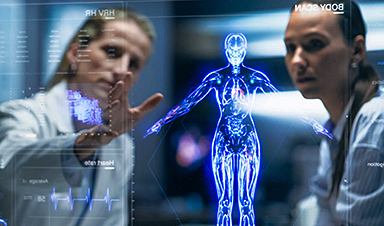
Where do nanoparticles go once they enter the body?
New international best practice guidance, co-written at ANSTO, sets out how to measure where nanoparticles like titanium dioxide end up in the body and how long they remain. The guidance has been shared by [...]
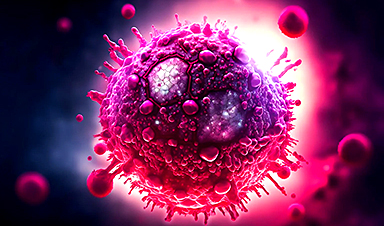
Long-Acting HIV Shots Could Solve a Major Treatment Challenge for Young People
A major African trial suggests that changing how HIV treatment is delivered could significantly improve viral suppression in adolescents. Young people with HIV were more likely to keep the virus suppressed when they received [...]

WHO Factsheets – The top 10 causes of death
In 2023, the 10 leading causes of death accounted for 33 million deaths, or 54% of the total 61 million deaths worldwide. The top global causes of death, in order of total number of lives lost, [...]
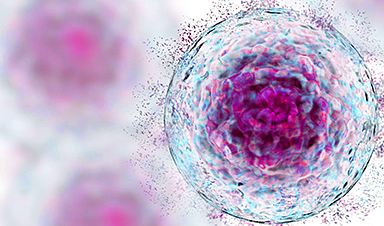
Aging Cells May Be Hiding From the Immune System – Scientists Think They Know How
Your immune system is supposed to clear out damaged cells. Researchers may have found how some of them hide and linger as the body ages. Researchers led by Cedars-Sinai Health Sciences University have identified [...]
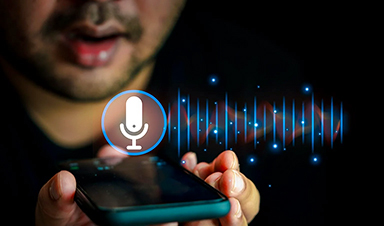
Your Voice May Reveal How Fast Your Brain Is Aging
Researchers have developed a machine-learning “speech clock” that estimates age from subtle patterns in how people speak and what they say. It is possible that people’s voices may contain certain signals of aging that [...]
Optogenetics Pioneers Win 2026 Nobel Prize in Physiology or Medicine
The 2026 Nobel Prize in Physiology or Medicine has been awarded to Peter Hegemann, Georg Nagel, and Karl Deisseroth for the development of optogenetics, a revolutionary technology that uses light to control individual neurons [...]
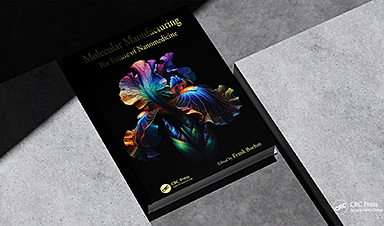
Molecular Manufacturing: The Future of Nanomedicine – From NanoappsMedical Inc.
This book explores the revolutionary potential of atomically precise manufacturing technologies to transform global healthcare, as well as practically every other sector across society. This forward-thinking volume examines how envisaged Factory@Home systems might enable the cost-effective [...]