The number of lives lost around the world due to infections that are resistant to the medications intended to treat them could increase nearly 70% by 2050, a new study projects, further showing the burden of theongoing superbug crisis.

Antimicrobial resistance happens when pathogens like bacteria and fungi develop the ability to evade the medications used to kill them.
The World Health Organization has called AMR "one of the top global public health and development threats," driven by the misuse and overuse of antimicrobial medications in humans, animals and plants, which can help pathogens develop a resistance to them.
The new study reveals that when it comes to the prevalence of AMR and its effects, "we expect it to get worse," said lead author Dr. Chris Murray, director of the Institute for Health Metrics and Evaluation at the University of Washington.
"We need appropriate attention on new antibiotics and antibiotic stewardship so that we can address what is really quite a large problem," he said.
Older adults bear the burden
The researchers – from the Global Research on Antimicrobial Resistance Project, the Institute for Health Metrics and Evaluation and other institutions – estimated deaths and illnesses attributable to versus associated with antimicrobial resistance for 22 pathogens, 84 pathogen-drug combinations and 11 infections across 204 countries and territories from 1990 through 2021. A death attributable to antimicrobial resistance was directly caused by it, while a death associated with AMR may have another cause that was exacerbated by the antimicrobial resistance.
About 520 million individual records were part of the data to make those estimates.
The researchers found that from 1990 to 2021, deaths from AMR fell more than 50% among children younger than 5 but increased more than 80% among adults 70 and older – trends that are forecast to continue.
It was surprising to see those patterns emerge, Murray said.
"We had these two opposite trends going on: a decline in AMR deaths under age 15, mostly due to vaccination, water and sanitation programs, some treatment programs, and the success of those," Murray said.
"And at the same time, there's this steady increase in the number of deaths over age 50," he said, as the world ages; older adults can be more susceptible to severe infection.
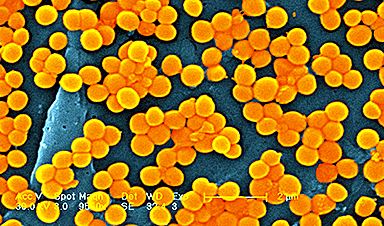
The researchers found that the pathogen-drug combination that had the largest increase in causing the most burden among all age groups was methicillin-resistant Staphylococcus aureus, or MRSA. For this combination – the antibiotic methicillin and the bacteria S. aureus – the number of attributable deaths nearly doubled from 57,200 in 1990 to 130,000 in 2021.
Using statistical modeling, the researchers also produced estimates of deaths and illnesses attributable to AMR by 2050 in three scenarios: if the current climate continues, if new potent antibiotic drugs are developed to target resistant pathogens, and if the world has improved quality of health care for infections and better access to antibiotics.
The forecasts show that deaths from antimicrobial resistance will increase by 2050 if measures are not in place to improve access to quality care, powerful antibiotics and other resources to reduce and treat infections.
The researchers estimated that, in 2050, the number of global deaths attributable to antimicrobial resistance could reach 1.9 million, and those associated with antimicrobial resistance could reach 8.2 million.
According to the data, the regions of the world most affected by AMR and attributable deaths are South Asia, Latin America and the Caribbean, and sub-Saharan Africa – and many of these regions don't have equitable access to quality care, Murray said.
"There are still, unfortunately, a lot of places in low-resource settings where people who need antibiotics are just not getting them, and so that's a big part of it. But it's not just the antibiotics. It's when you're sick, either as a kid or an adult, and you get sent to hospital, and you get a package of care, essentially, that includes things like oxygen," Murray said.
"In low-resource settings, even basics like oxygen are often not available. And then, if you are very sick and you need an intensive care unit, well, there's big parts of the low-resource world – most of them, actually – where you wouldn't get access to that sort of care," he said. "So there's a spectrum of supportive care, plus the antibiotics, that really make a difference."
But in a scenario where the world has better health care, 92 million cumulative deaths could be averted between 2025 and 2050, the researchers forecast. And in a scenario where the world has new, more potent drugs, about 11 million cumulative deaths could be avoided.
'There is possible hope on the horizon'
The "innovative and collaborative" approach to this study provides a "comprehensive assessment" of antimicrobial resistance and its potential burden on the world, Samuel Kariuki, of the Kenya Medical Research Institute, wrote in a commentary that accompanied the new study in The Lancet.
Yet he warned that the forecast models do not consider the emergence of new superbugs "and might lead to underestimation if new pathogens arise."
Overall, "these data should drive investments and targeted action" toward addressing the growing challenge of antimicrobial resistance in all regions of the world, Kariuki wrote.
The new paper represents decades of research on the global burden of antimicrobial resistance, said Dr. Steffanie Strathdee, associate dean of global health sciences and distinguished professor at the University of California San Diego School of Medicine, who was not involved in the study.
Strathdee saw firsthand the effects that antimicrobial resistance can have on health when her husband nearly died from a superbug infection.
"I'm somebody who's lived with antimicrobial resistance affecting my family for the last eight years. My husband nearly died from a superbug infection. It's actually one of the infections that's highlighted in this paper," said Strathdee, who serves as co-director of the Center for Innovative Phage Applications and Therapeutics at UC San Diego.
During a Thanksgiving cruise on the Nile in 2015, Strathdee's husband, Tom Patterson, suddenly developed severe stomach cramps. When a clinic in Egypt failed to help his worsening symptoms, Patterson was flown to Germany, where doctors discovered a grapefruit-size abdominal abscess filled with Acinetobacter baumannii, a virulent bacterium resistant to nearly all antibiotics.
The annual number of people dying from gram-negative bacteria, like A. baumannii, that are resistant to carbapenem – a class of last-resort antibiotics used to treat severe bacterial infections – rose 89,200 from 1990 to 2021, more than any antibiotic class over that period, according to the new study.
"That's one of the urgent priority pathogens, which is one of these gram-negative bacteria," Strathdee said. "And my husband, when he fell ill from this, he was 69. So he's exactly at the age that this paper is highlighting, that older people are going to be affected by this more in the future, because our population is aging and people have comorbidities, like diabetes, like my husband has."
Strathdee's husband recovered after treatment with phages, viruses that selectively target and kill bacteria and that can be used as a treatment approach for antimicrobial-resistant bacterial infections.
"The most important alternative to antibiotics is phage therapy, or bacteriophage therapy, and that's what saved my husband's life," Strathdee said. "Phage can be used very effectively with antibiotics, to reduce the amount of antibiotics that are needed, and they can even be used potentially in livestock and in farming."
The new study gives Strathdee hope that the world can reduce the potential burden of antimicrobial resistance. That would require improving access to antibiotics and newer antimicrobial medications, vaccines, clean water and other aspects of quality health care around the world, she said, while reducing the use of antibiotics in livestock, food production and the environment, which can breed more resistance.
"There is possible hope on the horizon," Strathdee said. "If we were to scale up these interventions, we could dramatically reduce the number of deaths in the future."
CNN's Sandee LaMotte contributed to this report.

News
Cutting Two Amino Acids Slowed Prostate Cancer in Mice
A newly identified link between amino acid metabolism and cholesterol production may help prostate tumors adapt to hormone therapy. Prostate cancer can find ways around treatments designed to deprive tumors of the hormones they [...]

Largest-Ever Physics Survey Raises New Doubts About Our Model of the Universe
Physicists around the world remain deeply divided on key mysteries of the universe, from dark matter to quantum gravity. The standard cosmological model failed to gain majority support, and no leading theory dominated the [...]
Scientists Just Overturned a 100-Year-Old Belief About Bacteria in the Lungs
New findings raise questions about the role of microbes living in the lungs. More than 35 trillion bacteria live throughout the human body, forming microbiomes in the gut, mouth, lungs, skin, and urogenital tract. [...]

GHCE Concept
From the preface of the book Global Health Care Equivalency in the Age of Nanotechnology, Nanomedicine and Artificial Intelligence, Edited by Frank Boehm: Since the publication of my first book (Nanomedical Device and Systems [...]

Novartis, Ionis drug failure spurs questions
Pelacarsen didn’t protect heart health despite lowering levels of a protein particle, “Lp(a),” in a large clinical trial — a result with important implications for cardiovascular drug research. Dive Brief: An RNA drug from [...]

New injectable treatment helps the brain rebuild after stroke
Biomedical engineers at Duke University have created an injectable biomaterial that may help the brain recover from damage left behind by an ischemic stroke. In experiments with mice, the material transformed the cavity created [...]

Scientists Discover a Hidden “Immune Organ” Inside the Skull
Researchers discovered lymph node-like immune hubs inside skull bone marrow that appear to act as rapid-response centers for the brain. For decades, the brain was thought to operate largely apart from the immune system. [...]
Engineered tRNAs and lipid nanoparticles target nonsense mutation cystic fibrosis
Researchers have developed a potential new approach for treating a form of cystic fibrosis caused by so-called nonsense mutations, combining chemically modified transfer RNAs with lipid nanoparticles designed to deliver the therapy directly to [...]
New pancreatic cancer drug carries a $39,800 monthly list price
A groundbreaking treatment for one of the most common forms of pancreatic cancer has been approved in pill form by the FDA. Revolution Medicines’ oral tablet daraxonrasib, branded as Rasonque, reduced the risk of [...]

Researchers Have Discovered a New Way To Reduce Chronic Nerve Pain
A cancer-linked protein called BRAF may help drive chronic nerve pain, and existing cancer drugs targeting it reduced pain sensitivity in preclinical models. Chronic nerve pain can persist long after an injury and often [...]

Our books now available worldwide!
Online Sellers other than Amazon, Routledge, and IOPP Indigo Global Health Care Equivalency in the Age of Nanotechnology, Nanomedicine and Artifcial Intelligence Global Health Care Equivalency In The Age Of Nanotechnology, Nanomedicine And Artificial [...]

Quantum-Enabled Regenerative Health: Reimagining Wellness, Precision Health and Longevity Medicine
Introduction Healthcare is approaching a frontier where the quantum portfolio could influence not only how disease is diagnosed and treated, but how health itself is measured, modeled, predicted and preserved. Quantum computing, quantum simulation, [...]

FDA Clears First-of-Its-Kind Nonmedication Treatment for PTSD
The FDA has cleared a system that uses brain activity data to personalize magnetic stimulation for PTSD, adding a new nonmedication treatment option. Every day in the United States, approximately 17.5 veterans die by suicide, [...]
FDA approves breakthrough drug to treat advanced pancreatic cancer
The Food and Drug Administration (FDA) approved on Wednesday a drug that could extend the survival of those with metastatic pancreatic cancer. The drug, called daraxonrasib, will be sold under the brand name Rasonque [...]

AI Decodes a Hidden DNA Signal Linked to Disease-Causing Mutations
Machine learning identifies the likely “initiator” and enables new predictions about DNA mutations that can cause disease. Every human cell depends on tens of thousands of genes being switched on at the right time [...]

Pope Leo Urges Global Response to Congo’s Deadliest Ebola Outbreak
Pope Leo called for international action to address the Ebola outbreak in the Democratic Republic of Congo. The epidemic has claimed over 2,500 lives and is the nation's largest recorded outbreak. The Pope emphasized [...]