Researchers have developed an eco-friendly method to produce silver nanoparticles from the roots of Martynia annua, showing strong antioxidant and anti-diabetic potential while avoiding the toxic by-products of conventional synthesis.
Silver nanoparticles are particularly popular in research because of their high surface area-to-volume ratio, which boosts their reactivity and biological performance. However, producing these tiny particles is energy-intensive, uses toxic reagents, and generates hazardous waste.
Researchers are turning to plants to find a less environmentally compromising route to synthesis. Known as photosynthesis, scientists can harness the natural phytochemicals in plants to reduce silver ions (Ag+) to elemental silver (Ag0) and stabilize the resulting particles, preventing aggregation. The key compounds involved are terpenoids, flavonoids, saponins, and phenolics, among others.
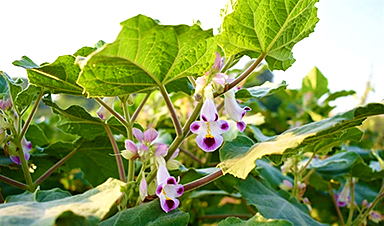
The new study, published in Nano TransMed, focuses on Martynia annua, a plant with a rich phytochemical profile, particularly its roots, as the biological source for nanoparticle production.
The researchers first prepared an aqueous extract of Martynia annua roots, filtering the liquid carefully to retain the phytochemicals required for nanoparticle formation. When combined with a silver nitrate (AgNO3) solution under controlled conditions, the extract showed a visible change in color from pale yellow to reddish-brown, signalling the onset of surface plasmon resonance, a distinctive optical property of metal nanoparticles that confirms their synthesis.
The nanoparticles were characterized using several complementary techniques: UV/Vis spectroscopy, Fourier-transform infrared spectroscopy (FTIR), scanning electron microscopy (SEM), energy-dispersive X-ray spectroscopy (EDX), and dynamic light scattering (DLS).
UV/Vis spectroscopy revealed a peak at around 420 nm, a wavelength typical of silver nanoparticles. This provided further confirmation of the formation of particles exhibiting surface plasmon resonance.
FTIR identified functional groups on the particle surfaces, such as hydroxyl and carbonyl moieties, indicating the involvement of plant-derived compounds in capping and stabilization.
SEM images showed that the nanoparticles were predominantly polygonal or irregular in shape. EDX confirmed the elemental composition of the nanoparticles, with a majority of silver present at 58.08 %, and trace amounts of other elements.
DLS measured the hydrodynamic diameter of the particles at roughly 64 nm, with a polydispersity index of 0.385, suggesting a relatively uniform size distribution suitable for biomedical applications. Zeta potential analysis indicated a surface charge of -21.6 mV, reflecting moderate colloidal stability and a reduced tendency for the nanoparticles to clump together in suspension.
Phytochemical analysis of the root extract confirmed a strong presence of terpenoids, which are believed to facilitate both the reduction of silver ions and the long-term stability of the nanoparticles.
Strong Bioactivity
The team also assessed the biological properties of the Martynia annua-derived silver nanoparticles to assess their therapeutic potential.
Antioxidant assays of the particles demonstrated strong free radical scavenging ability in the DPPH test and substantial ferric reducing antioxidant power, important in counteracting oxidative stress. In diabetes, where oxidative stress plays a significant role in the onset and progression of the illness, this is particularly promising.
The nanoparticles inhibited α-amylase in enzymatic studies, an enzyme responsible for breaking down complex carbohydrates into simple sugars. By limiting α-amylase activity, the nanoparticles may help reduce post-meal spikes in blood glucose levels. Further, in cell-based experiments, they were found to enhance glucose uptake, indicating potential for improving glucose homeostasis in diabetic conditions.
A Sustainable Path Forward
Taken together, these results demonstrate that the green synthesis of silver nanoparticles from Martynia annua roots is both feasible and effective, producing stable, well-defined particles with strong antioxidant properties. The combination of favourable physicochemical attributes, such as appropriate size, shape, surface charge, and stability, with measurable biological benefits suggests these plant-derived nanoparticles could contribute to new therapeutic strategies.
With growing demand for environmentally responsible nanotechnology, such plant-mediated methods could help to strike a balance between sustainable manufacturing and high-performance biomedical materials.
Journal Reference
Abbigeri M.B., et al. (2025). Green synthesis of silver nanoparticles from Martynia annua: characterization and bioactivity. Nano TransMed, 4, 100070. DOI: 10.1016/j.ntm.2025.100070, https://www.sciencedirect.com/science/article/pii/S2790676025000019


News

Scientists Just Overturned a 100-Year-Old Belief About Bacteria in the Lungs
New findings raise questions about the role of microbes living in the lungs. More than 35 trillion bacteria live throughout the human body, forming microbiomes in the gut, mouth, lungs, skin, and urogenital tract. [...]

GHCE Concept
From the preface of the book Global Health Care Equivalency in the Age of Nanotechnology, Nanomedicine and Artificial Intelligence, Edited by Frank Boehm: Since the publication of my first book (Nanomedical Device and Systems [...]

Novartis, Ionis drug failure spurs questions
Pelacarsen didn’t protect heart health despite lowering levels of a protein particle, “Lp(a),” in a large clinical trial — a result with important implications for cardiovascular drug research. Dive Brief: An RNA drug from [...]

New injectable treatment helps the brain rebuild after stroke
Biomedical engineers at Duke University have created an injectable biomaterial that may help the brain recover from damage left behind by an ischemic stroke. In experiments with mice, the material transformed the cavity created [...]

Scientists Discover a Hidden “Immune Organ” Inside the Skull
Researchers discovered lymph node-like immune hubs inside skull bone marrow that appear to act as rapid-response centers for the brain. For decades, the brain was thought to operate largely apart from the immune system. [...]

Engineered tRNAs and lipid nanoparticles target nonsense mutation cystic fibrosis
Researchers have developed a potential new approach for treating a form of cystic fibrosis caused by so-called nonsense mutations, combining chemically modified transfer RNAs with lipid nanoparticles designed to deliver the therapy directly to [...]
New pancreatic cancer drug carries a $39,800 monthly list price
A groundbreaking treatment for one of the most common forms of pancreatic cancer has been approved in pill form by the FDA. Revolution Medicines’ oral tablet daraxonrasib, branded as Rasonque, reduced the risk of [...]

Researchers Have Discovered a New Way To Reduce Chronic Nerve Pain
A cancer-linked protein called BRAF may help drive chronic nerve pain, and existing cancer drugs targeting it reduced pain sensitivity in preclinical models. Chronic nerve pain can persist long after an injury and often [...]

Our books now available worldwide!
Online Sellers other than Amazon, Routledge, and IOPP Indigo Global Health Care Equivalency in the Age of Nanotechnology, Nanomedicine and Artifcial Intelligence Global Health Care Equivalency In The Age Of Nanotechnology, Nanomedicine And Artificial [...]

Quantum-Enabled Regenerative Health: Reimagining Wellness, Precision Health and Longevity Medicine
Introduction Healthcare is approaching a frontier where the quantum portfolio could influence not only how disease is diagnosed and treated, but how health itself is measured, modeled, predicted and preserved. Quantum computing, quantum simulation, [...]

FDA Clears First-of-Its-Kind Nonmedication Treatment for PTSD
The FDA has cleared a system that uses brain activity data to personalize magnetic stimulation for PTSD, adding a new nonmedication treatment option. Every day in the United States, approximately 17.5 veterans die by suicide, [...]

FDA approves breakthrough drug to treat advanced pancreatic cancer
The Food and Drug Administration (FDA) approved on Wednesday a drug that could extend the survival of those with metastatic pancreatic cancer. The drug, called daraxonrasib, will be sold under the brand name Rasonque [...]

AI Decodes a Hidden DNA Signal Linked to Disease-Causing Mutations
Machine learning identifies the likely “initiator” and enables new predictions about DNA mutations that can cause disease. Every human cell depends on tens of thousands of genes being switched on at the right time [...]

Pope Leo Urges Global Response to Congo’s Deadliest Ebola Outbreak
Pope Leo called for international action to address the Ebola outbreak in the Democratic Republic of Congo. The epidemic has claimed over 2,500 lives and is the nation's largest recorded outbreak. The Pope emphasized [...]

Is there a summer COVID-19 surge this year? Yep, it’s ramping up again
Hantavirus. Ebola. West Nile. Measles. And, of course, cyclospora — that stomach parasite making people miserable across the country. Americans have plenty to worry about this summer. But remember COVID-19? It may not be [...]

Natural Compound in Broccoli Could Help Treat a Rare, Incurable Neurological Disease
Swinburne researchers have discovered how broccoli could help treat an extremely rare and incurable disease that affects only about 200 Australians. A naturally occurring compound in broccoli is being investigated as a possible treatment [...]