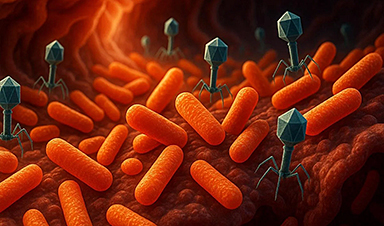
Scientists have long known that bacteriophages, viruses that infect bacteria, live in our gut, but exactly what they do has remained elusive.
Researchers developed a clever mouse model that can temporarily eliminate these phages without harming the bacteria, using a UTI treatment ingredient called acriflavine. Their experiments showed that without phages, gut bacteria become less sensitive to antibiotics, suggesting that these tiny viruses might actually worsen the microbiome damage antibiotics cause. This surprising connection could lead to new breakthroughs in gut health research.
Gut Viruses: The Overlooked Partners of Bacteria
Some things are just meant to be together: peanut butter and jelly, salt and pepper — and in your gut, bacteria and the viruses that infect them.
These viruses, known as bacteriophages, naturally target the bacterial species living in your digestive system. Although phages have evolved alongside bacteria for millions of years, they remain far less understood. They're tricky to classify and so closely intertwined with their bacterial hosts that scientists still aren't sure exactly what roles they play.
But what if researchers could compare a gut microbiome with and without these viruses, under otherwise identical conditions?
A New Way to Study Phages
At Virginia Tech, biologist Bryan Hsu and his team figured out how to do just that.
Hsu and graduate student Hollyn Franklin developed a model that can selectively remove bacteriophages from a mouse's gut microbiome — and later restore them — without disturbing the bacteria themselves. In early tests of the model, the researchers found intriguing evidence that phages might actually make gut bacteria more sensitive to antibiotics. Their findings were published today (April 28) in the journal Cell Host & Microbe.
Acriflavine: The Phage-Silencing Compound
What could inhibit a bacteria's viruses but not the bacteria itself? In her early search through the literature, Franklin found a chemical compound called acriflavine that fit the bill. It's a component of a widely available medication used in Brazil to treat urinary tract infections (UTI).
Fortuitously, a member of Hsu's lab and paper co-author, Rogerio Bataglioli, is a native Brazilian. He shipped a massive order of acriflavine to his parent's house. But he forgot to tell his parents it was coming, Hsu said.
"His mom called, and asked, 'Is everything OK? Because 20 boxes of UTI treatment just arrived under your name.'"
From UTI Medicine to Breakthrough Experiment
After that was sorted, Franklin began administering acriflavine to lab mice. Over a period of 12 days, there was a dramatic reduction in the concentration of viral particles. And they didn't bounce back when she stopped administering the drug.
But when Franklin reintroduced a tiny sample of the mouse's own gut microbiome, extracted before treatment, the natural phage populations sprang back to life.
"It went away when we wanted it to, and came back when we wanted it to," said Hsu. "Which means we have a bacteriophage conditional mouse model."
Or, more fun: BaCon mouse model.
The Power of a Switchable Microbiome
To see if the mouse model had some significance for health, Hsu's research team went straight to one of the hottest topics in the field: the collateral damage that antibiotics have on a patient's resident microbial population.
Antibiotics save millions of lives every year, but the drug rages indiscriminately through bad, benign, and beneficial bacteria alike, disrupting our gut microbiome and leaving us vulnerable to new pathogens.
Antibiotics, Gut Microbes, and Phage Interference
Could phages be playing a role in the destructive wake of an antibiotic treatment? Hsu and Franklin used their BaCon mouse model to ask this question and administered antibiotics to mice with and without phage populations.
Their results suggest that phages increase the sensitivity of bacteria to antibiotics.
"It's hard to make definitive conclusions, but these results are telling us that phages have some significance for how we respond to antibiotics," Hsu said.
Phages: Potential Game Changers in Microbiome Health
The next questions, according to Franklin, will explore if phages caused these effects or are simply correlated with them, and what role phages play in diseases, which would open new doors in microbiome studies.
Answers may be served with a side of BaCon mouse.
Reference: 28 April 2025, Cell Host & Microbe.
Funding for this work was provided by the Virginia Tech Institute for Critical Technology and Applied Science, the National Institute of General Medical Sciences of the National Institutes of Health.
Research collaborators include:
- Frank Aylward, associate professor of biological sciences
- Anh Ha, postdoctoral research associate
- Rita Makhlouf, graduate student, biological sciences
- Zachary Baker, graduate student, biological sciences
- Sydney Murphy ´24, former undergraduate researcher in the Hsu Lab
- Hannah Jirsa ´23, former undergraduate researcher in the Hsu Lab
- Joshua Heuler, graduate student, biological sciences
- Teresa Southard, associate professor of anatomic pathology

News
Cutting Two Amino Acids Slowed Prostate Cancer in Mice
A newly identified link between amino acid metabolism and cholesterol production may help prostate tumors adapt to hormone therapy. Prostate cancer can find ways around treatments designed to deprive tumors of the hormones they [...]

Largest-Ever Physics Survey Raises New Doubts About Our Model of the Universe
Physicists around the world remain deeply divided on key mysteries of the universe, from dark matter to quantum gravity. The standard cosmological model failed to gain majority support, and no leading theory dominated the [...]
Scientists Just Overturned a 100-Year-Old Belief About Bacteria in the Lungs
New findings raise questions about the role of microbes living in the lungs. More than 35 trillion bacteria live throughout the human body, forming microbiomes in the gut, mouth, lungs, skin, and urogenital tract. [...]

GHCE Concept
From the preface of the book Global Health Care Equivalency in the Age of Nanotechnology, Nanomedicine and Artificial Intelligence, Edited by Frank Boehm: Since the publication of my first book (Nanomedical Device and Systems [...]

Novartis, Ionis drug failure spurs questions
Pelacarsen didn’t protect heart health despite lowering levels of a protein particle, “Lp(a),” in a large clinical trial — a result with important implications for cardiovascular drug research. Dive Brief: An RNA drug from [...]
New injectable treatment helps the brain rebuild after stroke
Biomedical engineers at Duke University have created an injectable biomaterial that may help the brain recover from damage left behind by an ischemic stroke. In experiments with mice, the material transformed the cavity created [...]
Scientists Discover a Hidden “Immune Organ” Inside the Skull
Researchers discovered lymph node-like immune hubs inside skull bone marrow that appear to act as rapid-response centers for the brain. For decades, the brain was thought to operate largely apart from the immune system. [...]
Engineered tRNAs and lipid nanoparticles target nonsense mutation cystic fibrosis
Researchers have developed a potential new approach for treating a form of cystic fibrosis caused by so-called nonsense mutations, combining chemically modified transfer RNAs with lipid nanoparticles designed to deliver the therapy directly to [...]
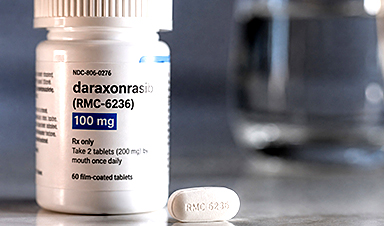
New pancreatic cancer drug carries a $39,800 monthly list price
A groundbreaking treatment for one of the most common forms of pancreatic cancer has been approved in pill form by the FDA. Revolution Medicines’ oral tablet daraxonrasib, branded as Rasonque, reduced the risk of [...]
Researchers Have Discovered a New Way To Reduce Chronic Nerve Pain
A cancer-linked protein called BRAF may help drive chronic nerve pain, and existing cancer drugs targeting it reduced pain sensitivity in preclinical models. Chronic nerve pain can persist long after an injury and often [...]
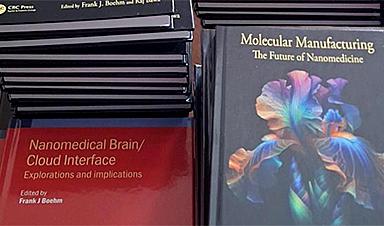
Our books now available worldwide!
Online Sellers other than Amazon, Routledge, and IOPP Indigo Global Health Care Equivalency in the Age of Nanotechnology, Nanomedicine and Artifcial Intelligence Global Health Care Equivalency In The Age Of Nanotechnology, Nanomedicine And Artificial [...]

Quantum-Enabled Regenerative Health: Reimagining Wellness, Precision Health and Longevity Medicine
Introduction Healthcare is approaching a frontier where the quantum portfolio could influence not only how disease is diagnosed and treated, but how health itself is measured, modeled, predicted and preserved. Quantum computing, quantum simulation, [...]

FDA Clears First-of-Its-Kind Nonmedication Treatment for PTSD
The FDA has cleared a system that uses brain activity data to personalize magnetic stimulation for PTSD, adding a new nonmedication treatment option. Every day in the United States, approximately 17.5 veterans die by suicide, [...]
FDA approves breakthrough drug to treat advanced pancreatic cancer
The Food and Drug Administration (FDA) approved on Wednesday a drug that could extend the survival of those with metastatic pancreatic cancer. The drug, called daraxonrasib, will be sold under the brand name Rasonque [...]
AI Decodes a Hidden DNA Signal Linked to Disease-Causing Mutations
Machine learning identifies the likely “initiator” and enables new predictions about DNA mutations that can cause disease. Every human cell depends on tens of thousands of genes being switched on at the right time [...]

Pope Leo Urges Global Response to Congo’s Deadliest Ebola Outbreak
Pope Leo called for international action to address the Ebola outbreak in the Democratic Republic of Congo. The epidemic has claimed over 2,500 lives and is the nation's largest recorded outbreak. The Pope emphasized [...]