While Artificial Intelligence (AI) can be a powerful tool that physicians can use to help diagnose their patients and has great potential to improve accuracy, efficiency and patient safety, it has its drawbacks. It may distract doctors, give them too much confidence in the answers it provides, and even lead them to lose confidence in their own diagnostic judgement.
To ensure that AI is properly integrated into healthcare practice, a research team has provided a framework comprising five guiding questions aimed at supporting doctors in their patient care while not undermining their expertise through an over-reliance on AI. The framework was recently published in the peer-reviewed Journal of the American Medical Informatics Association.
This paper moves the discussion from how well the AI algorithm performs to how physicians actually interact with AI during diagnosis. This paper provides a framework that pushes the field beyond ‘Can AI detect disease?’ to ‘How should AI support doctors without undermining their expertise?’ This reframing is an essential step toward safer and more effective adoption of AI in clinical practice.”
Dr. Joann G. Elmore, senior author, professor of medicine in the division of general internal medicine and health services research and Director of the National Clinician Scholars Program at the David Geffen School of Medicine at UCLA
While AI-related errors happen, no one really knows why these tools can fail to improve diagnostic decision-making when implemented into clinical practice.
To find out why, the researchers propose five questions to guide research and development to prevent AI-linked diagnostic errors. The questions to ask are: What type and format of information should AI present? Should it provide that information immediately, after initial review, or be toggled on and off by the physician? How does the AI system show how it arrives at its decisions? How does it affect bias and complacency? And finally, what are the risks of long-term reliance on it?
These questions are important to ask because:
- Format affects doctors’ attention, diagnostic accuracy, and possible interpretive biases
- Immediate information can lead to a biased interpretation while delayed cues may help maintain diagnostic skills by allowing physicians to more fully engage in a diagnosis
- How the AI system arrives at a decision can highlight features that were ruled in or out, provide “what-if” types of explanations, and more effectively align with doctors’ clinical reasoning
- When physicians lean too much on AI, they may rely less on their own critical thinking, letting an accurate diagnosis slip by
- Long-term reliance on AI may erode a doctor’s learned diagnostic abilities
The next steps toward improving AI for diagnostic purposes are to evaluate different designs in clinical settings, study how AI affects trust and decision-making, observe doctors’ skill development when AI is used in training and clinical practice, and develop systems that self-adjust how they assist physicians.
“AI has huge potential to improve diagnostic accuracy, efficiency, and patient safety, but poor integration could make healthcare worse instead of better,” Elmore said. “By highlighting the human factors like timing, trust, over-reliance, and skill erosion, our work emphasizes that AI must be designed to work with doctors, not replace them. This balance is crucial if we want AI to enhance care without introducing new risks.”
Co-authors are Tad Brunyé of Tufts University and Stephen Mitroff of George Washington University.
The research was supported by the National Cancer Institute of the National Institutes of Health (R01 CA288824, R01 CA225585, R01 CA172343, and R01 CA140560).

News
Cancer’s Hidden Antioxidant Shield Helps It Escape the Immune System
Blocking an antioxidant protein that tumors use to suppress immune attacks improved cancer immunotherapy responses in mice. Cancer cells can release antioxidants that interfere with the immune cells trying to kill them. Researchers have [...]

Scientists Find a Berry Compound That Helps Muscle Cells Burn Fat
Pterostilbene, a compound found naturally in some foods, affects how skeletal muscles process fats by stabilizing a protein called PPARδ and increasing its signaling activity. Pterostilbene, a natural compound found in blueberries, grapes, and [...]
Two Hidden Forces Help Build the Human Brain Before Birth
Scientists have uncovered two surprising forces that help guide how the human brain forms before birth. Before birth, the human brain is shaped in large part by an unusual class of stem cells known [...]
Researchers Uncover a Hidden Trigger Behind Chronic Inflammation
The findings offer new insights that could help guide the development of future therapies. A protein called human resistin may help flip on one of the immune system’s most powerful inflammatory switches. Researchers at [...]
Scientists Have Uncovered Previously Hidden Microbial Activity on Human Skin
The most abundant microbes on your skin may not be the ones doing most of the work. Human skin supports vast communities of bacteria, fungi, and viruses that can influence its protective barrier, immune [...]
Brazilian Tree Compounds Fight COVID-19 on Multiple Fronts
Scientists found compounds in a Brazilian tree that hit SARS-CoV-2 on multiple fronts, revealing a promising new lead in the search for COVID-19 treatments. Researchers have found that galloylquinic acids extracted from the leaves [...]
Cutting Two Amino Acids Slowed Prostate Cancer in Mice
A newly identified link between amino acid metabolism and cholesterol production may help prostate tumors adapt to hormone therapy. Prostate cancer can find ways around treatments designed to deprive tumors of the hormones they [...]
Largest-Ever Physics Survey Raises New Doubts About Our Model of the Universe
Physicists around the world remain deeply divided on key mysteries of the universe, from dark matter to quantum gravity. The standard cosmological model failed to gain majority support, and no leading theory dominated the [...]

Scientists Just Overturned a 100-Year-Old Belief About Bacteria in the Lungs
New findings raise questions about the role of microbes living in the lungs. More than 35 trillion bacteria live throughout the human body, forming microbiomes in the gut, mouth, lungs, skin, and urogenital tract. [...]
GHCE Concept
From the preface of the book Global Health Care Equivalency in the Age of Nanotechnology, Nanomedicine and Artificial Intelligence, Edited by Frank Boehm: Since the publication of my first book (Nanomedical Device and Systems [...]

Novartis, Ionis drug failure spurs questions
Pelacarsen didn’t protect heart health despite lowering levels of a protein particle, “Lp(a),” in a large clinical trial — a result with important implications for cardiovascular drug research. Dive Brief: An RNA drug from [...]
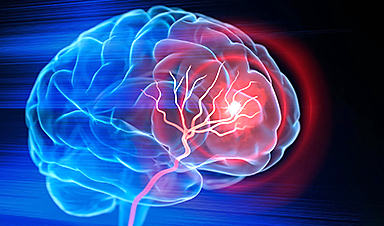
New injectable treatment helps the brain rebuild after stroke
Biomedical engineers at Duke University have created an injectable biomaterial that may help the brain recover from damage left behind by an ischemic stroke. In experiments with mice, the material transformed the cavity created [...]
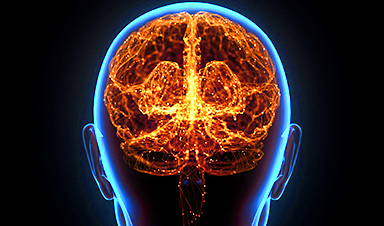
Scientists Discover a Hidden “Immune Organ” Inside the Skull
Researchers discovered lymph node-like immune hubs inside skull bone marrow that appear to act as rapid-response centers for the brain. For decades, the brain was thought to operate largely apart from the immune system. [...]
Engineered tRNAs and lipid nanoparticles target nonsense mutation cystic fibrosis
Researchers have developed a potential new approach for treating a form of cystic fibrosis caused by so-called nonsense mutations, combining chemically modified transfer RNAs with lipid nanoparticles designed to deliver the therapy directly to [...]
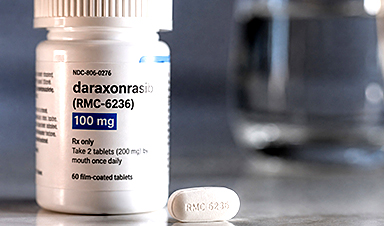
New pancreatic cancer drug carries a $39,800 monthly list price
A groundbreaking treatment for one of the most common forms of pancreatic cancer has been approved in pill form by the FDA. Revolution Medicines’ oral tablet daraxonrasib, branded as Rasonque, reduced the risk of [...]
Researchers Have Discovered a New Way To Reduce Chronic Nerve Pain
A cancer-linked protein called BRAF may help drive chronic nerve pain, and existing cancer drugs targeting it reduced pain sensitivity in preclinical models. Chronic nerve pain can persist long after an injury and often [...]