Research conducted during World Antimicrobial Awareness Week examines the effects of employing suggested chlorine-based chemicals to combat Clostridioides difficile, the leading cause of antibiotic-related illness in healthcare environments worldwide.
A recent study reveals that a primary chlorine disinfectant used in hospitals fails to eliminate the leading cause of antibiotic-associated illness in healthcare settings worldwide. This finding comes from research conducted by the University of Plymouth.
The study shows that Clostridioides difficile spores, also known as C. diff, remain completely unaffected despite being treated with high concentrations of bleach used in many hospitals. In fact, chlorine-based chemicals are no more effective than plain water in disinfecting surfaces against these spores.
Urgent Need for Effective Disinfection Methods
Writing in the journal Microbiology, the study's authors say susceptible people working and being treated in clinical settings might be unknowingly placed at risk of contracting the superbug.
As a result, and with the incidence of biocide overuse only serving to fuel rises in antimicrobial resistance (AMR) worldwide, they have called for urgent research to find alternative strategies to disinfect C. diff spores in order to break the chain of transmission in clinical environments.
Research published during World Antimicrobial Awareness Week has shown that one of the primary chlorine disinfectants currently being used to clean hospital scrubs and surfaces does not kill off spores of Clostridioides difficile, the most common cause of antibiotic-associated sickness in healthcare settings globally. Credit: Microbiology Society
Dr Tina Joshi, Associate Professor in Molecular Microbiology at the University of Plymouth, carried out the study with Humaira Ahmed, a fourth-year Medicine student from the University's Peninsula Medical School.
Dr Joshi, said: "With incidence of anti-microbial resistance on the rise, the threat posed by superbugs to human health is increasing. But far from demonstrating that our clinical environments are clean and safe for staff and patients, this study highlights the ability of C. diff spores to tolerate disinfection at in-use and recommended active chlorine concentrations. It shows we need disinfectants, and guidelines, that are fit for purpose and work in line with bacterial evolution, and the research should have a significant impact on current disinfection protocols in the medical field globally."
Global Impact of C. diff Infections
C. diff is a microbe that causes diarrhea, colitis, and other bowel complications and is known to infect millions of people all over the world each year.
It causes around 29,000 deaths per year in the USA, and almost 8,500 in Europe, with the most recent data showing that the incidence of C. diff infection was increasing prior to the start of the COVID-19 pandemic in the UK.
Previously, Dr Joshi and colleagues had demonstrated the ability of C. diff spores to survive exposure to recommended concentrations of sodium dichloroisocyanurate in liquid form and within personal protective fabrics such as surgical gowns.
The new study examined spore response of three different strains of C. diff to three clinical in-use concentrations of sodium hypochlorite. The spores were then spiked onto surgical scrubs and patient gowns, examined using scanning electron microscopes to establish if there were any morphological changes to the outer spore coat.
Dr Joshi, who is on the Microbiology Society Council and Co-Chairs their Impact & Influence Committee, added: "Understanding how these spores and disinfectants interact is integral to practical management of C. diff infection and reducing the burden of infection in healthcare settings. However, there are still unanswered questions regarding the extent of biocide tolerance within C. diff and whether it is affected by antibiotic co-tolerance. With AMR increasing globally, the need to find those answers – both for C. diff and other superbugs – has never been more pressing."
Reference: "Clostridioides difficile spores tolerate disinfection with sodium hypochlorite disinfectant and remain viable within surgical scrubs and gown fabrics" by Humaira Ahmed and Lovleen Tina Joshi, 21 November 2023, Microbiology.
DOI: 10.1099/mic.0.001418

News

Quantum-Enabled Regenerative Health: Reimagining Wellness, Precision Health and Longevity Medicine
Introduction Healthcare is approaching a frontier where the quantum portfolio could influence not only how disease is diagnosed and treated, but how health itself is measured, modeled, predicted and preserved. Quantum computing, quantum simulation, [...]

FDA Clears First-of-Its-Kind Nonmedication Treatment for PTSD
The FDA has cleared a system that uses brain activity data to personalize magnetic stimulation for PTSD, adding a new nonmedication treatment option. Every day in the United States, approximately 17.5 veterans die by suicide, [...]
FDA approves breakthrough drug to treat advanced pancreatic cancer
The Food and Drug Administration (FDA) approved on Wednesday a drug that could extend the survival of those with metastatic pancreatic cancer. The drug, called daraxonrasib, will be sold under the brand name Rasonque [...]

AI Decodes a Hidden DNA Signal Linked to Disease-Causing Mutations
Machine learning identifies the likely “initiator” and enables new predictions about DNA mutations that can cause disease. Every human cell depends on tens of thousands of genes being switched on at the right time [...]

Pope Leo Urges Global Response to Congo’s Deadliest Ebola Outbreak
Pope Leo called for international action to address the Ebola outbreak in the Democratic Republic of Congo. The epidemic has claimed over 2,500 lives and is the nation's largest recorded outbreak. The Pope emphasized [...]

Is there a summer COVID-19 surge this year? Yep, it’s ramping up again
Hantavirus. Ebola. West Nile. Measles. And, of course, cyclospora — that stomach parasite making people miserable across the country. Americans have plenty to worry about this summer. But remember COVID-19? It may not be [...]

Natural Compound in Broccoli Could Help Treat a Rare, Incurable Neurological Disease
Swinburne researchers have discovered how broccoli could help treat an extremely rare and incurable disease that affects only about 200 Australians. A naturally occurring compound in broccoli is being investigated as a possible treatment [...]

Antibody recycling, FcRn and the next generation of biologics
FcRn plays a central role in regulating the half-life of IgG antibodies and albumin, making it a critical target in both antibody engineering and autoimmune disease therapy. This article explores the biology of FcRn, [...]

Ebola kills 2,300 in three months with no vaccine available for Congo’s deadliest ever outbreak
It’s Congo’s 17th outbreak, with a toll that has eclipsed that of the country’s 2018-2020 outbreak when 2,299 deaths out of 3,481 cases were recorded. The latest data shows 101 new cases and 33 [...]

Beyond an Agency: How AI, Creativity and Commercialization Are Converging Into a New Growth Model
At a moment when AI is forcing a fundamental rethink of how work gets done, the life sciences industry is grappling with a deeper question: what role should human creativity play in an increasingly [...]

New $60 Blood Test Detects Lung Cancer Without Costly DNA Sequencing
A simple blood test that detects chemical changes in DNA identified more than 90% of stage 2-4 lung cancers in an early study, without relying on costly DNA sequencing. Researchers at Tel Aviv University and collaborating [...]
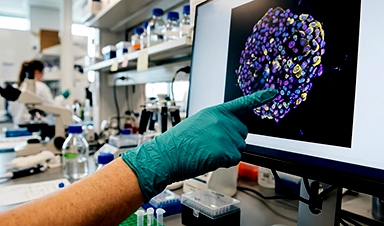
Reducing drug development failures with human-relevant models and AI
Professor Joseph C. Wu of Stanford University explains how stem cells, human-relevant models and AI are helping researchers predict which drug candidates are most likely to succeed before clinical trials. Researchers now have access [...]
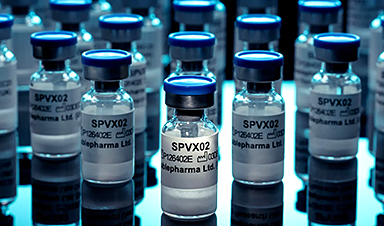
Half of vaccines are binned – ‘fridge-free’ versions could change that
Vaccines that do not need to be kept cool in a fridge have been successfully trialed in patients for the first time, say UK scientists. Currently, most vaccines need to be refrigerated or frozen [...]

Mushroom Mystery: The Fungus That Makes People See Tiny Humans
A mushroom sold in markets and served in restaurants in Southwest China has an unusual warning attached to it: cook it thoroughly, or you may start seeing tiny people. For decades, people have reported [...]

Artificial intelligence used to design brand new viruses
Artificial Intelligence has been used to design brand new viruses that are fully functional and can replicate in the laboratory, say US researchers. It is the first time whole genomes have been successfully designed [...]

Molecular Manufacturing: The Future of Nanomedicine – New book from NanoappsMedical Inc.
This book explores the revolutionary potential of atomically precise manufacturing technologies to transform global healthcare, as well as practically every other sector across society. This forward-thinking volume examines how envisaged Factory@Home systems might enable the cost-effective [...]