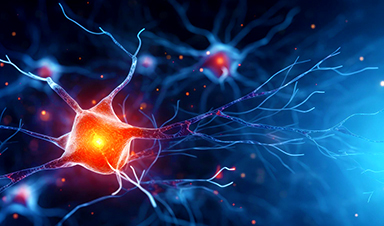
Scientists at Gladstone Institutes uncovered a surprising reason why dopamine-producing neurons, crucial for smooth body movements, die in Parkinson's disease.
Parkinson's Mystery: Why Key Brain Cells Die
Certain groups of brain cells control the body's ability to move with precision and coordination. When these cells remain in an overactive state for extended periods, they begin to deteriorate and eventually die. Researchers at the Gladstone Institutes recently observed this process, offering fresh insight into what might go wrong in the brains of people with Parkinson's disease.
Scientists have long recognized that a specific type of neuron is lost as Parkinson's progresses, though the reasons behind this decline have remained uncertain. A new study, published in the journal eLife, shows that in mice, prolonged overstimulation of these neurons can directly lead to their death. The researchers suggest that in Parkinson's, this overactivity may be fueled by a combination of genetic risks, environmental exposures, and the extra strain on surviving neurons as they try to make up for those already lost.
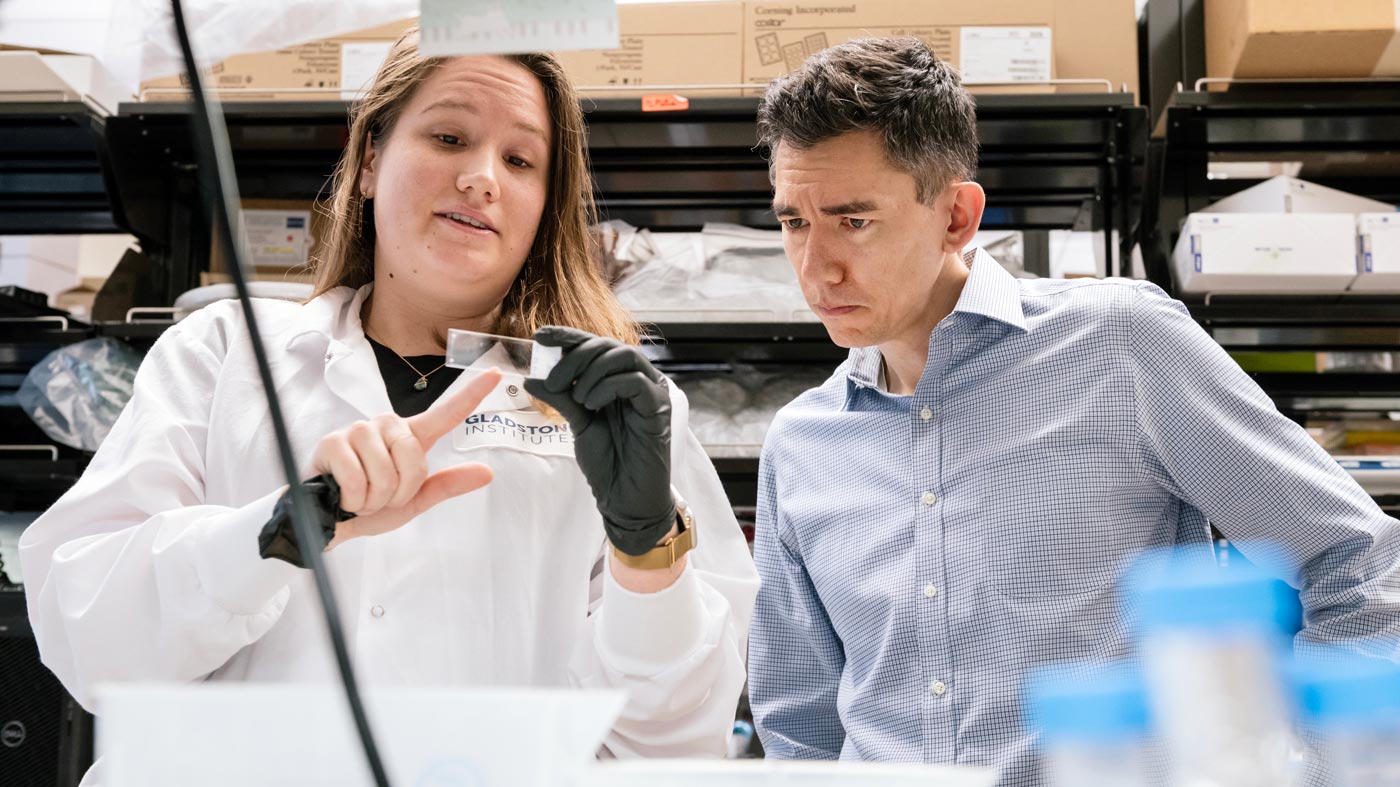
"An overarching question in the Parkinson's research field has been why the cells that are most vulnerable to the disease die," says Gladstone Investigator Ken Nakamura, MD, PhD, who led the study. "Answering that question could help us understand why the disease occurs and point toward new ways to treat it."
Parkinson's Symptoms and Rising Neuron Activity
More than 8 million people around the world are currently affected by Parkinson's disease, a progressive disorder of the brain that leads to tremors, slowed movements, muscle stiffness, and difficulty with walking and balance.
Researchers know that the neurons responsible for producing dopamine, which is essential for voluntary movement, are among those that die in Parkinson's patients. Evidence also shows that these neurons often become more active as the disease advances, both before and after degeneration begins. What has remained unclear is whether this surge in activity is simply a response to the disease or if it plays a direct role in driving cell death.

Continuous vs. Short-Term Activation
In the new study, Nakamura and his colleagues tackled this question by introducing a receptor specifically into dopamine neurons in mice that allowed them to increase the cells' activity by treating the animals with a drug, clozapin-N-oxide (CNO). Uniquely, the scientists added CNO to the animals' drinking water, driving chronic activation of the neurons.
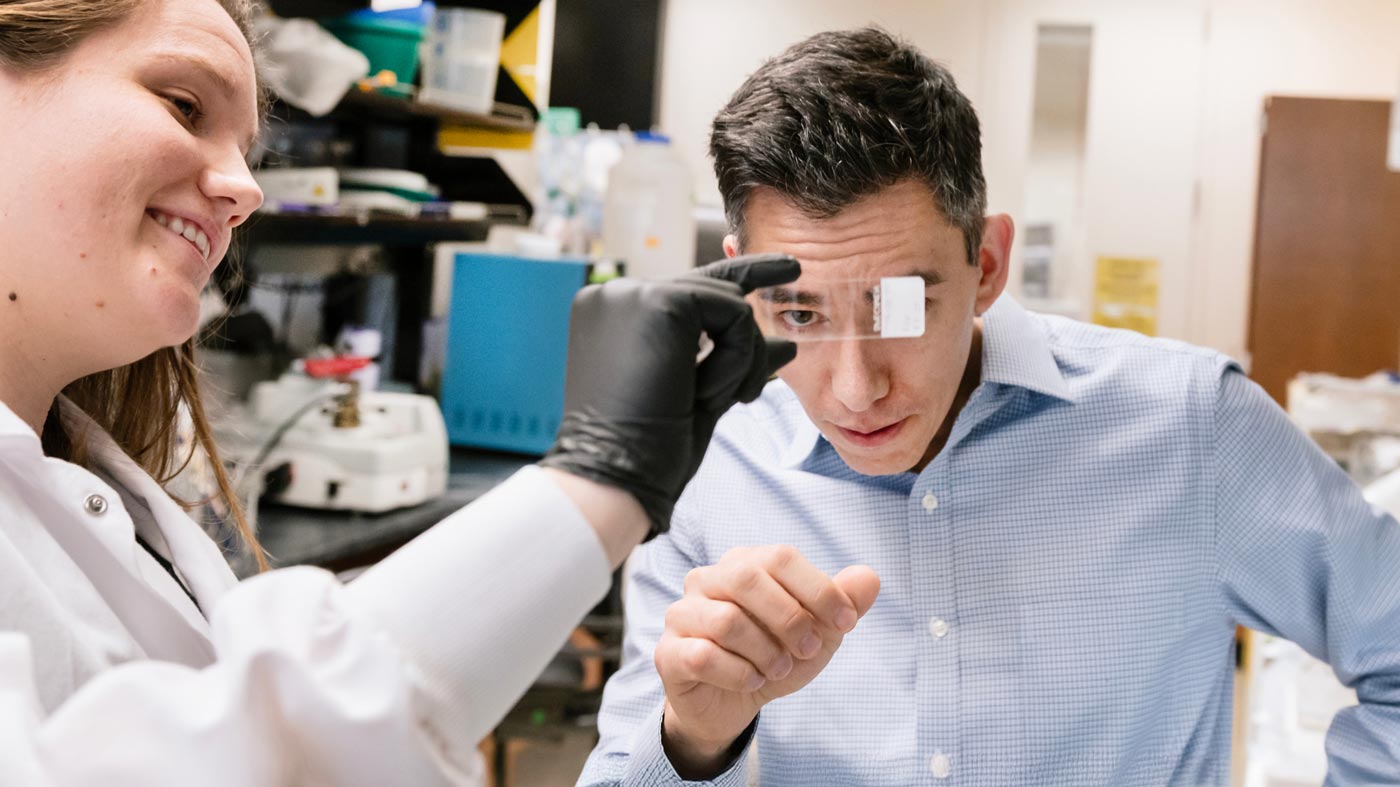
"In previous work, we and others have transiently activated these cells with injections of CNO or by other means, but that only led to short bursts of activation," says Katerina Rademacher, a graduate student in Nakamura's lab and first author of the study. "By delivering CNO through drinking water, we get a relatively continuous activation of the cells, and we think that's important in modeling what happens in people with Parkinson's disease."

Within a few days of overactivating dopamine neurons, the animals' typical cycle of daytime and nighttime activities became disrupted. After one week, the researchers could detect degeneration of the long projections (called axons) extending from some dopamine neurons. By one month, the neurons were beginning to die.
Connecting Mouse Findings to Human Parkinson's
To gain insight into why overactivation leads to neuronal degeneration, the researchers studied the molecular changes that occurred in the dopamine neurons before and after the overactivation. They showed that overactivation of the neurons led to changes in calcium levels and in the expression of genes related to dopamine metabolism.
"In response to chronic activation, we think the neurons may try to avoid excessive dopamine—which can be toxic—by decreasing the amount of dopamine they produce," Rademacher explains. "Over time, the neurons die, eventually leading to insufficient dopamine levels in the brain areas that support movement."
Shared Gene Patterns in Patients and Mice
When the researchers measured the levels of genes in brain samples from patients with early-stage Parkinson's, they found similar changes; genes related to dopamine metabolism, calcium regulation, and healthy stress responses were turned down.
The research did not reveal why activity of the dopamine neurons might increase with Parkinson's disease, but Nakamura hypothesizes that there could be multiple causes, including genetic and environmental factors. The overactivity could also be part of a vicious cycle initiated early in disease. As dopamine neurons become overactive, they gradually shut down dopamine production, which worsens movement problems. Remaining neurons work even harder to compensate, ultimately leading to cell exhaustion and death.
"If that's the case, it raises the exciting possibility that adjusting the activity patterns of vulnerable neurons with drugs or deep brain stimulation could help protect them and slow disease progression," Nakamura says.
Reference: "Chronic hyperactivation of midbrain dopamine neurons causes preferential dopamine neuron degeneration" by Katerina Rademacher, Zak Doric, Dominik Haddad, Aphroditi Mamaligas, Szu-Chi Liao, Rose Creed, Kohei Kano, Zac Chatterton, Yuhong Fu, Joseph H Garcia, Victoria M Vance, Yoshitaka J Sei, Anatol Kreitzer, Glenda Halliday, Alexandra B Nelson, Elyssa Margolis and Ken Nakamura, 26 August 2025, eLife.
DOI: 10.7554/eLife.98775

News
Cutting Two Amino Acids Slowed Prostate Cancer in Mice
A newly identified link between amino acid metabolism and cholesterol production may help prostate tumors adapt to hormone therapy. Prostate cancer can find ways around treatments designed to deprive tumors of the hormones they [...]

Largest-Ever Physics Survey Raises New Doubts About Our Model of the Universe
Physicists around the world remain deeply divided on key mysteries of the universe, from dark matter to quantum gravity. The standard cosmological model failed to gain majority support, and no leading theory dominated the [...]

Scientists Just Overturned a 100-Year-Old Belief About Bacteria in the Lungs
New findings raise questions about the role of microbes living in the lungs. More than 35 trillion bacteria live throughout the human body, forming microbiomes in the gut, mouth, lungs, skin, and urogenital tract. [...]

GHCE Concept
From the preface of the book Global Health Care Equivalency in the Age of Nanotechnology, Nanomedicine and Artificial Intelligence, Edited by Frank Boehm: Since the publication of my first book (Nanomedical Device and Systems [...]

Novartis, Ionis drug failure spurs questions
Pelacarsen didn’t protect heart health despite lowering levels of a protein particle, “Lp(a),” in a large clinical trial — a result with important implications for cardiovascular drug research. Dive Brief: An RNA drug from [...]
New injectable treatment helps the brain rebuild after stroke
Biomedical engineers at Duke University have created an injectable biomaterial that may help the brain recover from damage left behind by an ischemic stroke. In experiments with mice, the material transformed the cavity created [...]
Scientists Discover a Hidden “Immune Organ” Inside the Skull
Researchers discovered lymph node-like immune hubs inside skull bone marrow that appear to act as rapid-response centers for the brain. For decades, the brain was thought to operate largely apart from the immune system. [...]
Engineered tRNAs and lipid nanoparticles target nonsense mutation cystic fibrosis
Researchers have developed a potential new approach for treating a form of cystic fibrosis caused by so-called nonsense mutations, combining chemically modified transfer RNAs with lipid nanoparticles designed to deliver the therapy directly to [...]
New pancreatic cancer drug carries a $39,800 monthly list price
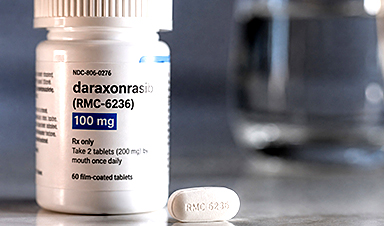
A groundbreaking treatment for one of the most common forms of pancreatic cancer has been approved in pill form by the FDA. Revolution Medicines’ oral tablet daraxonrasib, branded as Rasonque, reduced the risk of [...]
Researchers Have Discovered a New Way To Reduce Chronic Nerve Pain
A cancer-linked protein called BRAF may help drive chronic nerve pain, and existing cancer drugs targeting it reduced pain sensitivity in preclinical models. Chronic nerve pain can persist long after an injury and often [...]

Our books now available worldwide!
Online Sellers other than Amazon, Routledge, and IOPP Indigo Global Health Care Equivalency in the Age of Nanotechnology, Nanomedicine and Artifcial Intelligence Global Health Care Equivalency In The Age Of Nanotechnology, Nanomedicine And Artificial [...]

Quantum-Enabled Regenerative Health: Reimagining Wellness, Precision Health and Longevity Medicine
Introduction Healthcare is approaching a frontier where the quantum portfolio could influence not only how disease is diagnosed and treated, but how health itself is measured, modeled, predicted and preserved. Quantum computing, quantum simulation, [...]

FDA Clears First-of-Its-Kind Nonmedication Treatment for PTSD
The FDA has cleared a system that uses brain activity data to personalize magnetic stimulation for PTSD, adding a new nonmedication treatment option. Every day in the United States, approximately 17.5 veterans die by suicide, [...]

FDA approves breakthrough drug to treat advanced pancreatic cancer
The Food and Drug Administration (FDA) approved on Wednesday a drug that could extend the survival of those with metastatic pancreatic cancer. The drug, called daraxonrasib, will be sold under the brand name Rasonque [...]

AI Decodes a Hidden DNA Signal Linked to Disease-Causing Mutations
Machine learning identifies the likely “initiator” and enables new predictions about DNA mutations that can cause disease. Every human cell depends on tens of thousands of genes being switched on at the right time [...]

Pope Leo Urges Global Response to Congo’s Deadliest Ebola Outbreak
Pope Leo called for international action to address the Ebola outbreak in the Democratic Republic of Congo. The epidemic has claimed over 2,500 lives and is the nation's largest recorded outbreak. The Pope emphasized [...]