For the first time, researchers are leading a national study to see if the onset of nearsightedness can be delayed – and consequently reduced in magnitude over a lifetime – with the use of eyedrops in young children.
Scientists at The Ohio State University and the University of Houston have received two grants from the National Institutes of Health totaling $25 million to test daily drops of atropine as a nearsightedness preventive therapy in children age 6-11 years old.
“The more nearsightedness you have, the more at risk you are as an older adult of sight-threatening complications – retinal detachments, atrophy at the back of the eye, glaucoma and macular degeneration,” said Jeffrey Walline, co-principal investigator on the grants and professor of optometry at The Ohio State University.
So anything we can do to reduce the amount of myopia reduces your risk of those complications. And that’s our goal, ultimately.”
Jeffrey Walline, Professor, Optometry, The Ohio State University
Walline is co-leading the study with David Berntsen, Golden-Golden Professor and chair of clinical sciences at the University of Houston College of Optometry, and Lisa Jordan, director of the Data Coordination and Analysis Center at Ohio State.
Previous studies in the United States and Asia have suggested atropine can slow the progression of nearsightedness after its onset. This new study aims to administer the drug before diagnosis in children deemed at highest risk for myopia, or nearsightedness, based on their school vision screening outcomes.
People are born farsighted, and previous research has suggested that kids whose farsightedness has decreased to a specific measure by third grade are at the highest risk – with almost 90% accuracy – for developing nearsightedness by eighth grade. Those children will be recruited to join the study.
The clinical trial will be conducted at Ohio State, the University of Houston, and 12 additional centers across the United States. Researchers plan to enroll over 600 children who will be randomized to receive nightly drops of either 0.05% low-concentration atropine or a placebo for two years.
The timing of the onset of nearsightedness in children receiving the drug will be compared to those who receive the placebo. Any children in the placebo arm of the trial who are diagnosed with myopia during the study will begin receiving the atropine drops. All children who become nearsighted will also receive an annual voucher for corrective lenses, Walline said.
The eye grows fastest just before the onset of myopia, which tends to begin between the ages of 8 and 10 and progresses up to about age 16. After that, the eye might continue to grow but does not become more myopic in most people.
The researchers predict the atropine drops will reduce the proportion of children who become nearsighted from 20% in the placebo group to 10% in the treatment group, and that atropine will slow pre-myopic eye growth by 30% over the course of the study.
Myopia affects at least one-third of adults in the United States, and is becoming more prevalent – because, the scientific community believes, children are spending less time outdoors now than in the past.
In decades past, myopia hasn’t been thought of so much as a disease than as a nuisance condition. But in the past 10 years, optometry research has advanced beyond alleviating symptoms to better understand and address the mechanisms of nearsightedness with an eye toward lowering the risk for vision loss in adulthood, Walline said.
Walline, Berntsen and Jordan previously co-led studies showing that contact lenses can effectively slow the progression of nearsightedness. The research team reported in 2020 that multifocal contact lenses with the strongest reading power dramatically slowed further progression of myopia in nearsighted kids as young as 7 years old, and in 2025, they reported that those benefits lasted after the treatment ended.
“We’ve shown that kids can handle treatments from a very young age, and so we’re just applying a different treatment now,” Walline said. “If they become nearsighted during our study, we will also give them the option of wearing contact lenses.”
In addition to the health ramifications of myopia, correcting the condition is expensive, costing an estimated $4 billion to $7 billion annually in the United States. And high myopia not only threatens vision, but limits the options for refractive surgery, contact lenses and glasses – all factors that point to the importance of getting ahead of the diagnosis, Walline said.
“Myopia affects such a large number of people, and even if the effects for given individuals aren’t particularly bad, if we can save the sight of just a few people, I think it’s ultimately very important,” he said. “This affects one out of every three people in the United States. We can make a big difference.”

News
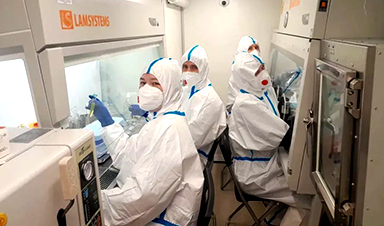
Researcher at Russian plague laboratory dies of ‘unknown’ infection
Russian authorities have imposed "anti-epidemic measures" after a laboratory worker at an institute in Siberia dedicated to studying the plague and other infectious diseases died of a mysterious illness. The researcher, a 28-year-old female [...]

GHCE Concept
From the preface of the book Global Health Care Equivalency in the Age of Nanotechnology, Nanomedicine and Artificial Intelligence, Edited by Frank Boehm: Since the publication of my first book (Nanomedical Device and Systems [...]

A Surprising Brain Signal Could Explain Why Eating Less Protein Extends Lifespan
A new paper suggests that limiting protein intake triggers a coordinated response throughout the body that may help explain how protein restriction affects healthy aging. Animals respond to protein restriction, or reduced protein in [...]

Back and shoulder surgery is often worse than useless
Millions of operations should be scrapped SIX IN TEN Britons have surgery at some point. So do lots of Americans, at a cost of perhaps $500bn a year, a third of all spending on [...]
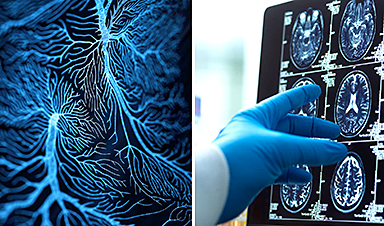
Cocaine plays with mind, hijacks brain circuit, drives increasingly rigid and repetitive behavior
Researchers have found that cocaine hijacks brain circuit, which to drive increasingly rigid and repetitive behavior. The brain circuit that normally participates in selecting natural mouth and face movements, but which becomes disproportionately engaged [...]
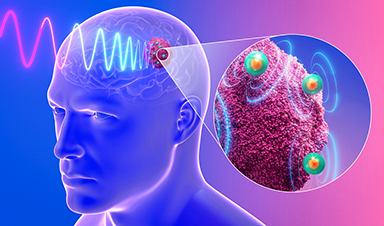
Injectable nanodevices could provide effective treatment for drug-resistant glioblastoma
The brain cancer glioblastoma is one of the most aggressive and treatment-resistant cancers known to medicine, carrying a median survival of just 12-15 months, even with the best available care. Now, researchers at the [...]
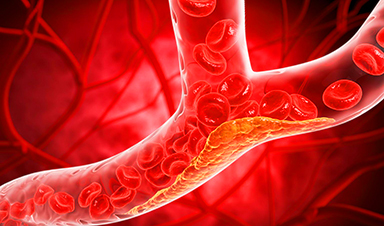
New Treatment Cuts “Bad” Cholesterol in Half for a Full Year
A single infusion of an experimental CRISPR-Cas9 therapy was reported to safely lower LDL cholesterol by 52.5% and triglycerides by 47.8%, as measured 12 months after treatment. What if one infusion could keep cholesterol [...]

Too Much RNA Can Drain a Cell’s Energy, Scientists Discover
A virus may cripple a cell’s power supply simply by producing too much of a molecule the cell needs to survive. New research from the Texas A&M College of Veterinary Medicine and Biomedical Sciences [...]
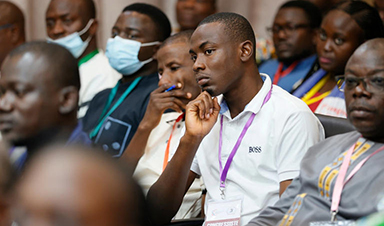
West African scientists warn of weakening health systems and urge stronger outbreak detection
LOME, Togo (AP) — West African laboratory scientists called on governments Friday to strengthen capacity to detect disease outbreaks to avoid another major outbreak, saying health systems across the region are becoming weaker. Participants [...]

A Little-Known Protein Could Point to a New Way To Treat Alzheimer’s
A study suggests that increasing SORLA protein levels could help treat Alzheimer’s disease and other disorders involving tau protein. Increasing SORLA, a protein with a protective role in the brain, helped mice withstand damage [...]
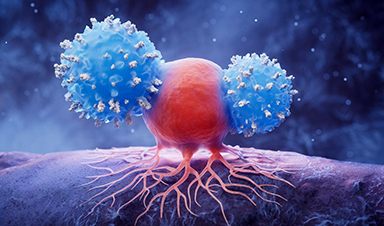
Cancer’s Hidden Antioxidant Shield Helps It Escape the Immune System
Blocking an antioxidant protein that tumors use to suppress immune attacks improved cancer immunotherapy responses in mice. Cancer cells can release antioxidants that interfere with the immune cells trying to kill them. Researchers have [...]

Scientists Find a Berry Compound That Helps Muscle Cells Burn Fat
Pterostilbene, a compound found naturally in some foods, affects how skeletal muscles process fats by stabilizing a protein called PPARδ and increasing its signaling activity. Pterostilbene, a natural compound found in blueberries, grapes, and [...]

Two Hidden Forces Help Build the Human Brain Before Birth
Scientists have uncovered two surprising forces that help guide how the human brain forms before birth. Before birth, the human brain is shaped in large part by an unusual class of stem cells known [...]
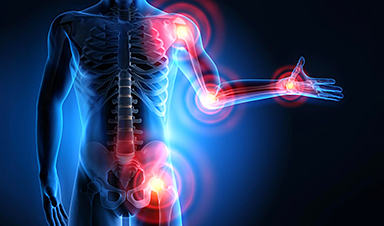
Researchers Uncover a Hidden Trigger Behind Chronic Inflammation
The findings offer new insights that could help guide the development of future therapies. A protein called human resistin may help flip on one of the immune system’s most powerful inflammatory switches. Researchers at [...]
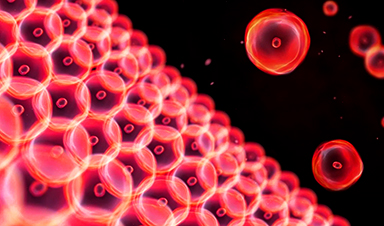
Scientists Have Uncovered Previously Hidden Microbial Activity on Human Skin
The most abundant microbes on your skin may not be the ones doing most of the work. Human skin supports vast communities of bacteria, fungi, and viruses that can influence its protective barrier, immune [...]
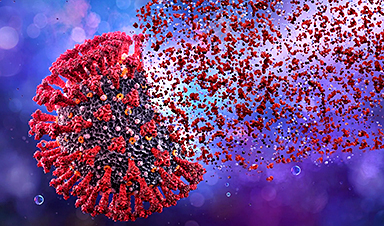
Brazilian Tree Compounds Fight COVID-19 on Multiple Fronts
Scientists found compounds in a Brazilian tree that hit SARS-CoV-2 on multiple fronts, revealing a promising new lead in the search for COVID-19 treatments. Researchers have found that galloylquinic acids extracted from the leaves [...]