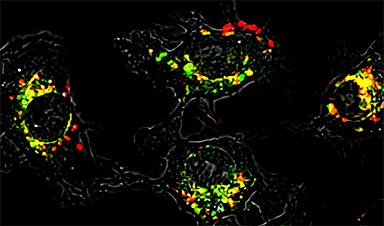
In a promising advance for cancer treatment, Northwestern University scientists have re-engineered the molecular structure of a common chemotherapy drug, making it dramatically more soluble and effective and less toxic.
In the new study, the team designed a new drug from the ground up as a spherical nucleic acid (SNA) — a nanostructure that weaves the drug directly into DNA strands coating tiny spheres. This design converts a poorly soluble, weakly performing drug into a powerful, targeted cancer killer that leaves healthy cells unharmed.
After developing the new therapy, the team tested it in a small animal model of acute myeloid leukemia (AML), a fast-moving, difficult-to-treat blood cancer. Compared to the standard chemotherapy drug, the SNA-based drug entered leukemia cells 12.5 times more efficiently, killed them up to 20,000 times more effectively and reduced cancer progression 59-fold — all without detectable side effects.
This work is another example of the potential of structural nanomedicine, a new field in which scientists use precise structural, as well as compositional, control to fine-tune how nanomedicines interact with the human body. With seven SNA-based therapies currently in clinical trials, the new approach could lead to potent vaccines and treatments for cancers, infectious diseases, neurodegenerative diseases and autoimmune diseases.
The study was published in the journal ACS Nano.
“In animal models, we demonstrated that we can stop tumors in their tracks,” said Northwestern’s Chad A. Mirkin, who led the study. “If this translates to human patients, it’s a really exciting advance. It would mean more effective chemotherapy, better response rates and fewer side effects. That’s always the goal with any sort of cancer treatment.”
A pioneer in chemistry and nanomedicine, Mirkin is the George B. Rathmann Professor of Chemistry, Chemical and Biological Engineering, Biomedical Engineering, Materials Science and Engineering and Medicine at Northwestern, where he has appointments in the Weinberg College of Arts and Sciences, McCormick School of Engineering and Feinberg School of Medicine. He also is the founding director of the International Institute for Nanotechnology and a member of the Robert H. Lurie Comprehensive Cancer Center of Northwestern University.
For the new study, Mirkin and his team focused on the traditional chemotherapy drug 5-fluorouracil (5-Fu), which often fails to reach cancer cells efficiently. And, because it also attacks healthy tissue, 5-Fu causes myriad side effects, including nausea, fatigue and, in rare cases, even heart failure.
According to Mirkin, the drug itself is not the problem — it’s how the body processes it. 5-Fu is poorly soluble, meaning less than 1% of it dissolves in many biological fluids. Most drugs need to dissolve in the bloodstream before they can travel through the body to enter cells. If a drug is poorly soluble, it clumps or retains a solid form, and the body cannot absorb it efficiently.
“We all know that chemotherapy is often horribly toxic,” Mirkin said. “But a lot of people don’t realize it’s also often poorly soluble, so we have to find ways to transform it into water soluble forms and deliver it effectively.”
To develop a more effective delivery system, Mirkin and his team turned to SNAs. Invented and developed by Mirkin at Northwestern, SNAs are globular nanostructures with a nanoparticle core surrounded by a dense shell of DNA or RNA. In previous studies, Mirkin discovered that cells recognize SNAs and invite them inside. In the new study, his team built new SNAs with the chemotherapy chemically incorporated into the DNA strands.
“Most cells have scavenger receptors on their surfaces,” Mirkin said. “But myeloid cells overexpress these receptors, so there are even more of them. If they recognize a molecule, then they will pull it into the cell. Instead of having to force their way into cells, SNAs are naturally taken up by these receptors.”
As Mirkin and his team suspected, the structural redesign completely changed how 5-Fu interacted with the cancer cells. Unlike with free-floating, unstructured chemotherapy molecules, the myeloid cells easily recognized and absorbed the SNA form. Once inside, enzymes broke down the DNA shell to release the drug molecules, which killed the cancer cell from within.
In the mouse experiments, the therapy eliminated the leukemia cells to near completion in the blood and spleen and significantly extended survival. And, because the SNAs selectively targeted AML cells, healthy tissues remained unharmed.
“Today’s chemotherapeutics kill everything they encounter,” Mirkin said. “So, they kill the cancer cells but also a lot of healthy cells. Our structural nanomedicine preferentially seeks out the myeloid cells. Instead of overwhelming the whole body with chemotherapy, it delivers a higher, more focused dose exactly where it’s needed.”
Next, Mirkin’s team plans to test the new strategy in a larger cohort of small animal models, then move to a larger animal model and, eventually, in human clinical trials, once funding is secured.
The study was supported by Edgar H. Bachrach and the Bachrach Family Foundation, the National Cancer Institute and the National Institute of Diabetes and Digestive and Kidney Diseases. This work recently received additional support from the Robert H. Lurie Comprehensive Cancer Center of Northwestern University.

News
Unzipping the Code of Life: Scientists Pinpoint Where DNA First Opens
Researchers mapped where DNA first opens and how a helicase gate may release one strand as genome copying begins. Before a cell can divide, it must open its tightly wound DNA and begin copying the entire [...]
Scientists Tested an 8-Hour Eating Window and Found a Surprising Brain Benefit
Limiting the daily eating window may provide brain benefits beyond those associated with weight loss. Eating within a shorter daily window may provide cognitive benefits beyond those associated with weight loss alone, according to [...]
Focused Ultrasound Opens Blood-Brain Barrier to Treat Brain Cancer
Summary: A new study demonstrates that primary brain tumors (gliomas) are particularly receptive to targeted drug delivery using focused ultrasound (FUS) combined with microbubbles. The team developed a high-resolution MRI protocol to track blood-brain barrier [...]

AI’s promise and practical limits in drug discovery
AI tools are becoming increasingly common in early drug discovery, allowing scientists to analyse data and navigate large volumes of research. However, according to Dr Raminderpal Singh, turning that potential into consistent scientific workflows [...]

GHCE Concept
From the preface of the book Global Health Care Equivalency in the Age of Nanotechnology, Nanomedicine and Artificial Intelligence, Edited by Frank Boehm: Since the publication of my first book (Nanomedical Device and Systems [...]

Healthcare Headlines: Challenges and Advances in 2026
Health-related updates reveal financial adjustments by Universal Health Services due to Medicaid reimbursement uncertainties, significant pollution-linked health concerns from French-British oil firm Perenco in Congo, drug trial setbacks, potential restructuring at major medical firms, [...]
Scientists Discover the Brain Protein That Helps Alzheimer’s Spread Through the Brain
Scientists have identified a brain protein that may help Alzheimer’s spread, revealing a potential new target for slowing the disease’s progression. Alzheimer’s disease is closely linked to the accumulation of a toxic form of the protein [...]
How Immune Dysregulation Contributes to Psychiatric Disorders
Introduction Growing evidence suggests that disruptions in immune function may play an important role in the development and progression of psychiatric disorders. However, immune mechanisms probably contribute more strongly in some patients than others, [...]
Electrostatic Discharge Boosts Triboelectric Nanogenerator Current and Enables DC Output
Controlled electrical discharges could enable triboelectric nanogenerators to achieve higher peak currents, extending nano-enabled energy harvesting into chemical processing and self-powered sensing. Paper: Electrostatic discharge as a breakthrough strategy for triboelectric nanogenerators. A new review [...]
Swiss laboratory uses old drugs against rare diseases
Researchers at the University of Geneva are combing through collections of approved drugs to find new therapies for rare diseases – with some success. This approach is gaining traction around the world, while pharmaceutical [...]
Nanozyme Aptasensors Show Promise for Faster Food, Health, and Environmental Testing
By pairing robust artificial enzymes with highly selective aptamers, nanozyme aptasensors could help detect disease biomarkers, pathogens, and contaminants faster, but the review shows that real-world deployment still depends on overcoming matrix interference, biofouling, [...]
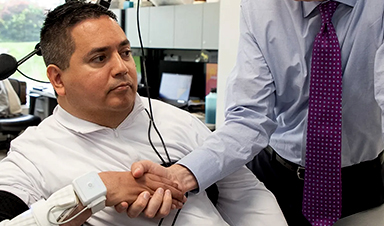
Paralyzed Man Feels Sensation Again With Brain Stimulation Device
Aneuroprosthetic system has allowed a man with paralysis to grasp and lift objects and feel touch again. The device helped 42-year-old Keith Thomas of Massapequa, New York, who was paralyzed from the chest down [...]
Global Cancer Cases Could Surge 67% by 2050, New Report Warns
New data reveal major geographic disparities and highlight the urgent need for global action on prevention, early detection, and equitable access to treatment. For roughly one in five people worldwide, cancer will become part [...]
A Deadly Ebola-Like Virus Is Spreading. Are We Ready?
BU virologist Nancy Sullivan says the Bundibugyo outbreak in the Democratic Republic of the Congo underscores the need for broader outbreak preparedness. The death of a nurse marked the moment health officials recognized that [...]
Why Most Animal Viruses Never Become Human Pandemics
From receptor mismatch to risky human-animal interfaces, this article explains why spillover is common but true pandemic emergence remains rare. Introduction Humans are constantly exposed to animal viruses through farming, wildlife contact, and the [...]

Stem cell organoids repair heart microvessels in coronary artery disease models
A Stanford University team has shown that vascular organoids derived from human stem cells can repair the heart’s microvessel network in pigs with ischaemic heart disease – a proof-of-concept advancement that could open new therapeutic [...]