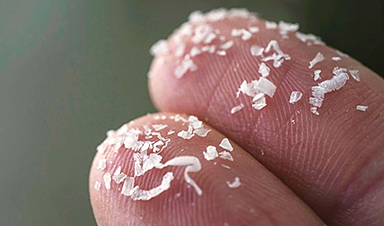
Higher levels of micronanoplastics were found in carotid artery plaque, especially in people with stroke symptoms, suggesting a potential new risk factor.
People with plaque buildup in the arteries of their neck have been found to carry higher concentrations of tiny plastic particles within those blood vessels compared to individuals with healthy arteries. This difference was even more pronounced among patients who had suffered a stroke, mini-stroke (also known as a transient ischemic attack), or temporary vision loss due to vascular blockages. These findings come from preliminary research recently presented at the American Heart Association's Vascular Discovery 2025 Scientific Sessions: From Genes to Medicine, held April 22–25 in Baltimore.
Micronanoplastics are extremely small plastic fragments either produced during industrial processes or formed as larger plastic debris breaks down in the environment, such as in oceans and soils. They encompass a mixture of sizes:
- Microplastics: Typically less than 5 millimeters across (about the size of a pencil eraser) and sometimes visible to the naked eye.
- Nanoplastics: Far smaller, measuring under 1,000 nanometers, and invisible without a microscope.
Because of their minute size, nanoplastics can disperse more widely in the environment and penetrate cells and tissues within living organisms more easily than larger plastic particles.
Researchers are increasingly advocating for a shift in terminology from "micronanoplastics" to simply "nanoplastics," to better reflect the smaller, more biologically active particles that are the primary focus of ongoing studies.
Sources and Environmental Impact
"These types of plastics are commonly found in the environment, especially in ocean garbage patches. Over many years, these plastics break down, mix into the soil and water, and can build up in the food chain," said lead study author Ross Clark, M.D., M.B.A., R.P.V.I., a vascular surgeon-scientist at the University of New Mexico in Albuquerque. "Many people think that micro and nanoplastics mainly come from using plastic utensils, cutting boards, packaging, water bottles, and other plastic items. However, the main source is the food and water we eat and drink."
In 2024, researchers in Italy reported finding micronanoplastics in plaque from some people without symptoms who underwent surgery to remove carotid artery plaque. Symptoms caused by carotid plaque buildup may include stroke, mini-stroke, or temporary blindness. Followed for almost three years after surgery, people with micronanoplastics in their carotid plaque were significantly more likely to die or to have a non-fatal heart attack or stroke.
The Current Study: Building on Previous Work
The current study, which included fewer than 50 participants, was built on the previous research conducted in Italy. Researchers compared the levels of micronanoplastics found in the carotid arteries of three groups: people with healthy arteries; those with plaque but no symptoms; and those experiencing symptoms due to plaque buildup. Researchers also compared plaques with low and high plastic levels to assess the effects of micronanoplastics on markers of inflammation, the gene activity of immune cells called macrophages and stem cells that help stabilize plaque.
The analysis found that the concentration of micronanoplastics in carotid arteries was:
- 16 times higher (895 micrograms/gram vs. 57 micrograms/gram) in plaque among people without symptoms compared to the levels found in artery walls of deceased tissue donors of similar age with no plaque; and
- 51 times higher (2,888 micrograms/gram vs. 57 micrograms/gram) in plaque from people who had experienced stroke, mini-stroke, or temporary loss of vision due to blockage of blood flow to the retina, in comparison to samples from age-matched, deceased tissue donors.
Comparing high-plastic and low-plastic plaque levels, the analysis found:
- no link between the amount of micronanoplastics and signs of sudden inflammation; and
- differences in gene activity in plaque-stabilizing cells and less activity in anti-inflammatory genes of plaque macrophage immune cells.
"These findings indicate that the biological effects of micronanoplastics on fatty deposits are more complex and nuanced than simply causing sudden inflammation," Clark said. In their next phase of work, they will focus on better understanding the immunological effects of micronanoplastics in clogged arteries.
Caution and Study Limitations
"It's very important to study what these materials do to our bodies. However, we should be cautious about the early results of this study. We won't fully understand the biological effects for many years to come," Clark said.
The study has several limitations. It cannot prove that micronanoplastics in plaque were the cause of symptoms of carotid artery disease; micronanoplastics might be a sign of another health issue that caused these symptoms. Researchers did not have access to data detailing the sex or race/ethnicity of the tissue donors. Additionally, pyrolysis gas chromatography-mass spectrometry, used to measure plastic in biological samples may have limitations. This technique allows measurements to include nanoplastics and larger microplastic particles and uses high temperatures to break down plastics into smaller organic molecules. However, parts of the biological samples may also break down into similar molecules. For instance, fatty acids found in artery-clogging plaque could break down into compounds appearing similar to polyethylene.
"We are constantly improving our method to reduce the amounts of lipids in the samples to lessen their impact on the results. Lipids have a very similar spectral signature on gas chromatography as some plastic polymers (in particular polyethylene). It can be challenging to distinguish between the lipids and the polyethylene in the results. That's why removing the lipids is so important. We believe our methods are currently the best way to address this specific criticism. However, new discoveries might change how we understand this data in the future," Clark said.
"This is a very interesting and troubling study. To date, we have not considered exposure to plastic micronanoparticles a modifiable risk factor for stroke. Although it is important to understand the mechanism at play in the pathophysiology of symptomatic carotid atherosclerosis, this association presents a novel potential target for stroke prevention," said Karen L. Furie, M.D., M.P.H., FAHA, volunteer vice chair of the American Heart Association Stroke Brain Health Science Subcommittee and professor and chair of neurology at the Warren Alpert Medical School of Brown University in Providence, Rhode Island. Furie was not involved in this study.
Study details, background, and design
- Researchers tested 48 samples of carotid arteries from 48 different adults collected in 2023-2024 at the University of New Mexico and the Office of the Medical Investigator (a state agency and part of the Department of Pathology at the University of New Mexico).
- About one-third of the samples were from people aged 60 to 90 who had surgery to remove plaque from their carotid arteries. These people had symptoms including stroke, mini-stroke or temporary blindness (called amaurosis fugax).
- About one-third of the samples came from people of similar age with no symptoms. They were having surgery to remove plaque buildup in their carotid arteries because a blockage was found during screening or a physical exam.
- The last one-third of the samples came from tissue donors. These age-matched donors had died of any cause and did not have carotid artery blockage.
- The researchers also compared plaques with low vs. high amounts of micronanoplastics on inflammation-related measures. All samples were analyzed to measure inflammation by looking at levels of inflammatory molecules TNF-α and IL-6. The levels were compared to the amount of plastics to find any connections. For the RNA sequencing studies, researchers examined samples with the highest and lowest concentrations of plastics.

News
Cutting Two Amino Acids Slowed Prostate Cancer in Mice
A newly identified link between amino acid metabolism and cholesterol production may help prostate tumors adapt to hormone therapy. Prostate cancer can find ways around treatments designed to deprive tumors of the hormones they [...]

Largest-Ever Physics Survey Raises New Doubts About Our Model of the Universe
Physicists around the world remain deeply divided on key mysteries of the universe, from dark matter to quantum gravity. The standard cosmological model failed to gain majority support, and no leading theory dominated the [...]
Scientists Just Overturned a 100-Year-Old Belief About Bacteria in the Lungs
New findings raise questions about the role of microbes living in the lungs. More than 35 trillion bacteria live throughout the human body, forming microbiomes in the gut, mouth, lungs, skin, and urogenital tract. [...]

GHCE Concept
From the preface of the book Global Health Care Equivalency in the Age of Nanotechnology, Nanomedicine and Artificial Intelligence, Edited by Frank Boehm: Since the publication of my first book (Nanomedical Device and Systems [...]

Novartis, Ionis drug failure spurs questions
Pelacarsen didn’t protect heart health despite lowering levels of a protein particle, “Lp(a),” in a large clinical trial — a result with important implications for cardiovascular drug research. Dive Brief: An RNA drug from [...]
New injectable treatment helps the brain rebuild after stroke
Biomedical engineers at Duke University have created an injectable biomaterial that may help the brain recover from damage left behind by an ischemic stroke. In experiments with mice, the material transformed the cavity created [...]

Scientists Discover a Hidden “Immune Organ” Inside the Skull
Researchers discovered lymph node-like immune hubs inside skull bone marrow that appear to act as rapid-response centers for the brain. For decades, the brain was thought to operate largely apart from the immune system. [...]
Engineered tRNAs and lipid nanoparticles target nonsense mutation cystic fibrosis
Researchers have developed a potential new approach for treating a form of cystic fibrosis caused by so-called nonsense mutations, combining chemically modified transfer RNAs with lipid nanoparticles designed to deliver the therapy directly to [...]
New pancreatic cancer drug carries a $39,800 monthly list price
A groundbreaking treatment for one of the most common forms of pancreatic cancer has been approved in pill form by the FDA. Revolution Medicines’ oral tablet daraxonrasib, branded as Rasonque, reduced the risk of [...]

Researchers Have Discovered a New Way To Reduce Chronic Nerve Pain
A cancer-linked protein called BRAF may help drive chronic nerve pain, and existing cancer drugs targeting it reduced pain sensitivity in preclinical models. Chronic nerve pain can persist long after an injury and often [...]

Our books now available worldwide!
Online Sellers other than Amazon, Routledge, and IOPP Indigo Global Health Care Equivalency in the Age of Nanotechnology, Nanomedicine and Artifcial Intelligence Global Health Care Equivalency In The Age Of Nanotechnology, Nanomedicine And Artificial [...]

Quantum-Enabled Regenerative Health: Reimagining Wellness, Precision Health and Longevity Medicine
Introduction Healthcare is approaching a frontier where the quantum portfolio could influence not only how disease is diagnosed and treated, but how health itself is measured, modeled, predicted and preserved. Quantum computing, quantum simulation, [...]

FDA Clears First-of-Its-Kind Nonmedication Treatment for PTSD
The FDA has cleared a system that uses brain activity data to personalize magnetic stimulation for PTSD, adding a new nonmedication treatment option. Every day in the United States, approximately 17.5 veterans die by suicide, [...]
FDA approves breakthrough drug to treat advanced pancreatic cancer
The Food and Drug Administration (FDA) approved on Wednesday a drug that could extend the survival of those with metastatic pancreatic cancer. The drug, called daraxonrasib, will be sold under the brand name Rasonque [...]

AI Decodes a Hidden DNA Signal Linked to Disease-Causing Mutations
Machine learning identifies the likely “initiator” and enables new predictions about DNA mutations that can cause disease. Every human cell depends on tens of thousands of genes being switched on at the right time [...]

Pope Leo Urges Global Response to Congo’s Deadliest Ebola Outbreak
Pope Leo called for international action to address the Ebola outbreak in the Democratic Republic of Congo. The epidemic has claimed over 2,500 lives and is the nation's largest recorded outbreak. The Pope emphasized [...]