Even the most elite endurance athletes can't outrun biology. A new study finds that humans hit a metabolic ceiling at about 2.5 times their resting energy burn.
When ultra-runners take on races that last for hundreds of miles and continue for several days, they are not only challenging their mental endurance and physical strength. They are also exploring the outer boundaries of what the human body can sustain.
According to a study published in the Cell Press journal Current Biology, researchers discovered that even the most seasoned endurance athletes are unable to exceed a "metabolic ceiling" averaging 2.5 times their basal metabolic rate (BMR), which is the body's rate of energy use while at rest.
This metabolic ceiling defines the upper limit of how many calories the body can continuously burn. Earlier studies had proposed that humans might temporarily reach up to 10 times their BMR, but only for brief, intense periods before the body begins to slow down.
"Every living thing has a metabolic ceiling, but exactly what that number is, and what constrains it, is the question," says lead author and anthropologist Andrew Best of the Massachusetts College of Liberal Arts, who is also an endurance athlete.
"To find out, we asked, if we get a group of really competitive ultra-athletes, can they break this proposed metabolic ceiling?"

Testing Extreme Athletes
The researchers recruited 14 ultra-runners, cyclists, and triathletes and tracked them during competitions and training periods. To allow the researchers to measure energy expenditure, participants drank water containing deuterium and oxygen-18—slightly heavier versions of hydrogen and oxygen. By tracing these molecules when flushed out in urine, the scientists were able to calculate the amount of carbon dioxide an athlete exhales and the number of calories burned.
During multi-day races, some athletes burned six to seven times their BMR, around 7,000 to 8,000 calories a day. But when the team calculated the athletes' caloric burn over longer periods—30 and 52 weeks—their burn rates mostly returned to the predicted ceiling, averaging around 2.4 times their BMR. These results show that even the most extreme athletes reach a metabolic ceiling, and exceeding the limit proves exceptionally difficult, say the researchers.

"If you go over the ceiling for short periods, that's fine. You can make up for it later," says Best. "But long term, it's unsustainable because your body will start to break down its tissue, and you'll shrink."
How the Body Adapts
The study also revealed how the body copes with these extreme endurance activities. As athletes devoted more energy to running, cycling, and swimming, they unconsciously cut back on using energy elsewhere.
"Your brain has a really powerful influence on how much you fidget, how much you want to move, and how encouraged you are to take a nap," says Best. "All these fatigues we feel save calories."
The team noted that the results depended heavily on the individual bodies of the athletes who were recruited. Some exceptional individuals capable of exceeding the ceiling may have been missed. While their findings may have implications for an athlete's performance, they also encourage researchers to investigate how the body's energy cap can shape other essential functions.
"For most of us, we're never going to reach this metabolic ceiling," says Best. "It takes running about 11 miles on average a day for a year to achieve 2.5 times BMR. Most people, including me, would get injured before any sort of energetic limit comes into play."
Reference: "Ultra-endurance athletes and the metabolic ceiling" by Andrew Best, Srishti Sadhir, Emily Hyatt and Herman Pontzer, 20 October 2025, Current Biology.
DOI: 10.1016/j.cub.2025.08.063
This work was supported by funding from Duke University and a Massachusetts College of Liberal Arts Faculty Incentive Award.

News
Two Hidden Forces Help Build the Human Brain Before Birth
Scientists have uncovered two surprising forces that help guide how the human brain forms before birth. Before birth, the human brain is shaped in large part by an unusual class of stem cells known [...]
Researchers Uncover a Hidden Trigger Behind Chronic Inflammation
The findings offer new insights that could help guide the development of future therapies. A protein called human resistin may help flip on one of the immune system’s most powerful inflammatory switches. Researchers at [...]
Scientists Have Uncovered Previously Hidden Microbial Activity on Human Skin
The most abundant microbes on your skin may not be the ones doing most of the work. Human skin supports vast communities of bacteria, fungi, and viruses that can influence its protective barrier, immune [...]
Brazilian Tree Compounds Fight COVID-19 on Multiple Fronts
Scientists found compounds in a Brazilian tree that hit SARS-CoV-2 on multiple fronts, revealing a promising new lead in the search for COVID-19 treatments. Researchers have found that galloylquinic acids extracted from the leaves [...]
Cutting Two Amino Acids Slowed Prostate Cancer in Mice
A newly identified link between amino acid metabolism and cholesterol production may help prostate tumors adapt to hormone therapy. Prostate cancer can find ways around treatments designed to deprive tumors of the hormones they [...]
Largest-Ever Physics Survey Raises New Doubts About Our Model of the Universe
Physicists around the world remain deeply divided on key mysteries of the universe, from dark matter to quantum gravity. The standard cosmological model failed to gain majority support, and no leading theory dominated the [...]

Scientists Just Overturned a 100-Year-Old Belief About Bacteria in the Lungs
New findings raise questions about the role of microbes living in the lungs. More than 35 trillion bacteria live throughout the human body, forming microbiomes in the gut, mouth, lungs, skin, and urogenital tract. [...]

GHCE Concept
From the preface of the book Global Health Care Equivalency in the Age of Nanotechnology, Nanomedicine and Artificial Intelligence, Edited by Frank Boehm: Since the publication of my first book (Nanomedical Device and Systems [...]
Novartis, Ionis drug failure spurs questions
Pelacarsen didn’t protect heart health despite lowering levels of a protein particle, “Lp(a),” in a large clinical trial — a result with important implications for cardiovascular drug research. Dive Brief: An RNA drug from [...]
New injectable treatment helps the brain rebuild after stroke
Biomedical engineers at Duke University have created an injectable biomaterial that may help the brain recover from damage left behind by an ischemic stroke. In experiments with mice, the material transformed the cavity created [...]
Scientists Discover a Hidden “Immune Organ” Inside the Skull
Researchers discovered lymph node-like immune hubs inside skull bone marrow that appear to act as rapid-response centers for the brain. For decades, the brain was thought to operate largely apart from the immune system. [...]
Engineered tRNAs and lipid nanoparticles target nonsense mutation cystic fibrosis
Researchers have developed a potential new approach for treating a form of cystic fibrosis caused by so-called nonsense mutations, combining chemically modified transfer RNAs with lipid nanoparticles designed to deliver the therapy directly to [...]
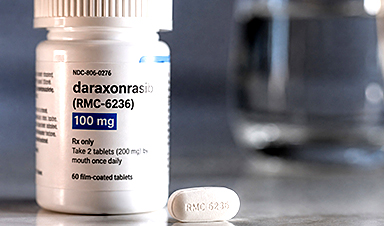
New pancreatic cancer drug carries a $39,800 monthly list price
A groundbreaking treatment for one of the most common forms of pancreatic cancer has been approved in pill form by the FDA. Revolution Medicines’ oral tablet daraxonrasib, branded as Rasonque, reduced the risk of [...]
Researchers Have Discovered a New Way To Reduce Chronic Nerve Pain
A cancer-linked protein called BRAF may help drive chronic nerve pain, and existing cancer drugs targeting it reduced pain sensitivity in preclinical models. Chronic nerve pain can persist long after an injury and often [...]
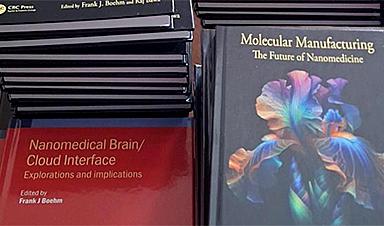
Our books now available worldwide!
Online Sellers other than Amazon, Routledge, and IOPP Indigo Global Health Care Equivalency in the Age of Nanotechnology, Nanomedicine and Artifcial Intelligence Global Health Care Equivalency In The Age Of Nanotechnology, Nanomedicine And Artificial [...]
Quantum-Enabled Regenerative Health: Reimagining Wellness, Precision Health and Longevity Medicine
Introduction Healthcare is approaching a frontier where the quantum portfolio could influence not only how disease is diagnosed and treated, but how health itself is measured, modeled, predicted and preserved. Quantum computing, quantum simulation, [...]