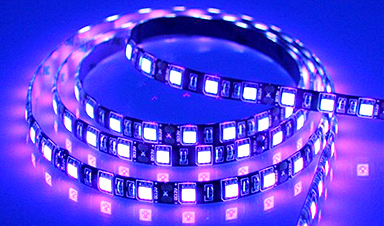
Many efforts to reduce transmission of diseases like COVID-19 and the flu have focused on measures such as masking and isolation, but another useful approach is reducing the load of airborne pathogens through filtration or germicidal ultraviolet light. Conventional UV sources can be harmful to eyes and skin, but newer sources that emit at a different wavelength, 222 nanometers, are considered safe.
The findings are reported in the journal Environmental Science & Technology, in a paper by recent MIT postdoc Victoria Barber, doctoral student Matthew Goss, Professor Jesse Kroll, and six others at MIT, Aerodyne Research, and Harvard University.
While Kroll and his team usually work on issues of outdoor air pollution, during the pandemic they became increasingly interested in indoor air quality. Usually, little photochemical reactivity happens indoors, unlike outdoors, where the air is constantly exposed to sunlight. But with the use of devices to clean indoor air using chemical methods or UV light, “all of a sudden some of this oxidation is brought indoors,” triggering a potential cascade of reactions, Kroll says.
Initially, the UV light interacts with oxygen in the air to form ozone, which is itself a health risk. “But also, once you make ozone, there’s a possibility for all these other oxidation reactions,” Kroll says. For example, the UV can interact with the ozone to produce compounds called OH radicals, which are also powerful oxidizers.
Barber, who is now an assistant professor at the University of California at Los Angeles, adds, “If you have volatile organic compounds in the environment, which you do basically in all indoor environments, then these oxidants react with them and you make these oxidized volatile organic compounds, which in some cases turn out to be more harmful to human health than their unoxidized precursors.”
The process also leads to the formation of secondary organic aerosols, she says. “Again, this stuff is harmful to breathe, so having it in your indoor environment is not ideal.”
The formation of such compounds is particularly problematic in the indoors, Kroll says, because people spend so much of their time there, and low ventilation rates can mean these compounds could accumulate to relatively high levels.
Having studied such processes in outdoor air for years, the team had the right equipment in hand to observe these pollution-forming processes indoors directly. They carried out a series of experiments, first exposing clean air to the UV lights inside a controlled container, then adding one organic compound at a time to see how they each affected the compounds that were produced. Although further research is needed to see how these findings apply to real indoor environments, the formation of secondary products was clear.
The devices that make use of the new UV wavelengths, called KrCl excimer lamps, are still relatively rare and expensive. They’re used in some hospital, restaurant, or commercial settings rather than in homes. But while they have sometimes been touted as a substitute for ventilation, especially in hard-to-ventilate older buildings, the new study suggests that’s not appropriate.
“Our big finding was that these lights are not a replacement for ventilation, but rather a complement to it,” says Kroll, who is a professor of civil and environmental engineering, and of chemical engineering.
Some have proposed that with these devices, “maybe if you could just deactivate the viruses and bacteria indoors, you wouldn’t need to worry about ventilation as much. What we showed is that, unfortunately, that’s not necessarily the case, because when you have less ventilation, you get a buildup of these secondary products,” Kroll says.
He suggests a different approach: “There may be a sweet spot in which you’re getting the health benefits of the light, the deactivation of pathogens, but not too many of the disbenefits of the pollutant formation because you’re ventilating that out.”
The results so far are from precisely controlled lab experiments, with air contained in a Teflon bag for testing, Barber points out. “What we’re seeing in our bag is not necessarily directly comparable to what you would see in a real indoor environment,” she says, “but it does give a pretty good picture of what the chemistry is that can happen under radiation from these devices.”
Goss adds that “this work allowed us to validate a simple model that we could plug in parameters to that are more relevant to actual indoor spaces.” In the paper, they use this information “to try to apply the measurements we’ve taken to estimate what would happen in an actual indoor space.” The next step in the research will be to attempt follow-up studies taking measurements in real-world indoor spaces, he says.
“We’ve shown that these are a potential concern,” Kroll says. “But in order to understand what the full real-world implications are, we need to take measurements in real indoor environments.”
“These 222-nanometer radiation devices are being deployed in bathrooms, classrooms, and conference rooms without a full accounting of the potential benefits and/or harm associate with their operation,” says Dustin Poppendieck, a research scientist at the National Institute for Standards and Technology, who was not associated with this study.
“This work lays the foundation for a proper quantification of potential negative health impacts of these devices. It is important this process is completed prior to relying on the technology to help prevent the next pandemic.”
More information: Victoria P. Barber et al, Indoor Air Quality Implications of Germicidal 222 nm Light, Environmental Science & Technology (2023). DOI: 10.1021/acs.est.3c05680
Journal information: Environmental Science & Technology


News
Scientists Just Discovered a Cellular Survival System That Was Never Supposed To Exist
A surprising backup pathway allows cells to make a crucial amino acid when their primary machinery fails. For decades, biologists believed cells had only one way to access a molecule they cannot live without. New [...]
Artificial cells gain porous membranes, enabling lab reactions and drug release
Artificial cells created in the laboratory offer a wide range of potential applications. Until now, however, their membranes—unlike those of real cells—have been virtually impermeable. Researchers at the Max Planck Institute for Polymer Research, [...]
Popular Weight-Loss Drugs Like Ozempic Linked to Lower Breast Cancer Risk
Ozempic and similar weight-loss drugs were linked to a striking 30% reduction in breast cancer risk in a study of more than 110,000 women. Popular weight-loss and diabetes medications such as Ozempic, Wegovy, Mounjaro, [...]

Stanford Scientists Discover Explosive New Type of Immune Cell
Scientists studying the remarkable regenerative abilities of planarian flatworms have uncovered a previously unknown type of immune cell with an unusually destructive defense strategy. What if an immune cell could wipe out nearby threats [...]
Big Pharma-backed SonoThera sounds off with $125M series B for bubble-based genetic delivery
Bay Area biotech SonoThera is bubbling to a clinical boil after raising a $125 million series B with the backing of some of the biggest names in pharma. Vida Ventures led the raise, with the venture [...]

Joint initiative of 5 EU countries calls for ‘unified approach’ to pharma framework amid US drug pricing pressure
With drug pricing pressure building from the U.S., a healthcare-focused consortium of five European countries is calling for a “unified approach” to strengthen Europe’s pharmaceutical framework and access to innovative medicines. Belgium, the Netherlands, [...]

Our books now available worldwide!
Online Sellers other than Amazon, Routledge, and IOPP Indigo Global Health Care Equivalency in the Age of Nanotechnology, Nanomedicine and Artifcial Intelligence Global Health Care Equivalency In The Age Of Nanotechnology, Nanomedicine And Artificial [...]

Molecular Manufacturing: The Future of Nanomedicine – New book from NanoappsMedical Inc.
This book explores the revolutionary potential of atomically precise manufacturing technologies to transform global healthcare, as well as practically every other sector across society. This forward-thinking volume examines how envisaged Factory@Home systems might enable the cost-effective [...]
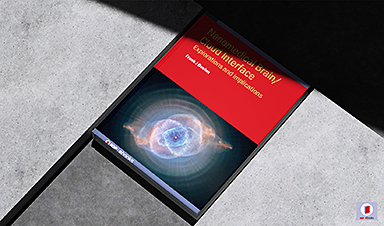
NanoMedical Brain/Cloud Interface – Explorations and Implications. A new book from Frank Boehm
New book from Frank Boehm, NanoappsMedical Inc Founder: This book explores the future hypothetical possibility that the cerebral cortex of the human brain might be seamlessly, safely, and securely connected with the Cloud via [...]

New book from Nanoappsmedical Inc. – Global Health Care Equivalency
A new book by Frank Boehm, NanoappsMedical Inc. Founder. This groundbreaking volume explores the vision of a Global Health Care Equivalency (GHCE) system powered by artificial intelligence and quantum computing technologies, operating on secure [...]
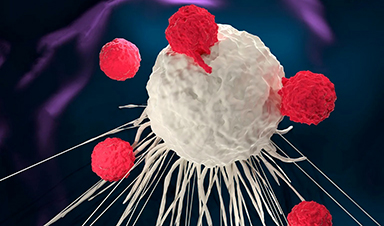
UCLA Scientists Uncover a “Hidden Weakness” in Some of the World’s Deadliest Cancers
A new study has uncovered an unexpected vulnerability in some of the deadliest cancers. Researchers at UCLA have identified a previously hidden weakness in some of the most aggressive cancers, pointing to a possible new way [...]
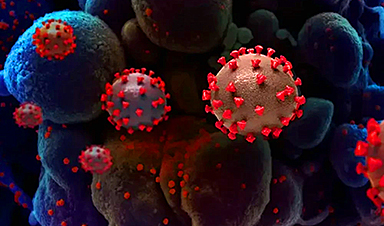
AI-designed universal coronavirus vaccine clears first human trial
Key Takeaways Super-Antigen Technology: Uses AI and machine learning to analyze viral genomes, creating a single vaccine that targets essential features across entire virus families, including coronaviruses and Ebola. Human Trials & Safety: Phase [...]

Researchers Discover a Hidden Vitamin D Problem That Persists Year-Round
A new study suggests that some groups may not experience the expected seasonal boost in vitamin D levels, even during the sunniest months of the year. Many people assume that spending more time outdoors [...]
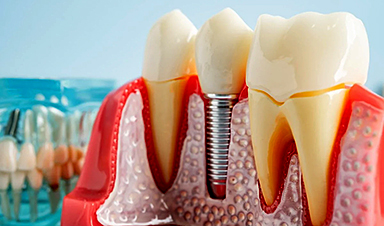
Researchers Solve the Mystery Behind a Billion-Dollar Dental Implant Disease
Researchers have uncovered why a common and costly dental implant infection often resists antibiotics. Dental implants have helped tens of millions of people regain a full set of stable, functional teeth, something traditional dentures [...]
Nanoparticles inspired by lung fluid improve therapies targeting respiratory system
The CIC biomaGUNE Center for Cooperative Research in Biomaterials has developed pulmonary surfactant nanoparticles (the blend of lipids and proteins that line the alveoli and enables breathing), which are encapsulated [...]
Scientists Finally Uncover How a “Forever Chemical” Causes Birth Defects
PFDA, a PFAS “forever chemical,” can cause craniofacial birth defects by disrupting retinoic acid regulation during fetal development, revealing the first clear molecular mechanism behind the link. Researchers have long linked perfluoroalkyl and polyfluoroalkyl substances (PFAS), [...]