Background
Wound healing is a complex physiological process that can be compromised by infection and impaired tissue regeneration. Conventional dressings, typically made from natural fibers such as cotton or linen, offer limited functionality. Nanofiber scaffolds, particularly those based on biocompatible polymers like PLA, provide high surface area and porosity, making them suitable for controlled drug delivery and tissue interaction.
Curcumin, a bioactive compound derived from turmeric, has demonstrated anti-inflammatory and antibacterial properties. However, its use in wound care is limited by poor solubility and low bioavailability. CNTs offer complementary advantages: they possess intrinsic antibacterial activity and can improve the mechanical properties and drug release profiles of polymer-based systems.
This study investigates the integration of CNTs into PLA-curcumin nanofibers to create a multifunctional wound dressing capable of both structural support and infection control.
The Current Study
The dressing was produced using electrospinning, a technique suitable for fabricating nanofibers with controlled morphology. PLA (molecular weight: 203,000 g/mol) was dissolved in dichloromethane, followed by the addition of curcumin to ensure uniform dispersion. CNTs were incorporated at varying concentrations to assess their effects on the material’s structural and functional properties.
Electrospun nanofibers were collected using a standard setup with a controlled flow rate and fixed needle-to-collector distance. Characterization included Fourier-transform infrared spectroscopy (FTIR) for chemical analysis and scanning electron microscopy (SEM) for morphology. Tensile tests evaluated mechanical strength, while curcumin release profiles were analyzed through in vitro assays. Antibacterial performance was assessed using standard strains of Staphylococcus aureus and Escherichia coli.
Results and Discussion
Incorporating CNTs significantly improved the mechanical strength and thermal stability of the PLA-curcumin nanofibers. Tensile testing showed that even small additions of CNTs enhanced tensile strength compared to pure PLA. Drug release studies confirmed a controlled and sustained release of curcumin, with the rate modulated by CNT concentration. This effect was attributed to changes in scaffold porosity and microstructure.
Antibacterial assays revealed that CNT-containing composites had a marked inhibitory effect on bacterial growth. The PLA-Cur-0.05 % CNT formulation showed the highest antibacterial activity, with a 78.95 % reduction in microbial growth. While curcumin alone showed limited antibacterial efficacy in the PLA matrix, CNTs appeared to support both dispersion and membrane-disruptive mechanisms, contributing to improved outcomes.
Water absorption tests further supported the composite’s suitability for wound care. While PLA alone exhibited high water uptake, the addition of curcumin and CNTs reduced this absorption. A more moderate water uptake profile is advantageous for managing exudates without compromising the mechanical integrity of the dressing.
Conclusion
This study demonstrates the potential of CNT-enhanced PLA-curcumin nanofiber mats as multifunctional wound dressings. The combination of improved mechanical properties, antibacterial activity, and controlled drug release offers a promising platform for infection management and wound healing support. The design leverages nanostructure engineering to overcome the limitations of conventional materials and drug delivery systems.
Future research should explore in vivo performance, scalability, and further refinement of the composite formulation. Optimizing component ratios and evaluating long-term biocompatibility will be key steps toward clinical application.
Journal Reference
Faal M., et al. (2025). Fabrication and evaluation of polylactic acid-curcumin containing carbon nanotubes (CNTs) wound dressing using electrospinning method with experimental and computational approaches. Scientific Reports. DOI: 10.1038/s41598-025-98393-2, https://www.nature.com/articles/s41598-025-98393-2

News
Cutting Two Amino Acids Slowed Prostate Cancer in Mice
A newly identified link between amino acid metabolism and cholesterol production may help prostate tumors adapt to hormone therapy. Prostate cancer can find ways around treatments designed to deprive tumors of the hormones they [...]

Largest-Ever Physics Survey Raises New Doubts About Our Model of the Universe
Physicists around the world remain deeply divided on key mysteries of the universe, from dark matter to quantum gravity. The standard cosmological model failed to gain majority support, and no leading theory dominated the [...]

Scientists Just Overturned a 100-Year-Old Belief About Bacteria in the Lungs
New findings raise questions about the role of microbes living in the lungs. More than 35 trillion bacteria live throughout the human body, forming microbiomes in the gut, mouth, lungs, skin, and urogenital tract. [...]
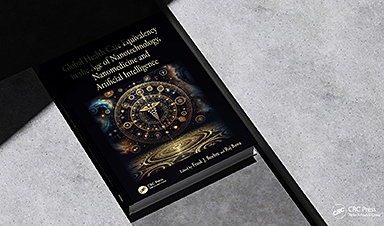
GHCE Concept
From the preface of the book Global Health Care Equivalency in the Age of Nanotechnology, Nanomedicine and Artificial Intelligence, Edited by Frank Boehm: Since the publication of my first book (Nanomedical Device and Systems [...]

Novartis, Ionis drug failure spurs questions
Pelacarsen didn’t protect heart health despite lowering levels of a protein particle, “Lp(a),” in a large clinical trial — a result with important implications for cardiovascular drug research. Dive Brief: An RNA drug from [...]
New injectable treatment helps the brain rebuild after stroke
Biomedical engineers at Duke University have created an injectable biomaterial that may help the brain recover from damage left behind by an ischemic stroke. In experiments with mice, the material transformed the cavity created [...]

Scientists Discover a Hidden “Immune Organ” Inside the Skull
Researchers discovered lymph node-like immune hubs inside skull bone marrow that appear to act as rapid-response centers for the brain. For decades, the brain was thought to operate largely apart from the immune system. [...]
Engineered tRNAs and lipid nanoparticles target nonsense mutation cystic fibrosis
Researchers have developed a potential new approach for treating a form of cystic fibrosis caused by so-called nonsense mutations, combining chemically modified transfer RNAs with lipid nanoparticles designed to deliver the therapy directly to [...]
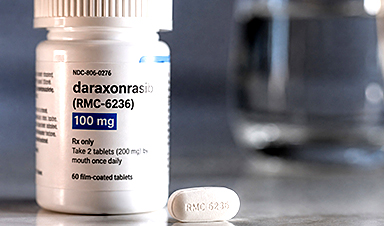
New pancreatic cancer drug carries a $39,800 monthly list price
A groundbreaking treatment for one of the most common forms of pancreatic cancer has been approved in pill form by the FDA. Revolution Medicines’ oral tablet daraxonrasib, branded as Rasonque, reduced the risk of [...]
Researchers Have Discovered a New Way To Reduce Chronic Nerve Pain
A cancer-linked protein called BRAF may help drive chronic nerve pain, and existing cancer drugs targeting it reduced pain sensitivity in preclinical models. Chronic nerve pain can persist long after an injury and often [...]
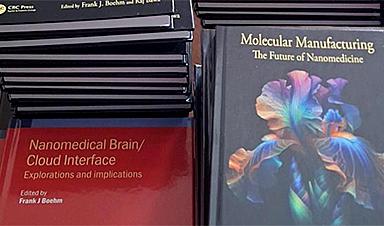
Our books now available worldwide!
Online Sellers other than Amazon, Routledge, and IOPP Indigo Global Health Care Equivalency in the Age of Nanotechnology, Nanomedicine and Artifcial Intelligence Global Health Care Equivalency In The Age Of Nanotechnology, Nanomedicine And Artificial [...]

Quantum-Enabled Regenerative Health: Reimagining Wellness, Precision Health and Longevity Medicine
Introduction Healthcare is approaching a frontier where the quantum portfolio could influence not only how disease is diagnosed and treated, but how health itself is measured, modeled, predicted and preserved. Quantum computing, quantum simulation, [...]

FDA Clears First-of-Its-Kind Nonmedication Treatment for PTSD
The FDA has cleared a system that uses brain activity data to personalize magnetic stimulation for PTSD, adding a new nonmedication treatment option. Every day in the United States, approximately 17.5 veterans die by suicide, [...]

FDA approves breakthrough drug to treat advanced pancreatic cancer
The Food and Drug Administration (FDA) approved on Wednesday a drug that could extend the survival of those with metastatic pancreatic cancer. The drug, called daraxonrasib, will be sold under the brand name Rasonque [...]

AI Decodes a Hidden DNA Signal Linked to Disease-Causing Mutations
Machine learning identifies the likely “initiator” and enables new predictions about DNA mutations that can cause disease. Every human cell depends on tens of thousands of genes being switched on at the right time [...]

Pope Leo Urges Global Response to Congo’s Deadliest Ebola Outbreak
Pope Leo called for international action to address the Ebola outbreak in the Democratic Republic of Congo. The epidemic has claimed over 2,500 lives and is the nation's largest recorded outbreak. The Pope emphasized [...]