A new study in the academic journal Machine Learning: Health discovers that ChatGPT can accelerate patient screening for clinical trials, showing promise in reducing delays and improving trial success rates.
Researchers at UT Southwestern Medical Centre used ChatGPT to assess whether patients were eligible to take part in clinical trials and were able to identify suitable candidates within minutes.
Clinical trials, which test new medications and procedures on the public, are vital for developing and validating new treatments. But many trials struggle to enrol enough participants. According to a recent study, up to 20% of National Cancer Institute (NCI)-affiliated trials fail due to low enrolment. This not only inflates costs and delays results, but also undermines the reliability of new treatments.
Currently, screening patients for trials is a manual process. Researchers must review each patient’s medical records to determine if they meet eligibility criteria, which takes around 40 minutes per patient. With limited staff and resources, this process is often too slow to keep up with demand.
Part of the problem is that valuable patient information contained in electronic health records (EHRs) is often buried in unstructured text, such as doctors’ notes, which traditional machine learning software struggles to decipher. As a result, many eligible patients are overlooked because there simply isn’t enough capacity to review every case. This contributes to low enrolment rates, trial delays and even cancellations, ultimately slowing down access to new therapies.
To counter this problem, the researchers have looked at ways of speeding up the screening process by using ChatGPT. Researchers used GPT-3.5 and GPT-4 to analyse 74 patients’ data to see if they qualified for a head and neck cancer trial.
Three ways of prompting the AI were tested:
- Structured Output (SO): asking for answers in a set format.
- Chain of Thought (CoT): asking the model to explain its reasoning.
- Self-Discover (SD): letting the model figure out what to look for.
The results were promising. GPT-4 was more accurate than GPT-3.5, though slightly slower and more expensive. Screening times ranged from 1.4 to 12.4 minutes per patient, with costs between $0.02 and $0.27.
LLMs like GPT-4 can help screen patients for clinical trials, especially when using flexible criteria. They’re not perfect, especially when all rules must be met, but they can save time and support human reviewers.”
Dr. Mike Dohopolski, lead author of the study
This research highlights the potential for AI to support faster, more efficient clinical trials – bringing new treatments to patients sooner.
The study is one of the first articles published in IOP Publishing’s Machine Learning series™, the world’s first open access journal series dedicated to the application and development of machine learning (ML) and artificial intelligence (AI) for the sciences.
The same research team have worked on a method that allows surgeons to adjust patients’ radiation therapy in real time whilst they are still on the table. Using a deep learning system called GeoDL, the AI delivers precise 3D dose estimates from CT scans and treatment data in just 35 milliseconds. This could make adaptive radiotherapy faster and more efficient in real clinical settings.
Beattie, J., et al. (2025). ChatGPT augmented clinical trial screening. Machine Learning: Health. doi.org/10.1088/3049-477x/adbd47.

News
Cancer’s Hidden Antioxidant Shield Helps It Escape the Immune System
Blocking an antioxidant protein that tumors use to suppress immune attacks improved cancer immunotherapy responses in mice. Cancer cells can release antioxidants that interfere with the immune cells trying to kill them. Researchers have [...]

Scientists Find a Berry Compound That Helps Muscle Cells Burn Fat
Pterostilbene, a compound found naturally in some foods, affects how skeletal muscles process fats by stabilizing a protein called PPARδ and increasing its signaling activity. Pterostilbene, a natural compound found in blueberries, grapes, and [...]
Two Hidden Forces Help Build the Human Brain Before Birth
Scientists have uncovered two surprising forces that help guide how the human brain forms before birth. Before birth, the human brain is shaped in large part by an unusual class of stem cells known [...]
Researchers Uncover a Hidden Trigger Behind Chronic Inflammation
The findings offer new insights that could help guide the development of future therapies. A protein called human resistin may help flip on one of the immune system’s most powerful inflammatory switches. Researchers at [...]
Scientists Have Uncovered Previously Hidden Microbial Activity on Human Skin
The most abundant microbes on your skin may not be the ones doing most of the work. Human skin supports vast communities of bacteria, fungi, and viruses that can influence its protective barrier, immune [...]
Brazilian Tree Compounds Fight COVID-19 on Multiple Fronts
Scientists found compounds in a Brazilian tree that hit SARS-CoV-2 on multiple fronts, revealing a promising new lead in the search for COVID-19 treatments. Researchers have found that galloylquinic acids extracted from the leaves [...]
Cutting Two Amino Acids Slowed Prostate Cancer in Mice
A newly identified link between amino acid metabolism and cholesterol production may help prostate tumors adapt to hormone therapy. Prostate cancer can find ways around treatments designed to deprive tumors of the hormones they [...]
Largest-Ever Physics Survey Raises New Doubts About Our Model of the Universe
Physicists around the world remain deeply divided on key mysteries of the universe, from dark matter to quantum gravity. The standard cosmological model failed to gain majority support, and no leading theory dominated the [...]

Scientists Just Overturned a 100-Year-Old Belief About Bacteria in the Lungs
New findings raise questions about the role of microbes living in the lungs. More than 35 trillion bacteria live throughout the human body, forming microbiomes in the gut, mouth, lungs, skin, and urogenital tract. [...]
GHCE Concept
From the preface of the book Global Health Care Equivalency in the Age of Nanotechnology, Nanomedicine and Artificial Intelligence, Edited by Frank Boehm: Since the publication of my first book (Nanomedical Device and Systems [...]
Novartis, Ionis drug failure spurs questions
Pelacarsen didn’t protect heart health despite lowering levels of a protein particle, “Lp(a),” in a large clinical trial — a result with important implications for cardiovascular drug research. Dive Brief: An RNA drug from [...]
New injectable treatment helps the brain rebuild after stroke
Biomedical engineers at Duke University have created an injectable biomaterial that may help the brain recover from damage left behind by an ischemic stroke. In experiments with mice, the material transformed the cavity created [...]
Scientists Discover a Hidden “Immune Organ” Inside the Skull
Researchers discovered lymph node-like immune hubs inside skull bone marrow that appear to act as rapid-response centers for the brain. For decades, the brain was thought to operate largely apart from the immune system. [...]
Engineered tRNAs and lipid nanoparticles target nonsense mutation cystic fibrosis
Researchers have developed a potential new approach for treating a form of cystic fibrosis caused by so-called nonsense mutations, combining chemically modified transfer RNAs with lipid nanoparticles designed to deliver the therapy directly to [...]
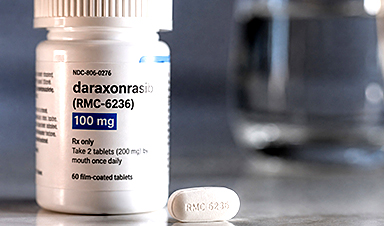
New pancreatic cancer drug carries a $39,800 monthly list price
A groundbreaking treatment for one of the most common forms of pancreatic cancer has been approved in pill form by the FDA. Revolution Medicines’ oral tablet daraxonrasib, branded as Rasonque, reduced the risk of [...]
Researchers Have Discovered a New Way To Reduce Chronic Nerve Pain
A cancer-linked protein called BRAF may help drive chronic nerve pain, and existing cancer drugs targeting it reduced pain sensitivity in preclinical models. Chronic nerve pain can persist long after an injury and often [...]