
Researchers at the Francis Crick Institute and UCL have analyzed ancient DNA from Borrelia recurrentis, a type of bacteria that causes relapsing fever, pinpointing when it evolved to spread through lice rather than ticks, and how it gained and lost genes in the process.
This transition may have coincided with changes in human lifestyles, like living closer together and the beginning of the wool trade.
Borrelia recurrentis bacteria cause relapsing fever, an illness with many recurring episodes of fever, which is typically found today in areas with poor sanitation or overcrowding, such as refugee camps. It is a distant cousin of the bacteria that today cause Lyme disease.
Historical records in Britain have referred to periods of a ‘sweating sickness’ or ‘epidemic fever’ which may have been caused by B. recurrentis, but limited data means the likely cause of these outbreaks remains unknown.
Only three known species of bacteria, including B. recurrentis, have transitioned from being carried primarily by ticks to lice, changing the potential severity of the disease. Until now it was unknown when B. recurrentis made the jump from ticks to lice and what impact this had on disease transmission and severity in humans.
In research published today in Science, the scientists sequenced the whole genome from four samples of B. recurrentis. Ranging from 2,300 to 600 years ago, their samples include the oldest B. recurrentis genome to date. These ancient samples were obtained from the skeletons of people who were infected hundreds of years ago. The DNA is a shadow of the bacteria that once circulated in their blood and has been captured in bones and teeth.
The individuals’ teeth contained traces of B. recurrentis DNA. Two samples had relatively high amounts of the pathogen, suggesting these individuals may have died from a severe, acute infection, or that the DNA was particularly well preserved.
Becoming adapted to the human louse
The researchers looked at differences in the ancient genomes and modern-day B. recurrentis to map how the bacteria has changed over time, finding that the species likely diverged from its nearest tick-borne cousin, B. duttonii, about 6,000 to 4,000 years ago.
The perfect conditions
Based on these ancient and modern genomes, the divergence from the bacteria’s tick-borne ancestor happened during the transition from the Neolithic period to the Early Bronze Age. This was a time of change in human lifestyles, as people began to domesticate animals and live in more dense settlements. This may have helped B. recurrentis spread from person to person more easily.
The researchers also raise the possibility that the development of sheep farming for wool at this time may have given an advantage to louse-borne pathogens, as wool has better conditions for lice to lay eggs.
They conclude that the evolution of B. recurrentis highlights that a combination of genetic and environmental changes can help pathogens spread and infect populations more easily.
Louse-borne relapsing fever is a neglected disease with limited modern genomes, making it difficult to study its diversity. Adding four ancient B. recurrentis genomes to the mix has allowed us to create an evolutionary time series and shed light on how the genetics of the bacteria have changed over time. Although there’s a trend towards genome decay as it adapted to the human louse vector, we’ve shown that the evolution of B. recurrentis was dynamic until about 1,000 years ago, when it looks similar to present-day genomes.”
Pooja Swali, Research Fellow at UCL, former Crick PhD student and first author
Pontus Skoglund, Group Leader of the Ancient Genomics Laboratory at the Crick, and co-senior author, said: “Ancient DNA can enhance our understanding of significant but understudied diseases like relapsing fever. Understanding how bacteria such as B. recurrentis became more severe in the past may help us understand how diseases could change in the future. The time points we’ve identified suggest that changes in human societies such as new clothing material or living in larger groups may have allowed B. recurrentis to jump vectors and become more lethal, an example of how pathogens and humans have co-evolved.”
Lucy van Dorp, Group Leader at UCL, and co-senior author, said: “Genetic analysis of these infections in ancient humans has allowed us to directly track how B. recurrentis has juggled loss and gain of genes during its evolution. Its ability to spread and cause disease appears to be context-dependent, with ancient DNA allowing us to speculate on the important role of past human interactions and behaviour in creating conditions conducive to disease spread. More samples will help us to narrow down the events which led to this tick-to-louse transition and the genetic mechanisms which have helped the bacteria thrive using either vector.”
Swali, P., et al. (2025) Ancient Borrelia genomes document the evolutionary history of louse-borne relapsing fever. Science. doi.org/10.1126/science.adr2147.

News

Two Hidden Forces Help Build the Human Brain Before Birth
Scientists have uncovered two surprising forces that help guide how the human brain forms before birth. Before birth, the human brain is shaped in large part by an unusual class of stem cells known [...]

Researchers Uncover a Hidden Trigger Behind Chronic Inflammation
The findings offer new insights that could help guide the development of future therapies. A protein called human resistin may help flip on one of the immune system’s most powerful inflammatory switches. Researchers at [...]

Scientists Have Uncovered Previously Hidden Microbial Activity on Human Skin
The most abundant microbes on your skin may not be the ones doing most of the work. Human skin supports vast communities of bacteria, fungi, and viruses that can influence its protective barrier, immune [...]

Brazilian Tree Compounds Fight COVID-19 on Multiple Fronts
Scientists found compounds in a Brazilian tree that hit SARS-CoV-2 on multiple fronts, revealing a promising new lead in the search for COVID-19 treatments. Researchers have found that galloylquinic acids extracted from the leaves [...]

Cutting Two Amino Acids Slowed Prostate Cancer in Mice
A newly identified link between amino acid metabolism and cholesterol production may help prostate tumors adapt to hormone therapy. Prostate cancer can find ways around treatments designed to deprive tumors of the hormones they [...]

Largest-Ever Physics Survey Raises New Doubts About Our Model of the Universe
Physicists around the world remain deeply divided on key mysteries of the universe, from dark matter to quantum gravity. The standard cosmological model failed to gain majority support, and no leading theory dominated the [...]

Scientists Just Overturned a 100-Year-Old Belief About Bacteria in the Lungs
New findings raise questions about the role of microbes living in the lungs. More than 35 trillion bacteria live throughout the human body, forming microbiomes in the gut, mouth, lungs, skin, and urogenital tract. [...]
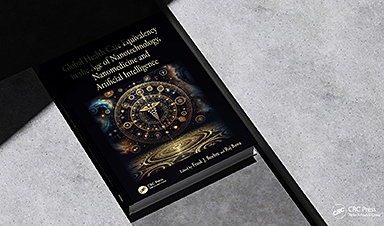
GHCE Concept
From the preface of the book Global Health Care Equivalency in the Age of Nanotechnology, Nanomedicine and Artificial Intelligence, Edited by Frank Boehm: Since the publication of my first book (Nanomedical Device and Systems [...]

Novartis, Ionis drug failure spurs questions
Pelacarsen didn’t protect heart health despite lowering levels of a protein particle, “Lp(a),” in a large clinical trial — a result with important implications for cardiovascular drug research. Dive Brief: An RNA drug from [...]

New injectable treatment helps the brain rebuild after stroke
Biomedical engineers at Duke University have created an injectable biomaterial that may help the brain recover from damage left behind by an ischemic stroke. In experiments with mice, the material transformed the cavity created [...]

Scientists Discover a Hidden “Immune Organ” Inside the Skull
Researchers discovered lymph node-like immune hubs inside skull bone marrow that appear to act as rapid-response centers for the brain. For decades, the brain was thought to operate largely apart from the immune system. [...]

Engineered tRNAs and lipid nanoparticles target nonsense mutation cystic fibrosis
Researchers have developed a potential new approach for treating a form of cystic fibrosis caused by so-called nonsense mutations, combining chemically modified transfer RNAs with lipid nanoparticles designed to deliver the therapy directly to [...]

New pancreatic cancer drug carries a $39,800 monthly list price
A groundbreaking treatment for one of the most common forms of pancreatic cancer has been approved in pill form by the FDA. Revolution Medicines’ oral tablet daraxonrasib, branded as Rasonque, reduced the risk of [...]

Researchers Have Discovered a New Way To Reduce Chronic Nerve Pain
A cancer-linked protein called BRAF may help drive chronic nerve pain, and existing cancer drugs targeting it reduced pain sensitivity in preclinical models. Chronic nerve pain can persist long after an injury and often [...]

Our books now available worldwide!
Online Sellers other than Amazon, Routledge, and IOPP Indigo Global Health Care Equivalency in the Age of Nanotechnology, Nanomedicine and Artifcial Intelligence Global Health Care Equivalency In The Age Of Nanotechnology, Nanomedicine And Artificial [...]

Quantum-Enabled Regenerative Health: Reimagining Wellness, Precision Health and Longevity Medicine
Introduction Healthcare is approaching a frontier where the quantum portfolio could influence not only how disease is diagnosed and treated, but how health itself is measured, modeled, predicted and preserved. Quantum computing, quantum simulation, [...]