Most bacteria cannot be cultured in the lab-and that’s been bad news for medicine. Many of our frontline antibiotics originated from microbes, yet as antibiotic resistance spreads and drug pipelines run dry, the soil beneath our feet has a vast hidden reservoir of untapped lifesaving compounds.
Now, researchers have developed a way to access this microbial goldmine. Their approach, published in Nature Biotechnology, circumvents the need to grow bacteria in the lab by extracting very large DNA fragments directly from soil to piece together the genomes of previously hidden microbes, and then mines resulting genomes for bioactive molecules.
From a single forest sample, the team generated hundreds of complete bacterial genomes never seen before, as well as two new antibiotic leads. The findings offer a scalable way to scour unculturable bacteria for new drug leads-and expose the vast, uncharted microbial frontier that shapes our environment.
We finally have the technology to see the microbial world that have been previously inaccessible to humans. And we’re not just seeing this information; we’re already turning it into potentially useful antibiotics. This is just the tip of the spear.”
Sean F. Brady, head of the Laboratory of Genetically Encoded Small Molecules at Rockefeller
Microbial dark matter
When hunting for bacteria, soil is an obvious choice. It’s the largest, most biodiverse reservoir of bacteria on the planet-a single teaspoon of it may contain thousands of different species. Many important therapeutics, including most of our antibiotic arsenal, were discovered in the tiny fraction of soil bacteria that can be grown in the laboratory. And soil is dirt cheap.
Yet we know very little about the millions of microbes packed into the earth. Scientists suspect that these hidden bacteria hold not only an untapped reservoir of new therapeutics, but clues as to how microbes shape climate, agriculture, and the larger environment that we live in. “All over the world there’s this hidden ecosystem of microbes that could have dramatic effects on our lives,” Brady adds. “We wanted to finally see them.”
Getting that glimpse involved weaving together several approaches. First, the team optimized a method for isolating large, high-quality DNA fragments directly from soil. Pairing this advance with emerging long-read nanopore sequencing allowed Jan Burian, a postdoctoral associate in the Brady lab, to produce continuous stretches of DNA that were tens of thousands of base pairs long-200 times longer than any previously existing technology could manage. Soil DNA contains a huge number of different bacteria; without such large DNA sequences to work with, resolving that complex genetic puzzle into complete and contiguous genomes for disparate bacteria proved exceedingly difficult.
“It’s easier to assemble a whole genome out of bigger pieces of DNA, rather than the millions of tiny snippets that were available before,” Brady says. “And that makes a dramatic difference in your confidence in your results.”
Unique small molecules, like antibiotics, that bacteria produce are called “natural products”. To convert the newly uncovered sequences into bioactive molecules, the team applied a synthetic bioinformatic natural products (synBNP) approach. They bioinformatically predicted the chemical structures of natural products directly from the genome data and then chemically synthesized them in the lab. With the synBNP approach, Brady and colleagues managed to turn the genetic blueprints from uncultured bacteria into actual molecules-including two potent antibiotics.
Brady describes the method, which is scalable and can be adapted to virtually any metagenomic space beyond soil, as a three-step strategy that could kick off a new era of microbiology: “Isolate big DNA, sequence it, and computationally convert it into something useful.”
Two new drug candidates, and counting
Applied to their single forest soil sample, the team’s approach produced 2.5 terabase-pairs of sequence data-the deepest long-read exploration of a single soil sample to date. Their analysis uncovered hundreds of complete contiguous bacterial genomes, more than 99 percent of which were entirely new to science and identified members from 16 major branches of the bacterial family tree.
The two lead compounds discovered could translate into potent antibiotics. One, called erutacidin, disrupts bacterial membranes through an uncommon interaction with the lipid cardiolipin and is effective against even the most challenging drug-resistant bacteria. The other, trigintamicin, acts on a protein-unfolding motor known as ClpX, a rare antibacterial target.
Brady emphasizes that these discoveries are only the beginning. The study demonstrates that previously inaccessible microbial genomes can now be decoded and mined for bioactive molecules at scale without culturing the organisms. Unlocking the genetic potential of microbial dark matter may also provide new insights into the hidden microbial networks that sustain ecosystems.
“We’re mainly interested in small molecules as therapeutics, but there are applications beyond medicine,” Burian says. “Studying culturable bacteria led to advances that helped shape the modern world and finally seeing and accessing the uncultured majority will drive a new generation of discovery.”
Burian, J., et al. (2025). Bioactive molecules unearthed by terabase-scale long-read sequencing of a soil metagenome. Nature Biotechnology. doi.org/10.1038/s41587-025-02810-w

News
Cutting Two Amino Acids Slowed Prostate Cancer in Mice
A newly identified link between amino acid metabolism and cholesterol production may help prostate tumors adapt to hormone therapy. Prostate cancer can find ways around treatments designed to deprive tumors of the hormones they [...]
Largest-Ever Physics Survey Raises New Doubts About Our Model of the Universe
Physicists around the world remain deeply divided on key mysteries of the universe, from dark matter to quantum gravity. The standard cosmological model failed to gain majority support, and no leading theory dominated the [...]

Scientists Just Overturned a 100-Year-Old Belief About Bacteria in the Lungs
New findings raise questions about the role of microbes living in the lungs. More than 35 trillion bacteria live throughout the human body, forming microbiomes in the gut, mouth, lungs, skin, and urogenital tract. [...]

GHCE Concept
From the preface of the book Global Health Care Equivalency in the Age of Nanotechnology, Nanomedicine and Artificial Intelligence, Edited by Frank Boehm: Since the publication of my first book (Nanomedical Device and Systems [...]
Novartis, Ionis drug failure spurs questions
Pelacarsen didn’t protect heart health despite lowering levels of a protein particle, “Lp(a),” in a large clinical trial — a result with important implications for cardiovascular drug research. Dive Brief: An RNA drug from [...]
New injectable treatment helps the brain rebuild after stroke
Biomedical engineers at Duke University have created an injectable biomaterial that may help the brain recover from damage left behind by an ischemic stroke. In experiments with mice, the material transformed the cavity created [...]
Scientists Discover a Hidden “Immune Organ” Inside the Skull
Researchers discovered lymph node-like immune hubs inside skull bone marrow that appear to act as rapid-response centers for the brain. For decades, the brain was thought to operate largely apart from the immune system. [...]
Engineered tRNAs and lipid nanoparticles target nonsense mutation cystic fibrosis
Researchers have developed a potential new approach for treating a form of cystic fibrosis caused by so-called nonsense mutations, combining chemically modified transfer RNAs with lipid nanoparticles designed to deliver the therapy directly to [...]
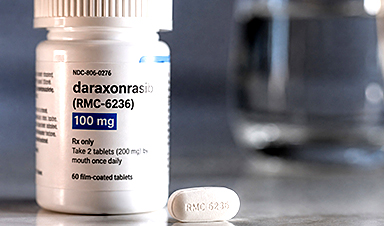
New pancreatic cancer drug carries a $39,800 monthly list price
A groundbreaking treatment for one of the most common forms of pancreatic cancer has been approved in pill form by the FDA. Revolution Medicines’ oral tablet daraxonrasib, branded as Rasonque, reduced the risk of [...]
Researchers Have Discovered a New Way To Reduce Chronic Nerve Pain
A cancer-linked protein called BRAF may help drive chronic nerve pain, and existing cancer drugs targeting it reduced pain sensitivity in preclinical models. Chronic nerve pain can persist long after an injury and often [...]
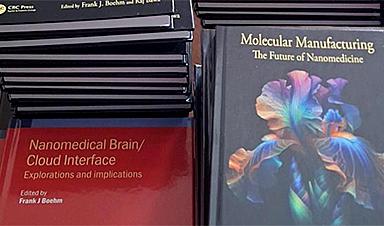
Our books now available worldwide!
Online Sellers other than Amazon, Routledge, and IOPP Indigo Global Health Care Equivalency in the Age of Nanotechnology, Nanomedicine and Artifcial Intelligence Global Health Care Equivalency In The Age Of Nanotechnology, Nanomedicine And Artificial [...]

Quantum-Enabled Regenerative Health: Reimagining Wellness, Precision Health and Longevity Medicine
Introduction Healthcare is approaching a frontier where the quantum portfolio could influence not only how disease is diagnosed and treated, but how health itself is measured, modeled, predicted and preserved. Quantum computing, quantum simulation, [...]

FDA Clears First-of-Its-Kind Nonmedication Treatment for PTSD
The FDA has cleared a system that uses brain activity data to personalize magnetic stimulation for PTSD, adding a new nonmedication treatment option. Every day in the United States, approximately 17.5 veterans die by suicide, [...]

FDA approves breakthrough drug to treat advanced pancreatic cancer
The Food and Drug Administration (FDA) approved on Wednesday a drug that could extend the survival of those with metastatic pancreatic cancer. The drug, called daraxonrasib, will be sold under the brand name Rasonque [...]
AI Decodes a Hidden DNA Signal Linked to Disease-Causing Mutations
Machine learning identifies the likely “initiator” and enables new predictions about DNA mutations that can cause disease. Every human cell depends on tens of thousands of genes being switched on at the right time [...]

Pope Leo Urges Global Response to Congo’s Deadliest Ebola Outbreak
Pope Leo called for international action to address the Ebola outbreak in the Democratic Republic of Congo. The epidemic has claimed over 2,500 lives and is the nation's largest recorded outbreak. The Pope emphasized [...]