Hydrogen gas, dubbed the energy of the future, has been providing energy since 4 billion years ago.
A recent study reveals how hydrogen gas, often touted as the energy source of tomorrow, provided energy in the past, at the origin of life 4 billion years ago. Hydrogen gas is clean fuel. It burns with oxygen in the air to provide energy with no CO2.
Hydrogen is a key to sustainable energy for the future. Though humans are just now coming to realize the benefits of hydrogen gas (H2 in chemical shorthand), microbes have known that H2 is a good fuel for as long as there has been life on Earth. Hydrogen is ancient energy.
The very first cells on Earth lived from H2 produced in hydrothermal vents, using the reaction of H2 with CO2 to make the molecules of life. Microbes that thrive from the reaction of H2 and CO2 can live in total darkness, inhabiting spooky, primordial habitats like deep-sea hydrothermal vents or hot rock formations deep within the Earth’s crust, environments where many scientists think that life itself arose.
Discovery of Hydrogen’s Role in Early Cellular Energy Harvesting
Surprising new insights about how the first cells on Earth came to harness H2 as an energy source are now reported in PNAS. The new study comes from the team of William F. Martin at the University of Düsseldorf and Martina Preiner at the Max Planck Institute (MPI) for Terrestrial Microbiology in Marburg with support from collaborators in Germany and Asia.
In order to harvest energy, cells first have to push the electrons from H2 energetically uphill. “That is like asking a river to flow uphill instead of downhill, so cells need engineered solutions,” explains one of the three first authors of the study, Max Brabender.
Image from the Sulis formation in the Lost City hydrothermal field, an alkaline hydrothermal vent that produces hydrogen. Credit: Courtesy of Susan Lang, U. of South Carolina /NSF/ROV Jason 2018 © Woods Hole Oceanographic Institution
How cells solve that problem was discovered only 15 years ago by Wolfgang Buckel together with his colleague Rolf Thauer in Marburg. They found that cells send the two electrons in hydrogen down different paths. One electron goes far downhill, so far downhill that it sets something like a pulley (or a siphon) in motion that can pull the other electron energetically uphill. This process is called electron bifurcation.
The Mechanisms of Electron Bifurcation and Early Evolutionary Puzzle
In cells, it requires several enzymes that send the electrons uphill to an ancient and essential biological electron carrier called ferredoxin. The new study shows that at pH 8.5, typical of naturally alkaline vents, “no proteins are required,” explains Buckel, co-author on the study, “the H–H bond of H2 splits on the iron surface, generating protons that are consumed by the alkaline water and electrons that are then easily transferred directly to ferredoxin.”
How an energetically uphill reaction could have worked in early evolution, before there were enzymes or cells, has been a very tough puzzle. “Several different theories have proposed how the environment might have pushed electrons energetically uphill to ferredoxin before the origin of electron bifurcation,“ says Martin, “we have identified a process that could not be simpler and that works in the natural conditions of hydrothermal vents”.
Since the discovery of electron bifurcation, scientists have found that the process is both ancient and absolutely essential in microbes that live from H2. The vexing problem for evolutionarily-minded chemists like Martina Preiner, whose team in Marburg focusses on the impact of the environment on reactions that microbes use today and possibly used at life’s origin, is: How was H2 harnessed for CO2 fixing pathways before there were complicated proteins?
“Metals provide answers,”, she says, “at the onset of life, metals under ancient environmental conditions can send the electrons from H2 uphill, and we can see relicts of that primordial chemistry preserved in the biology of modern cells.” But metals alone are not enough. “H2 needs to be produced by the environment as well” adds co-first author Delfina Pereira from Preiner’s lab. Such environments are found in hydrothermal vents, where water interacts with iron-containing rocks to make H2, and where microbes still live today from that hydrogen as their source of energy.
The Surprising Role of Hydrogen in Forming Metallic Iron
Hydrothermal vents, both modern and ancient, generate H2 in such large amounts that the gas can turn iron-containing minerals into shiny metallic iron.
“That hydrogen can make metallic iron out of minerals is no secret,” says Harun Tüysüz, expert for high-tech materials at the Max-Planck-Institut für Kohlenforschung Mülheim and coauthor on the study. “Many processes in the chemical industry use H2 to make metals out of minerals during the reaction.” The surprise is that nature does this too, especially at hydrothermal vents, and that this naturally deposited iron could have played a crucial role at the origin of life.
Iron was the only metal identified in the new study that was able to send the electrons in H2 uphill to ferredoxin. But the reaction only works under alkaline conditions like those in a certain type of hydrothermal vents.
Natalia Mrnjavac from the Düsseldorf group and co-first author on the study points out: “This fits well with the theory that life arose in such environments. The most exciting thing is that such simple chemical reactions can close an important gap in understanding the complex process of origins, and that we can see those reactions working under the conditions of ancient hydrothermal vents in the laboratory today.”
Reference: “Ferredoxin reduction by hydrogen with iron functions as an evolutionary precursor of flavin-based electron bifurcation” by Max Brabender, Delfina P. Henriques Pereira, Natalia Mrnjavac, Manon Laura Schlikker, Zen-Ichiro Kimura, Jeerus Sucharitakul, Karl Kleinermanns, Harun Tüysüz, Wolfgang Buckel, Martina Preiner and William F. Martin, 21 March 2024, Proceedings of the National Academy of Sciences.
DOI: 10.1073/pnas.2318969121

News
Largest-Ever Physics Survey Raises New Doubts About Our Model of the Universe
Physicists around the world remain deeply divided on key mysteries of the universe, from dark matter to quantum gravity. The standard cosmological model failed to gain majority support, and no leading theory dominated the [...]
Scientists Just Overturned a 100-Year-Old Belief About Bacteria in the Lungs
New findings raise questions about the role of microbes living in the lungs. More than 35 trillion bacteria live throughout the human body, forming microbiomes in the gut, mouth, lungs, skin, and urogenital tract. [...]

GHCE Concept
From the preface of the book Global Health Care Equivalency in the Age of Nanotechnology, Nanomedicine and Artificial Intelligence, Edited by Frank Boehm: Since the publication of my first book (Nanomedical Device and Systems [...]

Novartis, Ionis drug failure spurs questions
Pelacarsen didn’t protect heart health despite lowering levels of a protein particle, “Lp(a),” in a large clinical trial — a result with important implications for cardiovascular drug research. Dive Brief: An RNA drug from [...]
New injectable treatment helps the brain rebuild after stroke
Biomedical engineers at Duke University have created an injectable biomaterial that may help the brain recover from damage left behind by an ischemic stroke. In experiments with mice, the material transformed the cavity created [...]
Scientists Discover a Hidden “Immune Organ” Inside the Skull
Researchers discovered lymph node-like immune hubs inside skull bone marrow that appear to act as rapid-response centers for the brain. For decades, the brain was thought to operate largely apart from the immune system. [...]
Engineered tRNAs and lipid nanoparticles target nonsense mutation cystic fibrosis
Researchers have developed a potential new approach for treating a form of cystic fibrosis caused by so-called nonsense mutations, combining chemically modified transfer RNAs with lipid nanoparticles designed to deliver the therapy directly to [...]
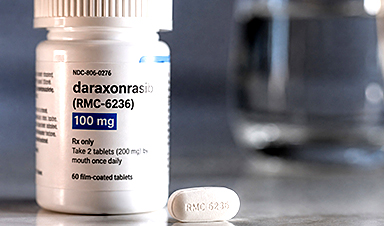
New pancreatic cancer drug carries a $39,800 monthly list price
A groundbreaking treatment for one of the most common forms of pancreatic cancer has been approved in pill form by the FDA. Revolution Medicines’ oral tablet daraxonrasib, branded as Rasonque, reduced the risk of [...]
Researchers Have Discovered a New Way To Reduce Chronic Nerve Pain
A cancer-linked protein called BRAF may help drive chronic nerve pain, and existing cancer drugs targeting it reduced pain sensitivity in preclinical models. Chronic nerve pain can persist long after an injury and often [...]
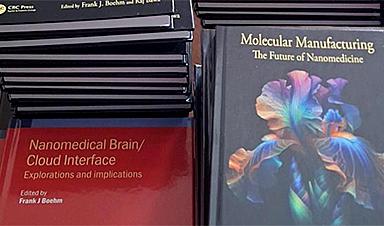
Our books now available worldwide!
Online Sellers other than Amazon, Routledge, and IOPP Indigo Global Health Care Equivalency in the Age of Nanotechnology, Nanomedicine and Artifcial Intelligence Global Health Care Equivalency In The Age Of Nanotechnology, Nanomedicine And Artificial [...]

Quantum-Enabled Regenerative Health: Reimagining Wellness, Precision Health and Longevity Medicine
Introduction Healthcare is approaching a frontier where the quantum portfolio could influence not only how disease is diagnosed and treated, but how health itself is measured, modeled, predicted and preserved. Quantum computing, quantum simulation, [...]

FDA Clears First-of-Its-Kind Nonmedication Treatment for PTSD
The FDA has cleared a system that uses brain activity data to personalize magnetic stimulation for PTSD, adding a new nonmedication treatment option. Every day in the United States, approximately 17.5 veterans die by suicide, [...]

FDA approves breakthrough drug to treat advanced pancreatic cancer
The Food and Drug Administration (FDA) approved on Wednesday a drug that could extend the survival of those with metastatic pancreatic cancer. The drug, called daraxonrasib, will be sold under the brand name Rasonque [...]
AI Decodes a Hidden DNA Signal Linked to Disease-Causing Mutations
Machine learning identifies the likely “initiator” and enables new predictions about DNA mutations that can cause disease. Every human cell depends on tens of thousands of genes being switched on at the right time [...]

Pope Leo Urges Global Response to Congo’s Deadliest Ebola Outbreak
Pope Leo called for international action to address the Ebola outbreak in the Democratic Republic of Congo. The epidemic has claimed over 2,500 lives and is the nation's largest recorded outbreak. The Pope emphasized [...]

Is there a summer COVID-19 surge this year? Yep, it’s ramping up again
Hantavirus. Ebola. West Nile. Measles. And, of course, cyclospora — that stomach parasite making people miserable across the country. Americans have plenty to worry about this summer. But remember COVID-19? It may not be [...]