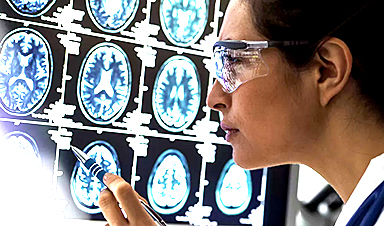
A new drug, donanemab, is being hailed as a turning point in the fight against Alzheimer’s, after a global trial confirms it slows cognitive decline.
The antibody medicine helps in the early stages of the disease by clearing a protein that builds up in the brains of people with this type of dementia.
Although not a cure, charities say the results in the journal JAMA mark a new era where Alzheimer’s can be treated.
The UK’s drugs watchdog has started assessing it for possible NHS use.
The drug works in Alzheimer’s disease, not in other types of dementia, such as vascular dementia.
In the trials, it appears to have slowed the pace of the disease by about a third, allowing people to retain more of their day-to-day lives and tasks, such as making meals and enjoying a hobby.
Mike gets an infusion each month at a clinic in London and says he is “one of the luckiest people you’ll ever meet”.

Mike and his family noticed he was having problems with memory and decision-making, not long before he started on the trial.
His son, Mark, said it was very hard to watch at the beginning: “Seeing him struggle with processing information and solving problems was very hard. But I think the decline is reaching a plateau now.”
Mike, who is from Kent, said: “I feel more confident every day.”
Donanemab, made by Eli Lilly, works in the same way as lecanemab – developed by companies Eisai and Biogen – which created headlines around the world when it was proven to slow the disease.
Brain swelling was a common side-effect in up to a third of patients in the donanemab trial. For most, this resolved without causing symptoms. However, two volunteers, and possibly a third, died as a result of dangerous swelling in the brain.
Another antibody Alzheimer’s drug, called aducanumab, was recently rejected by European regulators over safety concerns and a lack of evidence that it was effective enough for patients.
What is dementia and what can be done about it?
In the donanemab trial, researchers examined 1,736 people aged 60 to 85 with early-stage Alzheimer’s.
Half of them received a monthly infusion of the treatment and the other half were given a dummy drug, also known as a placebo, over 18 months.
The findings show:
- The drug seems to have a meaningful benefit, at least for some patients
- Those who had earlier disease and less brain amyloid at baseline derived greater benefit, in terms of clearance seen on brain scans
- Those given the drug also retained more of their day-to-day lives such as being able to discuss current events, answer the phone or pursue hobbies
- The pace of the disease, judged by what people could still do day-to-day, was slowed by about 20-30% overall – and by 30-40% in a set of patients who researchers thought more likely to respond
- There were significant side-effects and patients will need to be aware of risks of treatment
- Half of patients on donanemab were able to stop the treatment after a year, because it had cleared sufficient brain deposits

The drug’s effects may be modest, but the results provide further confirmation that removing amyloid from the brain may change the course of Alzheimer’s, and help people affected by this devastating disease if they’re treated at the right time, they say.
Prof Giles Hardingham from the UK Dementia Research Institute said: “It is terrific to see these results published in full today.
“We have waited a long time for Alzheimer’s treatments, so it’s really encouraging to see tangible progress continuing to gather pace in the field.”
Dr Susan Kohlhaas, from Alzheimer’s Research UK, said: “Today’s announcement marks another milestone.
“Thanks to decades of research, the outlook for dementia and its impact on people and society is finally changing, and we’re entering a new era where Alzheimer’s disease could become treatable.”
Speaking to BBC Radio 4’s PM programme, former Prime Minister David Cameron said resources should be put towards further research into what he called a “statin for the brain”.
“We want a pill that people who have the build-up of these proteins in the brain can take every day or every week in order to clear those proteins out of the brain and therefore reduce your chances of getting a disease that causes dementia,” he said.
Asked if the government were prepared to invest where needed to roll out new treatments, Mr Cameron said there was a real incentive to do so: “We’re a country of sixty million people, with a million people with dementia, many of them in very expensive residential care settings and so there is a lot of savings to be had from effectively treating people….I’m hopeful that our system can deliver.”
Lecanemab costs around $27,500 (£21,000) in the US, where it is licensed.
It is not clear how much donanemab may cost and how long it might take to get approval in the UK, but Alzheimer’s experts said having two drugs would help promote competition on price.
The UK’s drug’s watchdog NICE says it has already started work on its appraisal of donanemab for treating mild cognitive impairment or mild dementia caused by Alzheimer’s disease.
“Our aim is to produce recommendations on its use in the NHS as close as possible to it receiving its UK licence,” said a spokesperson.
Mike Colley turned 80 in April. At his birthday party, he surprised his family by singing My Way in front of 40 guests.
He told BBC News: “That’s the confidence I have now. I’d never have done that even 12 months ago.”
His son Mark added: “I never thought I would see my dad so full of life again. It was an incredible moment.”
Dr Emer MacSweeney, consultant neuroradiologist and medical director at Re:Cognition Health, led the trials of donanemab in the UK.
She said: “This is really significant and one of the biggest breakthroughs.”
The Alzheimer’s Society said: “This is truly a turning point in the fight against Alzheimer’s and science is proving that it is possible to slow down the disease.”
Around 720,000 people in the UK might potentially benefit from these emerging new Alzheimer’s disease treatments if they’re approved for use, but the Alzheimer’s Society said the NHS is “simply not ready to deliver them”.
Kate Lee, CEO for the charity, said: “Timely, accurate diagnosis is key, and currently only 2% of people in England and Wales receive their diagnosis through the specialist investigations needed to be eligible for these treatments.
“Alongside this, these emerging Alzheimer’s disease drugs require regular infusions and monitoring, and the NHS is not yet equipped to do this at scale.”

News
COVID-19 can wake up dormant viruses in the body, large study confirms
Virus reactivations by SARS-CoV-2 could worsen initial symptoms and increase risk of Long Covid. Early in the COVID-19 pandemic, scientists noticed that a SARS-CoV-2 infection can “wake up” other, dormant viruses already present in [...]
Scientists Discover the Brain May Enter a New Biological Phase Between 50 and 75
A single-cell study reveals major changes in immune cells, genome organization, and gene regulation within the aging human hippocampus, offering important insights into brain aging and dementias associated with age. Between roughly ages 50 [...]
Our books now available worldwide!
Online Sellers other than Amazon, Routledge, and IOPP Indigo Global Health Care Equivalency in the Age of Nanotechnology, Nanomedicine and Artifcial Intelligence Global Health Care Equivalency In The Age Of Nanotechnology, Nanomedicine And Artificial [...]

Unzipping the Code of Life: Scientists Pinpoint Where DNA First Opens
Researchers mapped where DNA first opens and how a helicase gate may release one strand as genome copying begins. Before a cell can divide, it must open its tightly wound DNA and begin copying the entire [...]
Scientists Tested an 8-Hour Eating Window and Found a Surprising Brain Benefit
Limiting the daily eating window may provide brain benefits beyond those associated with weight loss. Eating within a shorter daily window may provide cognitive benefits beyond those associated with weight loss alone, according to [...]

Focused Ultrasound Opens Blood-Brain Barrier to Treat Brain Cancer
Summary: A new study demonstrates that primary brain tumors (gliomas) are particularly receptive to targeted drug delivery using focused ultrasound (FUS) combined with microbubbles. The team developed a high-resolution MRI protocol to track blood-brain barrier [...]

AI’s promise and practical limits in drug discovery
AI tools are becoming increasingly common in early drug discovery, allowing scientists to analyse data and navigate large volumes of research. However, according to Dr Raminderpal Singh, turning that potential into consistent scientific workflows [...]

GHCE Concept
From the preface of the book Global Health Care Equivalency in the Age of Nanotechnology, Nanomedicine and Artificial Intelligence, Edited by Frank Boehm: Since the publication of my first book (Nanomedical Device and Systems [...]
Healthcare Headlines: Challenges and Advances in 2026
Health-related updates reveal financial adjustments by Universal Health Services due to Medicaid reimbursement uncertainties, significant pollution-linked health concerns from French-British oil firm Perenco in Congo, drug trial setbacks, potential restructuring at major medical firms, [...]
Scientists Discover the Brain Protein That Helps Alzheimer’s Spread Through the Brain
Scientists have identified a brain protein that may help Alzheimer’s spread, revealing a potential new target for slowing the disease’s progression. Alzheimer’s disease is closely linked to the accumulation of a toxic form of the protein [...]
How Immune Dysregulation Contributes to Psychiatric Disorders
Introduction Growing evidence suggests that disruptions in immune function may play an important role in the development and progression of psychiatric disorders. However, immune mechanisms probably contribute more strongly in some patients than others, [...]
Electrostatic Discharge Boosts Triboelectric Nanogenerator Current and Enables DC Output
Controlled electrical discharges could enable triboelectric nanogenerators to achieve higher peak currents, extending nano-enabled energy harvesting into chemical processing and self-powered sensing. Paper: Electrostatic discharge as a breakthrough strategy for triboelectric nanogenerators. A new review [...]
Swiss laboratory uses old drugs against rare diseases
Researchers at the University of Geneva are combing through collections of approved drugs to find new therapies for rare diseases – with some success. This approach is gaining traction around the world, while pharmaceutical [...]

Nanozyme Aptasensors Show Promise for Faster Food, Health, and Environmental Testing
By pairing robust artificial enzymes with highly selective aptamers, nanozyme aptasensors could help detect disease biomarkers, pathogens, and contaminants faster, but the review shows that real-world deployment still depends on overcoming matrix interference, biofouling, [...]
Paralyzed Man Feels Sensation Again With Brain Stimulation Device
Aneuroprosthetic system has allowed a man with paralysis to grasp and lift objects and feel touch again. The device helped 42-year-old Keith Thomas of Massapequa, New York, who was paralyzed from the chest down [...]
Global Cancer Cases Could Surge 67% by 2050, New Report Warns
New data reveal major geographic disparities and highlight the urgent need for global action on prevention, early detection, and equitable access to treatment. For roughly one in five people worldwide, cancer will become part [...]