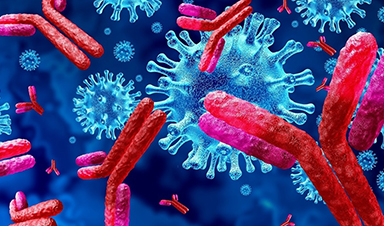
Researchers in the United States have conducted a study showing the difference in antibody evolution following vaccination against severe acute respiratory syndrome coronavirus 2 (SARS-CoV-2) between people who have not previously been infected with the virus and those who have.
The SARS-CoV-2 virus is the agent responsible for the ongoing coronavirus disease 2019 (COVID-19) pandemic that has now claimed the lives of more than 4.2 million people globally.
The team – from The Rockefeller University in New York – found that between a first (prime) and second (booster) shot of either the Pfizer-BioNTech or Moderna vaccine, the memory B cells of infection-naïve individuals produced antibodies that evolved increased neutralizing activity against SARS-CoV-2.
However, no additional increase in the potency or breadth of this activity was observed thereafter.
“Memory antibodies selected over time by natural infection have greater potency and breadth than antibodies elicited by vaccination,” says Michel Nussenzweig and colleagues.
The researchers say the findings suggest that boosting vaccinated individuals would elicit a quantitative increase in neutralizing activity, but not the qualitative advantage against SARS-CoV-2 variants produced when convalescent individuals are vaccinated.
A pre-print version of the research paper is available on the bioRxiv* server, while the article undergoes peer review.
B- cell responses evolve for at least a year in convalescent individuals
Following SARS-CoV-2 infection, B-cell responses continue to evolve for at least one year, with memory B cells expressing increasingly broad and potent antibodies that are resistant to the mutations found in variants of concern.
Vaccinating convalescent individuals, therefore, elicits high levels of plasma neutralizing activity against such variants.
Now, Nussenzweig and colleagues have investigated the evolution of memory B cells following vaccination with either the Pfizer-BioNTech or Moderna’s vaccine in a cohort of 32 infection-naïve (median age 34.5 years) who were recruited between January 21st and June 23rd, 2021.

News
Pope Leo Urges Global Response to Congo’s Deadliest Ebola Outbreak
Pope Leo called for international action to address the Ebola outbreak in the Democratic Republic of Congo. The epidemic has claimed over 2,500 lives and is the nation's largest recorded outbreak. The Pope emphasized [...]

Is there a summer COVID-19 surge this year? Yep, it’s ramping up again
Hantavirus. Ebola. West Nile. Measles. And, of course, cyclospora — that stomach parasite making people miserable across the country. Americans have plenty to worry about this summer. But remember COVID-19? It may not be [...]

Natural Compound in Broccoli Could Help Treat a Rare, Incurable Neurological Disease
Swinburne researchers have discovered how broccoli could help treat an extremely rare and incurable disease that affects only about 200 Australians. A naturally occurring compound in broccoli is being investigated as a possible treatment [...]
Antibody recycling, FcRn and the next generation of biologics
FcRn plays a central role in regulating the half-life of IgG antibodies and albumin, making it a critical target in both antibody engineering and autoimmune disease therapy. This article explores the biology of FcRn, [...]
Ebola kills 2,300 in three months with no vaccine available for Congo’s deadliest ever outbreak
It’s Congo’s 17th outbreak, with a toll that has eclipsed that of the country’s 2018-2020 outbreak when 2,299 deaths out of 3,481 cases were recorded. The latest data shows 101 new cases and 33 [...]
Beyond an Agency: How AI, Creativity and Commercialization Are Converging Into a New Growth Model
At a moment when AI is forcing a fundamental rethink of how work gets done, the life sciences industry is grappling with a deeper question: what role should human creativity play in an increasingly [...]

New $60 Blood Test Detects Lung Cancer Without Costly DNA Sequencing
A simple blood test that detects chemical changes in DNA identified more than 90% of stage 2-4 lung cancers in an early study, without relying on costly DNA sequencing. Researchers at Tel Aviv University and collaborating [...]
Reducing drug development failures with human-relevant models and AI
Professor Joseph C. Wu of Stanford University explains how stem cells, human-relevant models and AI are helping researchers predict which drug candidates are most likely to succeed before clinical trials. Researchers now have access [...]
Half of vaccines are binned – ‘fridge-free’ versions could change that
Vaccines that do not need to be kept cool in a fridge have been successfully trialed in patients for the first time, say UK scientists. Currently, most vaccines need to be refrigerated or frozen [...]

Mushroom Mystery: The Fungus That Makes People See Tiny Humans
A mushroom sold in markets and served in restaurants in Southwest China has an unusual warning attached to it: cook it thoroughly, or you may start seeing tiny people. For decades, people have reported [...]
Artificial intelligence used to design brand new viruses
Artificial Intelligence has been used to design brand new viruses that are fully functional and can replicate in the laboratory, say US researchers. It is the first time whole genomes have been successfully designed [...]
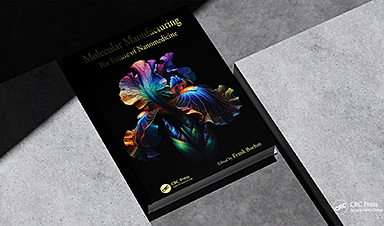
Molecular Manufacturing: The Future of Nanomedicine – New book from NanoappsMedical Inc.
This book explores the revolutionary potential of atomically precise manufacturing technologies to transform global healthcare, as well as practically every other sector across society. This forward-thinking volume examines how envisaged Factory@Home systems might enable the cost-effective [...]
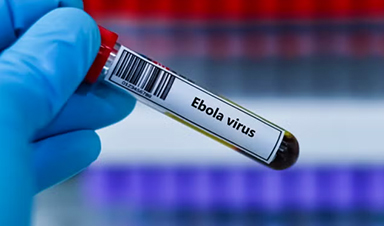
Moderna kicks off Phase I Ebola trial as Africa readies itself for research
If the Phase I trial is successful, Moderna plans to quickly initiate Phase II and Phase III trials of its Ebola vaccine. Moderna has initiated a Phase I trial of its mRNA Ebola vaccine [...]
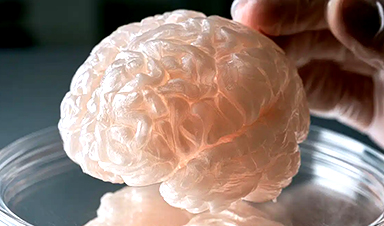
3D Human Brain Tissue Model Replicates Alzheimer’s Pathology
Summary: Researchers introduced a highly reproducible three-dimensional human brain tissue model capable of replicating complex neurodegenerative processes in Alzheimer’s disease. Developed over nine years using human stem cells, the self-organizing tissue spheroids integrate functional neurons, [...]
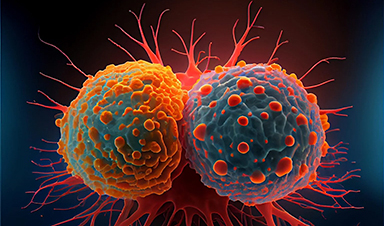
A Common Sugar May Loosen Cancer Cells and Help Them Spread
Chemotherapy may kill most ovarian cancer cells, but the few that survive can turn dangerously active. By releasing fructose, they may help nearby tumor cells break free and spread. Researchers at The Wistar Institute [...]
COVID-19 can wake up dormant viruses in the body, large study confirms
Virus reactivations by SARS-CoV-2 could worsen initial symptoms and increase risk of Long Covid. Early in the COVID-19 pandemic, scientists noticed that a SARS-CoV-2 infection can “wake up” other, dormant viruses already present in [...]