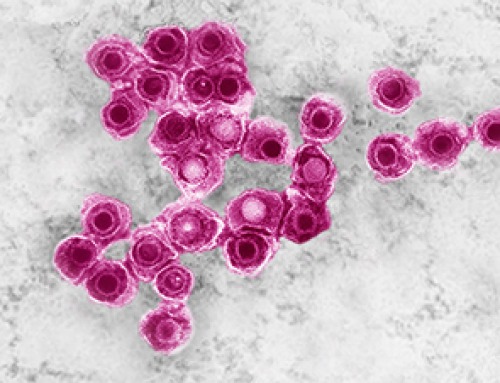
Engineers at MIT and the University of Massachusetts Medical School have designed a new type of nanoparticle that can be administered to the lungs, where it can deliver messenger RNA encoding useful proteins.
“This is the first demonstration of highly efficient delivery of RNA to the lungs in mice. We are hopeful that it can be used to treat or repair a range of genetic diseases, including cystic fibrosis,” says Daniel Anderson, a professor in MIT’s Department of Chemical Engineering and a member of MIT’s Koch Institute for Integrative Cancer Research and Institute for Medical Engineering and Science (IMES).
In a study of mice, Anderson and his colleagues used the particles to deliver mRNA encoding the machinery needed for CRISPR/Cas9 gene editing. That could open the door to designing therapeutic nanoparticles that can snip out and replace disease-causing genes.
The senior authors of the study, which appears today in Nature Biotechnology, are Anderson; Robert Langer, the David H. Koch Institute Professor at MIT; and Wen Xue, an associate professor at the UMass Medical School RNA Therapeutics Institute. Bowen Li, a former MIT postdoc who is now an assistant professor at the University of Toronto; Rajith Singh Manan, an MIT postdoc; and Shun-Qing Liang, a postdoc at UMass Medical School, are paper’s lead authors.
Targeting the lungs
Messenger RNA holds great potential as a therapeutic for treating a variety of diseases caused by faulty genes. One obstacle to its deployment thus far has been difficulty in delivering it to the right part of the body, without off-target effects. Injected nanoparticles often accumulate in the liver, so several clinical trials evaluating potential mRNA treatments for diseases of the liver are now underway. RNA-based COVID-19 vaccines, which are injected directly into muscle tissue, have also proven effective. In many of those cases, mRNA is encapsulated in a lipid nanoparticle—a fatty sphere that protects mRNA from being broken down prematurely and helps it enter target cells.
Several years ago, Anderson’s lab set out to design particles that would be better able to transfect the epithelial cells that make up most of the lining of the lungs. In 2019, his lab created nanoparticles that could deliver mRNA encoding a bioluminescent protein to lung cells. Those particles were made from polymers instead of lipids, which made them easier to aerosolize for inhalation into the lungs. However, more work is needed on those particles to increase their potency and maximize their usefulness.
In their new study, the researchers set out to develop lipid nanoparticles that could target the lungs. The particles are made up of molecules that contain two parts: a positively charged headgroup and a long lipid tail. The positive charge of the headgroup helps the particles to interact with negatively charged mRNA, and it also help mRNA to escape from the cellular structures that engulf the particles once they enter cells.
The lipid tail structure, meanwhile, helps the particles to pass through the cell membrane. The researchers came up with 10 different chemical structures for the lipid tails, along with 72 different headgroups. By screening different combinations of these structures in mice, the researchers were able to identify those that were most likely to reach the lungs.
Efficient delivery
In further tests in mice, the researchers showed that they could use the particles to deliver mRNA encoding CRISPR/Cas9 components designed to cut out a stop signal that was genetically encoded into the animals’ lung cells. When that stop signal is removed, a gene for a fluorescent protein turns on. Measuring this fluorescent signal allows the researchers to determine what percentage of the cells successfully expressed the mRNA.
After one dose of mRNA, about 40 percent of lung epithelial cells were transfected, the researchers found. Two doses brought the level to more than 50 percent, and three doses up to 60 percent. The most important targets for treating lung disease are two types of epithelial cells called club cells and ciliated cells, and each of these was transfected at about 15 percent.
“This means that the cells we were able to edit are really the cells of interest for lung disease,” Li says. “This lipid can enable us to deliver mRNA to the lung much more efficiently than any other delivery system that has been reported so far.”
The new particles also break down quickly, allowing them to be cleared from the lung within a few days and reducing the risk of inflammation. The particles could also be delivered multiple times to the same patient if repeat doses are needed. This gives them an advantage over another approach to delivering mRNA, which uses a modified version of harmless adenoviruses. Those viruses are very effective at delivering RNA but can’t be given repeatedly because they induce an immune response in the host.
To deliver the particles in this study, the researchers used a method called intratracheal instillation, which is often used as a way to model delivery of medication to the lungs. They are now working on making their nanoparticles more stable, so they could be aerosolized and inhaled using a nebulizer.
The researchers also plan to test the particles to deliver mRNA that could correct the genetic mutation found in the gene that causes cystic fibrosis, in a mouse model of the disease. They also hope to develop treatments for other lung diseases, such as idiopathic pulmonary fibrosis, as well as mRNA vaccines that could be delivered directly to the lungs.

News
COVID-19 can wake up dormant viruses in the body, large study confirms
Virus reactivations by SARS-CoV-2 could worsen initial symptoms and increase risk of Long Covid. Early in the COVID-19 pandemic, scientists noticed that a SARS-CoV-2 infection can “wake up” other, dormant viruses already present in [...]

Scientists Discover the Brain May Enter a New Biological Phase Between 50 and 75
A single-cell study reveals major changes in immune cells, genome organization, and gene regulation within the aging human hippocampus, offering important insights into brain aging and dementias associated with age. Between roughly ages 50 [...]

Our books now available worldwide!
Online Sellers other than Amazon, Routledge, and IOPP Indigo Global Health Care Equivalency in the Age of Nanotechnology, Nanomedicine and Artifcial Intelligence Global Health Care Equivalency In The Age Of Nanotechnology, Nanomedicine And Artificial [...]

Unzipping the Code of Life: Scientists Pinpoint Where DNA First Opens
Researchers mapped where DNA first opens and how a helicase gate may release one strand as genome copying begins. Before a cell can divide, it must open its tightly wound DNA and begin copying the entire [...]

Scientists Tested an 8-Hour Eating Window and Found a Surprising Brain Benefit
Limiting the daily eating window may provide brain benefits beyond those associated with weight loss. Eating within a shorter daily window may provide cognitive benefits beyond those associated with weight loss alone, according to [...]

Focused Ultrasound Opens Blood-Brain Barrier to Treat Brain Cancer
Summary: A new study demonstrates that primary brain tumors (gliomas) are particularly receptive to targeted drug delivery using focused ultrasound (FUS) combined with microbubbles. The team developed a high-resolution MRI protocol to track blood-brain barrier [...]

AI’s promise and practical limits in drug discovery
AI tools are becoming increasingly common in early drug discovery, allowing scientists to analyse data and navigate large volumes of research. However, according to Dr Raminderpal Singh, turning that potential into consistent scientific workflows [...]

GHCE Concept
From the preface of the book Global Health Care Equivalency in the Age of Nanotechnology, Nanomedicine and Artificial Intelligence, Edited by Frank Boehm: Since the publication of my first book (Nanomedical Device and Systems [...]

Healthcare Headlines: Challenges and Advances in 2026
Health-related updates reveal financial adjustments by Universal Health Services due to Medicaid reimbursement uncertainties, significant pollution-linked health concerns from French-British oil firm Perenco in Congo, drug trial setbacks, potential restructuring at major medical firms, [...]

Scientists Discover the Brain Protein That Helps Alzheimer’s Spread Through the Brain
Scientists have identified a brain protein that may help Alzheimer’s spread, revealing a potential new target for slowing the disease’s progression. Alzheimer’s disease is closely linked to the accumulation of a toxic form of the protein [...]

How Immune Dysregulation Contributes to Psychiatric Disorders
Introduction Growing evidence suggests that disruptions in immune function may play an important role in the development and progression of psychiatric disorders. However, immune mechanisms probably contribute more strongly in some patients than others, [...]

Electrostatic Discharge Boosts Triboelectric Nanogenerator Current and Enables DC Output
Controlled electrical discharges could enable triboelectric nanogenerators to achieve higher peak currents, extending nano-enabled energy harvesting into chemical processing and self-powered sensing. Paper: Electrostatic discharge as a breakthrough strategy for triboelectric nanogenerators. A new review [...]

Swiss laboratory uses old drugs against rare diseases
Researchers at the University of Geneva are combing through collections of approved drugs to find new therapies for rare diseases – with some success. This approach is gaining traction around the world, while pharmaceutical [...]

Nanozyme Aptasensors Show Promise for Faster Food, Health, and Environmental Testing
By pairing robust artificial enzymes with highly selective aptamers, nanozyme aptasensors could help detect disease biomarkers, pathogens, and contaminants faster, but the review shows that real-world deployment still depends on overcoming matrix interference, biofouling, [...]

Paralyzed Man Feels Sensation Again With Brain Stimulation Device
Aneuroprosthetic system has allowed a man with paralysis to grasp and lift objects and feel touch again. The device helped 42-year-old Keith Thomas of Massapequa, New York, who was paralyzed from the chest down [...]

Global Cancer Cases Could Surge 67% by 2050, New Report Warns
New data reveal major geographic disparities and highlight the urgent need for global action on prevention, early detection, and equitable access to treatment. For roughly one in five people worldwide, cancer will become part [...]