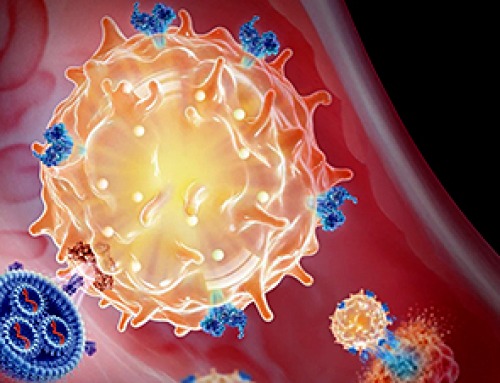
Northwestern Medicine scientists have developed a more effective way of creating nanotherapeutic vaccines and medicines, according to a new study published in ACS Nano.
In the Mirkin laboratory, investigators have harnessed this SNA technology in their work to design precision nanomedicines for use in gene regulation and in cancer immunotherapy with limited unwanted side effects through a systematic development process known as rational vaccinology.
“In the development of vaccines, historically, very little attention has been paid to vaccine structure,” said Mirkin, who is also a member of the Robert H. Lurie Comprehensive Cancer Center of Northwestern University. “All of the emphasis has been on the components. The premise of rational vaccinology is that, while components are critical, structure is equally important. How you present vaccine components within a modular nanoscale architecture can have a dramatic impact on vaccine efficacy, whether it’s treating infectious disease or cancer.”
In the study, investigators first tested the effects of using different chemical anchoring groups to attach the oligonucleotides—short strands of DNA or RNA—to the surface of the liposomes to prepare SNAs. They found that when increasingly hydrophobic dodecane-based anchoring groups were used, the stability of the nanostructure was significantly improved. When introduced to bone marrow-derived dendritic cells from mice, these more stable SNA constructs exhibited improved cellular uptake compared to the other versions of SNAs that were prepared using other types of anchoring groups, with different chemistries.
“We discovered a way to anchor the oligonucleotides to the surface of the particle that changes the overall stability of the SNA construct, which is critical,” said Jasper Dittmar, a Ph.D. student in the Mirkin laboratory and a co-author of the study. “The beauty of the SNA architecture is that it’s recognized by almost all cell types, immune cells included, and rapidly internalized. You get the vaccine to enter the cells that matter at the stoichiometry you’d like, with the desired number of antigens and adjuvant molecules.”
Scientists in the Mirkin lab then loaded the SNA vaccine with OVA1 (a model peptide derived from egg protein often used in vaccine development) and administered that to mice with lymphoma. The OVA1 SNA-treated mice not only had a greater number of polyfunctional T-cells (which are considered potent against chronic infections and tumors), they also showed a 21-fold reduction in tumor volumes compared to saline-treated mice, according to the study.
To assess the inflammatory side effects of the vaccine, investigators then studied the SNA to see if it activated excessive immune responses in mice. Mice given the treatment did not produce a cytokine storm, a sometimes-fatal side effect of immunotherapies.
Because cytokine storms are associated with severe cases of COVID-19, Mirkin and his research team also created an SNA vaccine where the OVA1 peptide was swapped out for a peptide from the virus that causes COVID-19 (CoV peptide) and administered it to human cells and ultimately mice. The investigators found that the vaccine enhanced antigen-specific, anti-COVID immune responses with minimal adverse side effects.
“Taken together, the results of this study lay a foundation for a new way of developing and delivering vaccines and other precision treatments, regardless of the target disease,” said Michael Evangelopoulos, a Ph.D. student in the Mirkin lab and a co-author of the study.
The findings also highlight the importance of vaccine construction, Mirkin said.
“Structure matters,” Mirkin said. “In a field where we’ve spent very little time focused on the structure of vaccines, we have may have been missing the forest for the trees. It’s a combined understanding of the components and the structural presentation that leads to an efficacious medicine or not.”
Moving forward, the Mirkin group will continue to devise different configurations of SNA vaccines to assess which are the most effective, he said.
“We are spending a lot of time using the SNA platform to figure out the structures that are the most efficacious, and then trying to figure out why that is, what works and then also why it works,” Mirkin said. “We think that by doing that, we’ll be able to create a whole new generation of medicines based upon this concept of rational vaccinology.”
More information: Jasper W. Dittmar et al, Tuning DNA Dissociation from Spherical Nucleic Acids for Enhanced Immunostimulation, ACS Nano (2023). DOI: 10.1021/acsnano.3c04333
Journal information: ACS Nano

News

Scientists Develop a Clever New Way To Kill Cancer Cells From the Inside
Scientists have developed an experimental strategy that exploits a chemical byproduct of cancer cells to produce anticancer drugs directly inside them. Scientists in Japan have developed an experimental method that uses a chemical produced [...]

Our books are available worldwide!
Online Sellers other than Amazon, Routledge, and IOPP Indigo Global Health Care Equivalency in the Age of Nanotechnology, Nanomedicine and Artifcial Intelligence Global Health Care Equivalency In The Age Of Nanotechnology, Nanomedicine And Artificial [...]

After only a short training, people in a coma managed to send targeted signals
Researchers have succeeded in communicating with brain-injured patients who are unconscious. They see enormous potential in this for future treatments. Patients who lie motionless in bed after a severe brain injury and do not [...]
MIT Scientists Reprogram Immune Cells Inside the Body To Destroy Cancer
Natural killer cells reprogrammed inside mice eliminated lymphoma tumors and helped damaged livers heal, though whether this approach could help people with cancer or autoimmune disease remains unknown. To make a cancer treatment from [...]

Melanoma mRNA Vaccine Shows Promise in Preventing Disease Recurrence
Key takeaways: Phase 3 trial finds personalized intismeran plus pembrolizumab may better prevent high-risk melanoma recurrence after surgery The trial enrolled 1,137 patients and builds on phase 2 results showing about half the recurrence [...]

Scientists Discover a Powerful New Weapon Against a Dangerous Gut Infection
The promise of an experimental treatment for C. difficile gut infections lies partly in the bacteria it leaves alive, according to early laboratory and mouse research. Broad-spectrum antibiotics can disrupt the gut’s microbial community, [...]
Your Bones May Hold a Hidden Clue to Blood Cancer Survival
For people with blood cancers called myelodysplastic syndromes, osteoporosis may hold an overlooked clue to survival, a three-year observational study suggests. In blood cancers that develop in the bone marrow, an important clue to [...]

Researchers Discover What Reading for Pleasure May Be Doing to Your Brain
Reading for pleasure may offer surprising benefits for the brain, with research linking the habit to better mental health, stronger cognitive abilities, and a lower risk of dementia. Reading for pleasure may do far [...]
Scientists Discover a Hidden Trigger That Keeps Inflammation Alive
Inflammation persists after proteins detach from immune receptors, revealing a potential target for autoimmune treatments. Since a Nobel Prize-winning discovery in the 1990s identified molecules called Toll-like Receptors as the guardians of the human [...]
A Virus Gives Itself Away the Moment It Attacks
Researchers have found the trigger behind a powerful bacterial defense against viruses. Viruses that prey on bacteria could become an increasingly important tool for treating bacterial infections, particularly as antibiotic resistance makes some infections [...]
Scientists Discover Aspirin May Slash Dementia Risk by 70% – but Only for Certain People
Aspirin was linked to a sharply lower dementia risk in some older adults, and their genes may hold the clue. A Monash University analysis found that older adults with a particular genetic profile had [...]
Inflammation May Awaken Dormant Cancer Cells Years After Treatment
The body’s response to inflammation may disturb cancer cells that have been lying silent for years, giving them an opportunity to grow again. Researchers at the Francis Crick Institute have found that gut inflammation [...]

Where do nanoparticles go once they enter the body?
New international best practice guidance, co-written at ANSTO, sets out how to measure where nanoparticles like titanium dioxide end up in the body and how long they remain. The guidance has been shared by [...]
Long-Acting HIV Shots Could Solve a Major Treatment Challenge for Young People
A major African trial suggests that changing how HIV treatment is delivered could significantly improve viral suppression in adolescents. Young people with HIV were more likely to keep the virus suppressed when they received [...]

WHO Factsheets – The top 10 causes of death
In 2023, the 10 leading causes of death accounted for 33 million deaths, or 54% of the total 61 million deaths worldwide. The top global causes of death, in order of total number of lives lost, [...]
Aging Cells May Be Hiding From the Immune System – Scientists Think They Know How
Your immune system is supposed to clear out damaged cells. Researchers may have found how some of them hide and linger as the body ages. Researchers led by Cedars-Sinai Health Sciences University have identified [...]