Nature Inspires Non-spherical Drug Delivery Nanoparticles

When a drug enters the body, it doesn’t generally target a particular part of the body. Paracetamol, for example, affects the whole body but its effects are felt at the source of pain. Likewise, cancer drugs can be imprecise; some enter the bloodstream to treat cancer at various anatomical points in the body, some are [...]
By |2018-03-22T14:32:41+00:00November 3rd, 2017|Categories: News|0 Comments

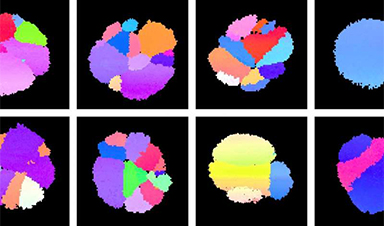
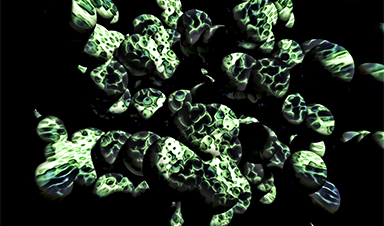
Plastic nanoparticles inspired by nature could improve cancer drug delivery

UNSW Sydney scientists have developed a way to control the shape of polymer molecules so they self-assemble into non-spherical nanoparticles - an advance that could improve the delivery of toxic drugs to tumours. "Very little in nature is perfectly spherical," says study senior author Professor Pall Thordarson of the UNSW School of Chemistry. "Most biological [...]

By |2018-03-22T14:32:41+00:00November 2nd, 2017|Categories: News|0 Comments

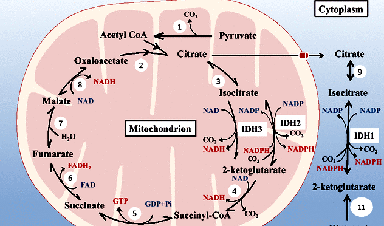
Isocitrate dehydrogenases in physiology and cancer: biochemical and molecular insight

From the abstract: Isocitrate dehydrogenases play important roles in cellular metabolism and cancer. This review will discuss how the roles of isoforms 1 and 2 in normal cell and cancer metabolism are distinct from those of isoform 3. It will also explain why, unlike 1 and 2, mutations in isoform 3 in tumor are not likely [...]

By |2018-03-22T14:32:41+00:00October 31st, 2017|Categories: News|0 Comments

Newly patented formulation based on nanotechnology will offer neuropathic pain relief

The company GB Sciences Inc. has obtained the exclusive global worldwide intellectual property license for this innovative solution, which is based on nanotechnology. The researchers Lucía Martín Banderas and Mercedes Fernández Arévalo, from the I+DNanomed research group at the University of Seville, have patented an innovative formulation based on nanotechnology, which is designed to relieve [...]

By |2018-03-22T14:32:41+00:00October 30th, 2017|Categories: News|0 Comments

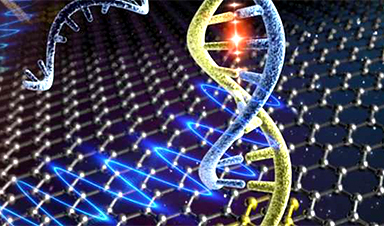
Graphene sensors detect HIV DNA

Leiden and Jülich researchers discovered an elegant and simple approach to improve the sensitivity of graphene biosensors. These so-called 'next generation graphene electronic biochemical sensor devices' are able to detect very low amounts of HIV DNA thanks to their very low electronic noise. The richness of electronic properties of graphene has attracted enormous interest for [...]

By |2018-03-22T14:32:41+00:00October 28th, 2017|Categories: News|0 Comments

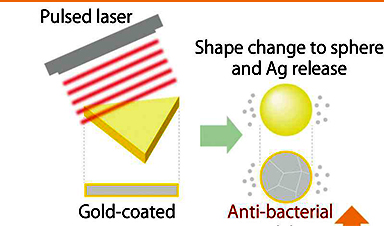
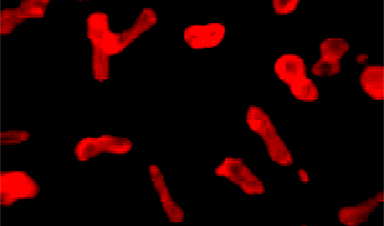
Nanoparticles with pulse laser controlled antibacterial properties

Silver nanoparticles (AgNPs) are known to have excellent antibacterial properties and are considered by many to be a strong contender in the critical search for an answer to antibiotic-resistant bacteria. They block enzymes and can cause bacteria to have irregularly shaped membranes, producing results ranging from inhibited growth to cell death. However, a collaboration of [...]

By |2018-03-22T14:32:41+00:00October 27th, 2017|Categories: News|0 Comments

Nanomedicine – despite the issues it still faces, investment is set to increase

The nanomedicines market is worth billions and, despite a variety of hurdles, it continues to attract the attention of venture capitalists. Tarun Pandotra reviews developments in the sector. Nanotechnology has come a long way in the last five years and now nanomedicine, a marriage of nanotechnology and medicine, is taking its place in the fight [...]

By |2018-03-22T14:32:41+00:00October 26th, 2017|Categories: News|0 Comments

Nanodiamonds Successfully Used in Aiding Recovery from Root Canal Procedure

Root canal treatment may soon be more effective because of a miniature but powerful ally that could inhibit infection after treatment. A team of Researchers at the UCLA School of Dentistry and the UCLA Henry Samueli School of Engineering and Applied Science discovered in a clinical trial that nanodiamonds protected disinfected root canals after the [...]

By |2018-03-22T14:32:41+00:00October 25th, 2017|Categories: News|0 Comments

New Intelligent Nanoparticles Capable of Killing Cancerous Cells

University of Surrey scientists have developed ‘intelligent’ nanoparticles capable of heating up to a temperature that is high enough to kill cancerous cells – but which can self-regulate and lose heat before they get hot enough to harm healthy tissue. It may be possible to use the self-stopping nanoparticles very soon as part of hyperthermic-thermotherapy [...]

By |2018-03-22T14:32:41+00:00October 25th, 2017|Categories: News|0 Comments

Single nanoparticle mapping paves the way for better nanotechnology

Researchers at Chalmers University of Technology and the Technical University of Denmark have developed a method that makes it possible to map the individual responses of nanoparticles in different situations and contexts. The results pave the way for better nanomaterials and safer nanotechnology and were recently published in the journal Nature Communications. In the future [...]

By |2018-03-22T14:32:42+00:00October 24th, 2017|Categories: News|0 Comments
Go to Top