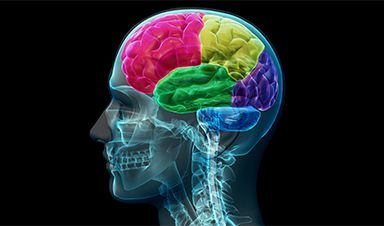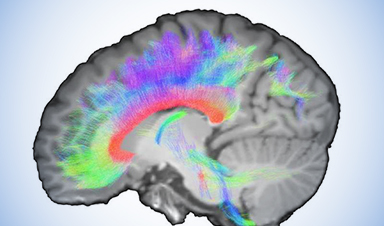
Scientists use supercomputer to search for “memory molecules”

Until now, searching for genes related to memory capacity has been comparable to seeking out the proverbial "needle in a haystack." Scientists at the University of Basel made use of the CSCS supercomputer Piz Daint to discover interrelationships in the human genome that might simplify the search for "memory molecules" and eventually lead to more [...]
By |2018-03-22T14:32:42+00:00October 23rd, 2017|Categories: News|0 Comments

Can nanotechnology heal scar tissue?

Dr Tristan Clemons, a UWA researcher, does his work on this minute scale. And while working on the nanoscale is pushing our science and technology to its limits, it's on this tiny new frontier that the solutions to scar tissue might be found. "Nanotechnology is answering a lot of questions about phenomena, which, up until [...]

By |2018-03-22T14:32:42+00:00October 22nd, 2017|Categories: News|0 Comments

Safety Requirements in Nanomedicine – Video from CLINAM 2017

  Robert E. Geertsma, M.Sc., Senior Scientist, Centre for Health Protection RIVM ‐ National Institute for Public Health and the Environment, Bilthoven (NL) talks at the Clinam Summit in 2017 about safety considerations on the route to the market. About the Clinam Foundation: The European Foundation for Clinical Nanomedicine is a non-profit institution [...]

By |2018-03-22T14:32:42+00:00October 21st, 2017|Categories: News|0 Comments

Nanotechnology for neuroscience

Notwithstanding the progress neuroscientists have made in understanding the microscale function of single neurons and the macroscale activity of the human brain – a comprehensive understanding of the brain still remains an elusive goal. The BRAIN Initiative, launched in 2013, seeks to deepen understanding of the inner workings of the human mind and to improve [...]

By |2018-03-22T14:32:42+00:00October 20th, 2017|Categories: News|0 Comments

The Benefits of Nanomedicine – An Editorial Feature from AZONano

From a feature written by Shelley Farrar Stoakes, MSc, BSc: Nanomedicine is the application of nanotechnology to the field of medicine by the use of a material at the nanometer scale. The most common application of nanomedicine involves employing nanoparticles to enhance the action of drugs in treatment. Research in the field has created targeted [...]

By |2018-03-22T14:32:42+00:00October 19th, 2017|Categories: News|0 Comments

Major advance in nanopore detection of peptides and proteins

Nanopore technology is generally used for DNA sequencing. It provides a portable, low-cost solution and works both in the jungle and in space. Now, this technology could potentially be used to identify proteins or peptides. Scientists from the University of Groningen have used a patented nanopore technology to detect the fingerprints of peptides and proteins. [...]

By |2018-03-22T14:32:42+00:00October 18th, 2017|Categories: News|0 Comments

Laws of Singularity – A paper by Reginald Grünenberg, PhD

The creation, or emergence, of a technological singularity is the subject of a wide array of speculations. Due to their lack of tangible criteria, the prospect of an upcoming singularity is still unclear, if not completely mysterious. This paper proposes to unfold a precise and exhaustive profile that may be applicable to any class of [...]

By |2018-03-22T14:32:42+00:00October 17th, 2017|Categories: News|0 Comments

Innovation Fund Announces National Funding for Promoting Biomedical Technologies

Envision is a nano-sized anti-cancer drug capable of destroying a breast tumor without damaging the surrounding tissue. Or imagine a self-healing skin graft developed from nanomaterials that treat the wounds of those with diabetes. These two biomedical technologies alone could be capable of greatly improving the quality of life for patients and saving millions in [...]

By |2018-03-22T14:32:42+00:00October 16th, 2017|Categories: News|0 Comments

Light-activated nanoparticles can supercharge current antibiotics

Light-activated nanoparticles, also known as quantum dots, can provide a crucial boost in effectiveness for antibiotic treatments used to combat drug-resistant superbugs such as E. coli and Salmonella, new University of Colorado Boulder research shows. Multi-drug resistant pathogens, which evolve their defenses faster than new antibiotic treatments can be developed to treat them, cost the [...]

By |2018-03-22T14:32:43+00:00October 16th, 2017|Categories: News|0 Comments

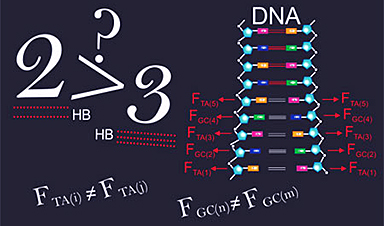
Hydrogen bond strength in DNA: where 3 could be less than 2

Hydrogen bond base pairing forces are essential for the mechanisms associated with DNA stability. Despite attracting great research attention, this fundamental interaction has eluded a precise physical description so far since its electrical origin has not been quantified yet. Researchers now have proposed characterization by means of electrical forces, providing a framework for universal characterization [...]

By |2018-03-22T14:32:43+00:00October 15th, 2017|Categories: News|0 Comments
Go to Top